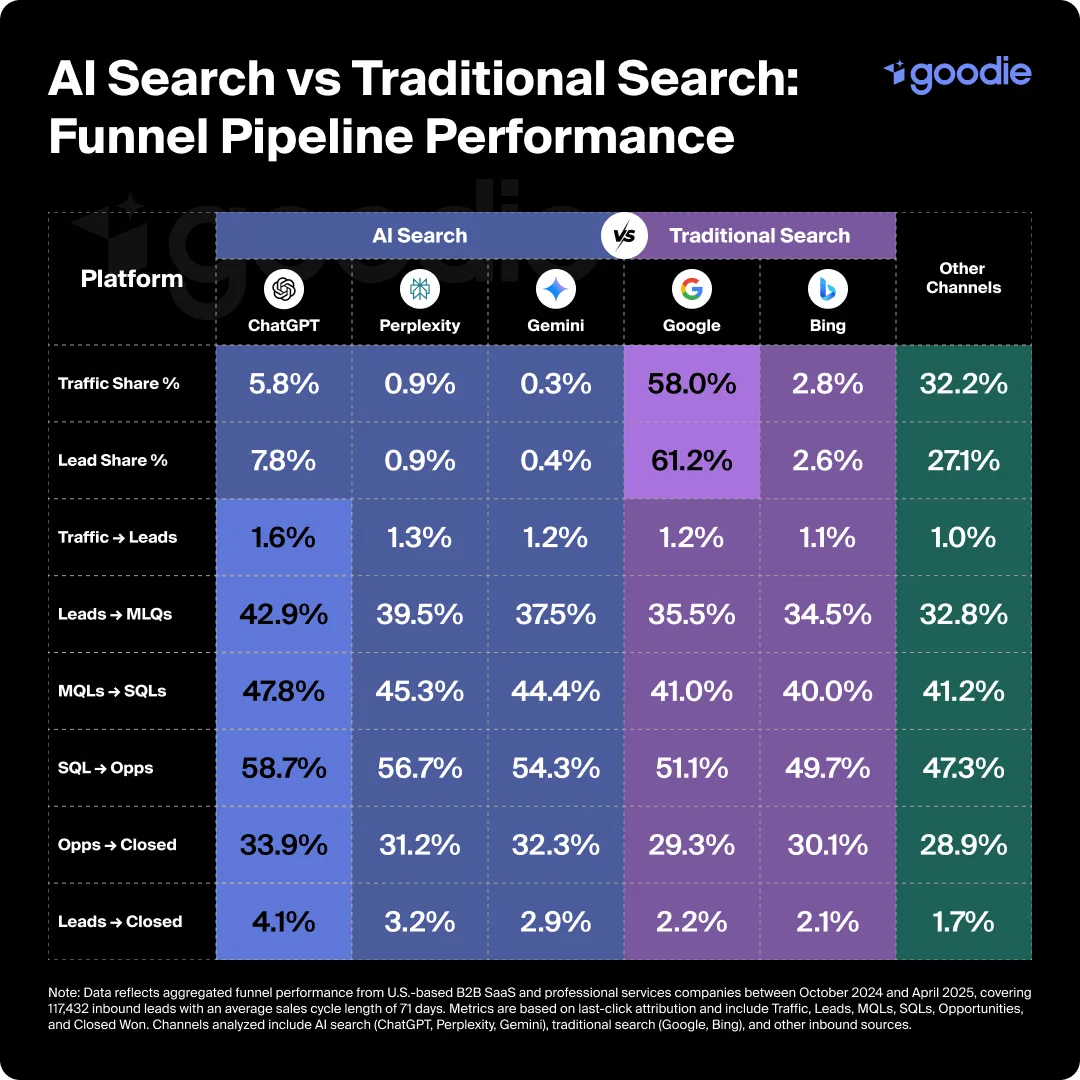
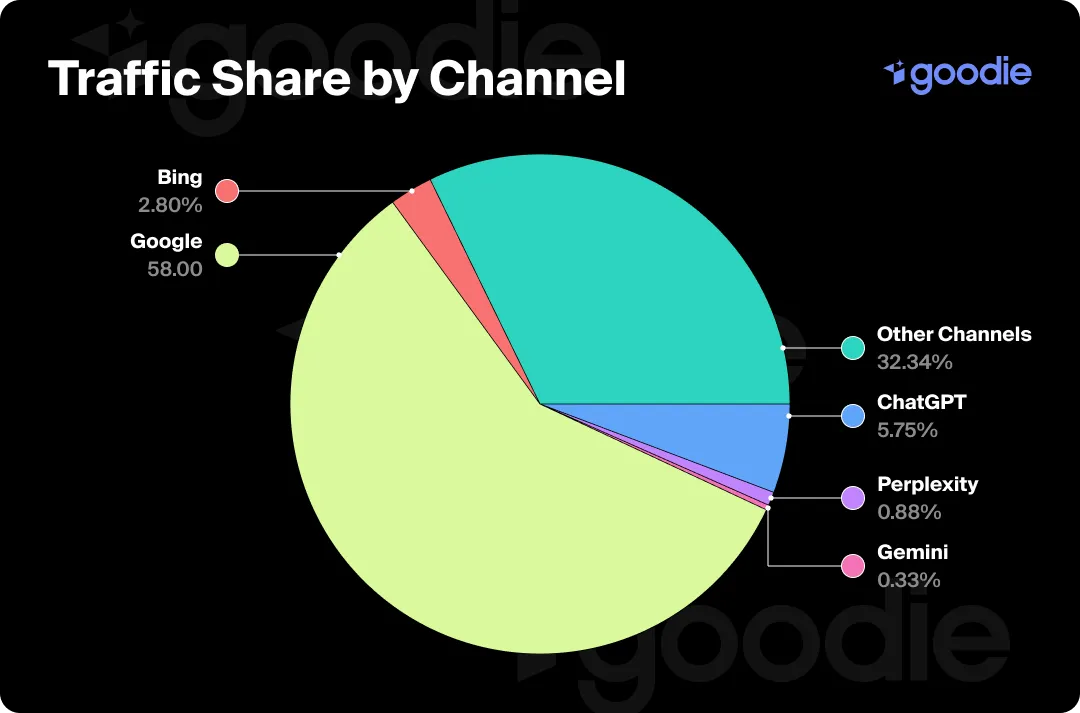
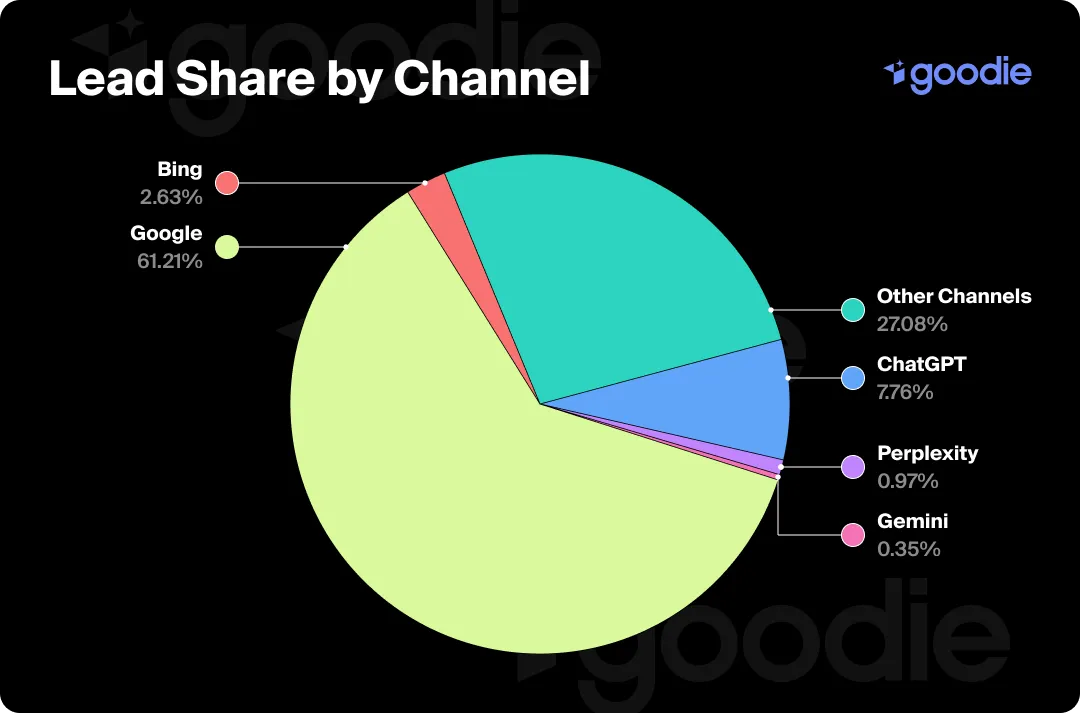
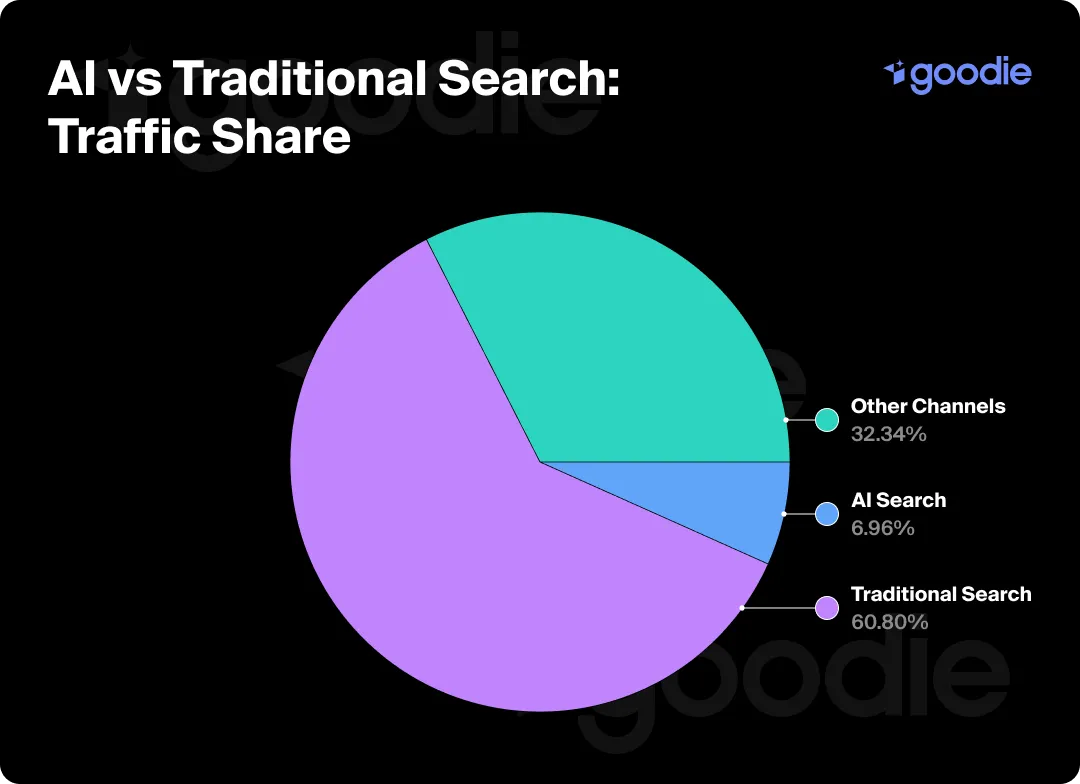
We analyzed over 117,432 inbound leads across multiple B2B brands to understand how AI search traffic compares to traditional search and other sources in terms of pipeline quality and downstream impact.
As more buyers turn to AI search and LLMs to ask product and vendor-related questions, we set out to answer the most critical question:
Does traffic from AI search sources lead to better pipeline outcomes than traditional sources like Google and Bing?
This question led us to conduct one of the largest B2B focused AEO studies in the AI search space.
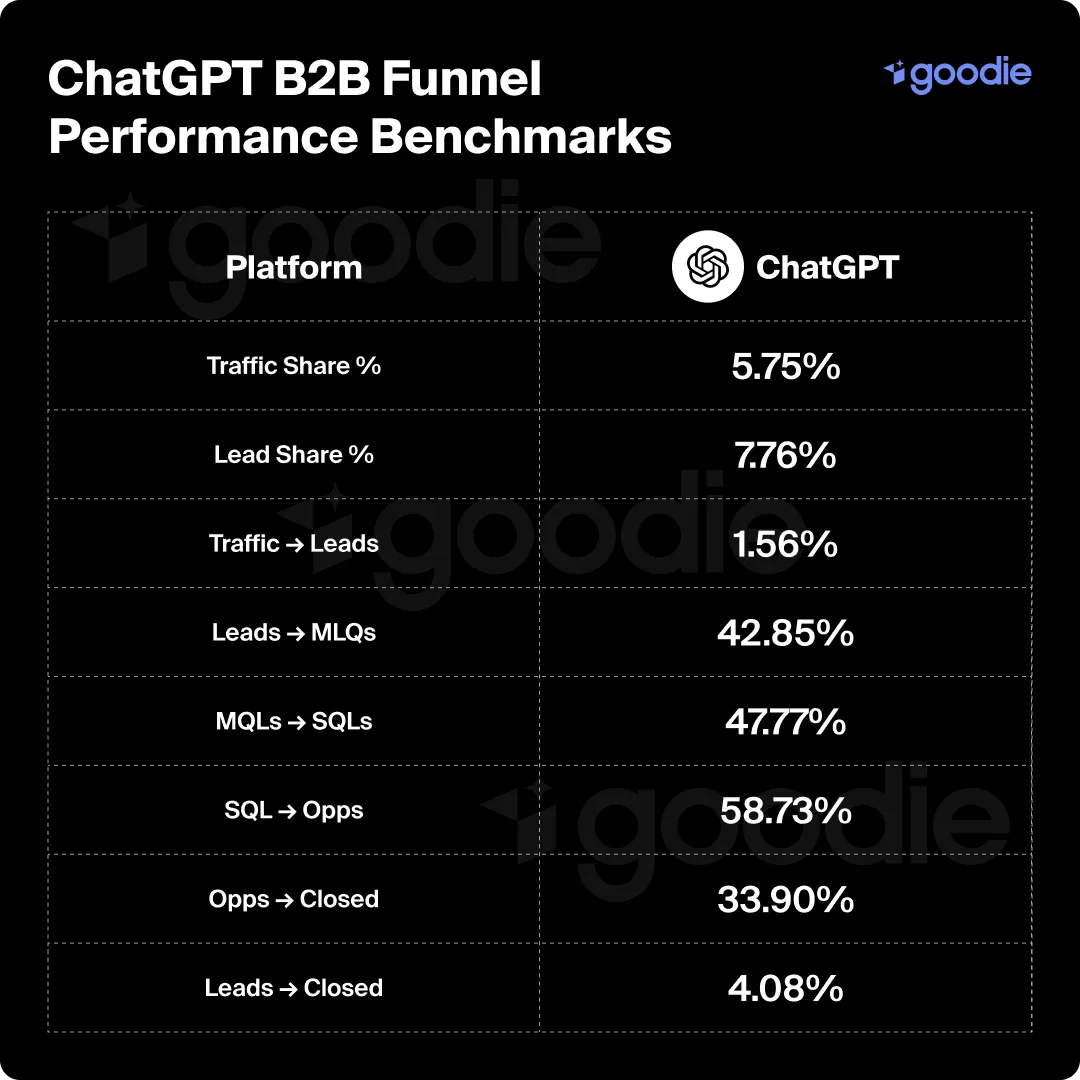
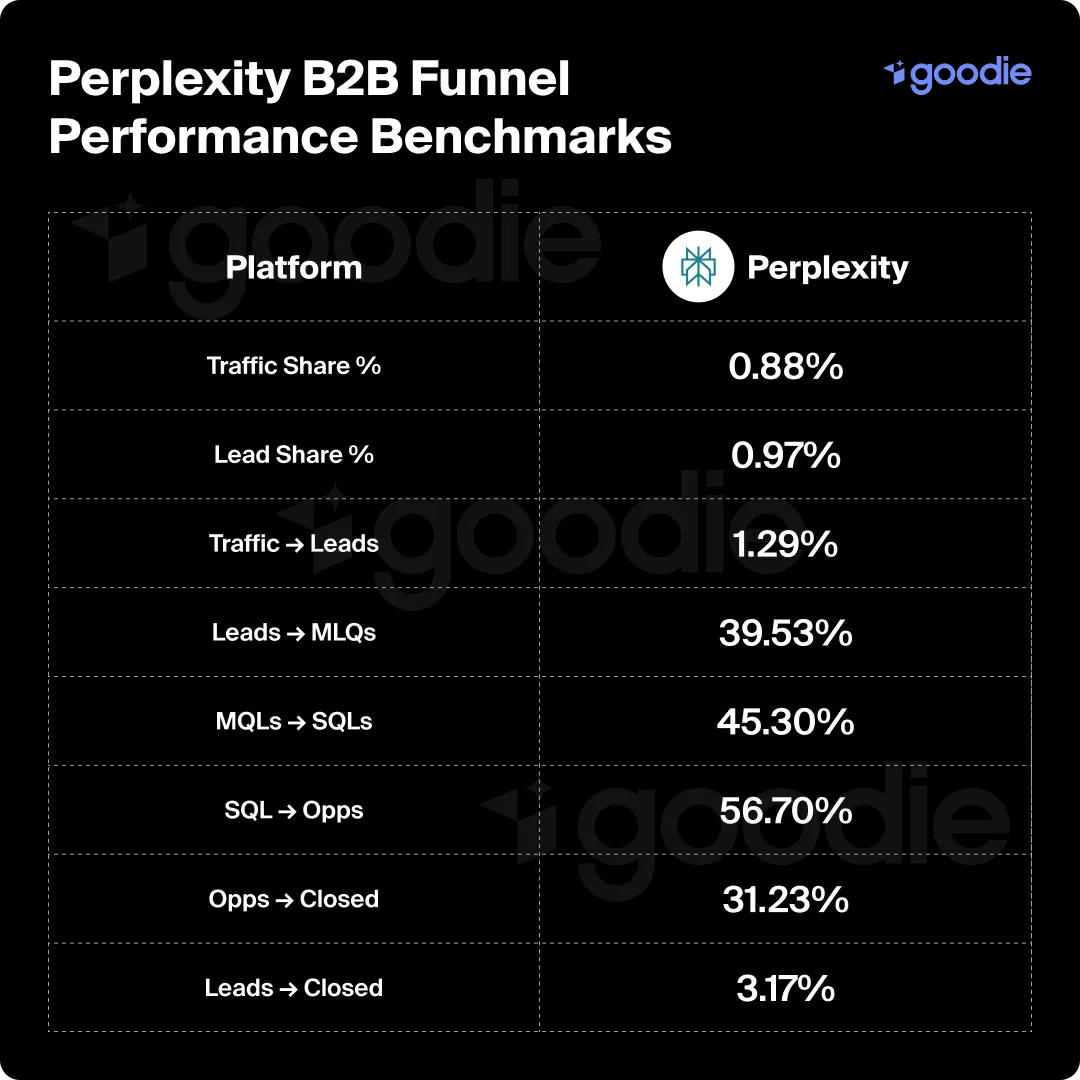
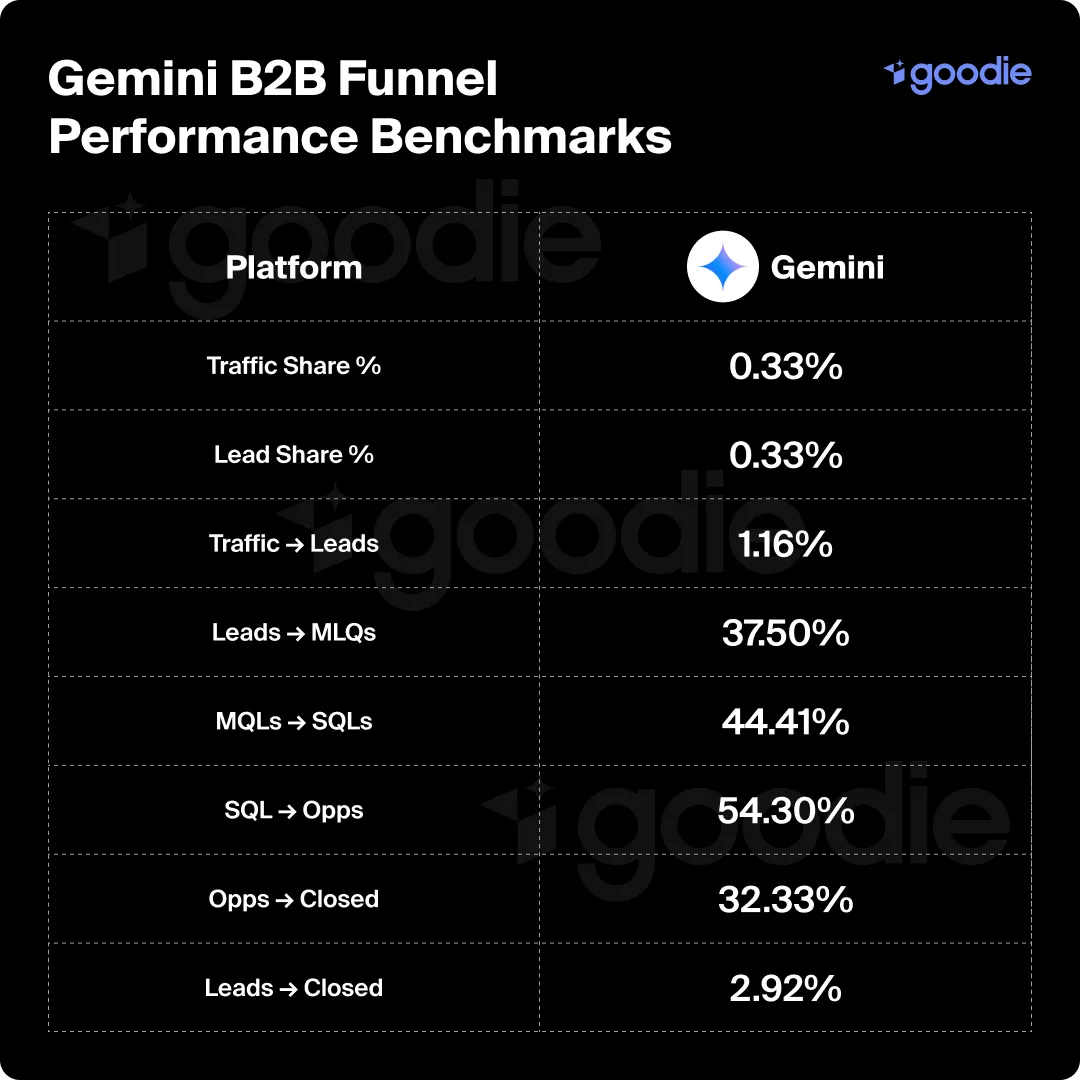
The study analyzed traffic from AI platforms (ChatGPT, Perplexity, and Gemini) compared to traditional search engines (Google and Bing as well as other traffic sources including paid, direct and referral traffic.
The findings aren’t just interesting, they’re a wake-up call for growth leaders, SEO teams, and content marketers clinging to legacy strategies and models of attribution and optimization.
The Study: Funnel Data from B2B Brands
We analyzed data from B2B SaaS and professional services companies, across the U.S., with ARR ranging from $1M to $108M.
Over 117,432 inbound leads were reviewed from October 2024 through April 2025. All data used last-click attribution and tracked full-funnel performance:
Traffic → Leads → MQLs → SQLs → Opportunities → Closed Won
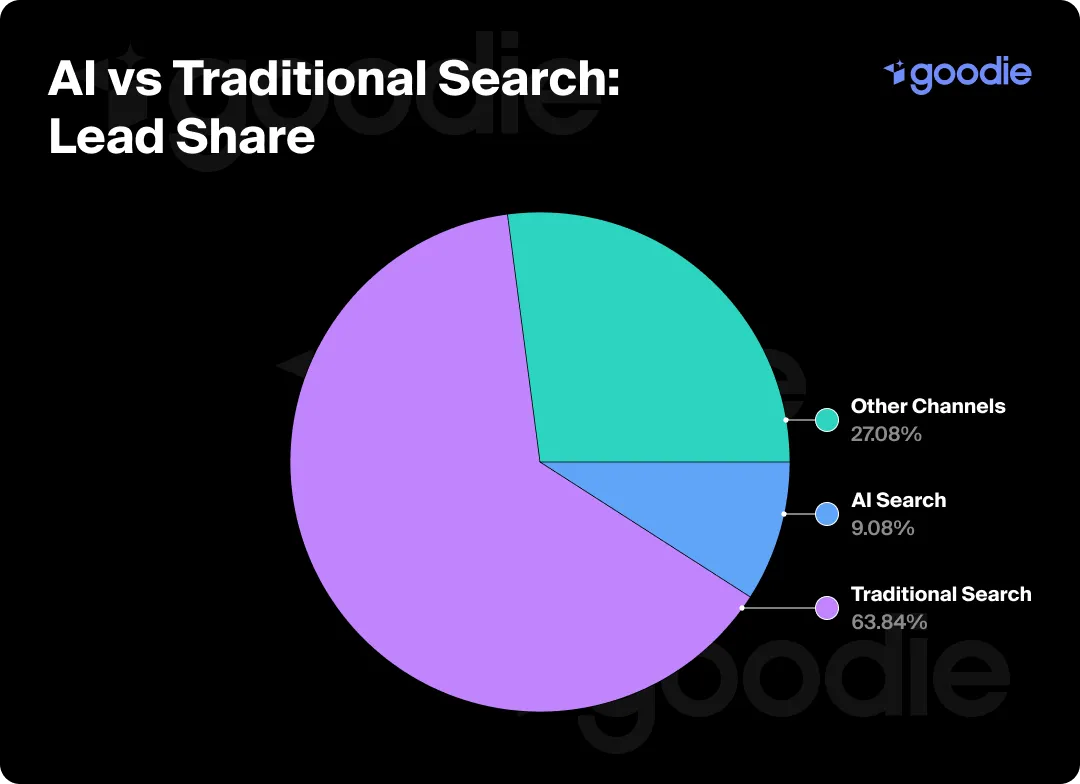
We segmented traffic into three categories:
- AI Search (ChatGPT, Perplexity, Gemini)
- Traditional Search (Google Search, Bing)
- Other Channels (non-search, mostly direct, paid, referral, and email)
Headline Finding: AI Search Delivers Higher-Quality Leads
Despite the lower volume, AI search traffic converts into pipeline at significantly higher rates than traditional search.