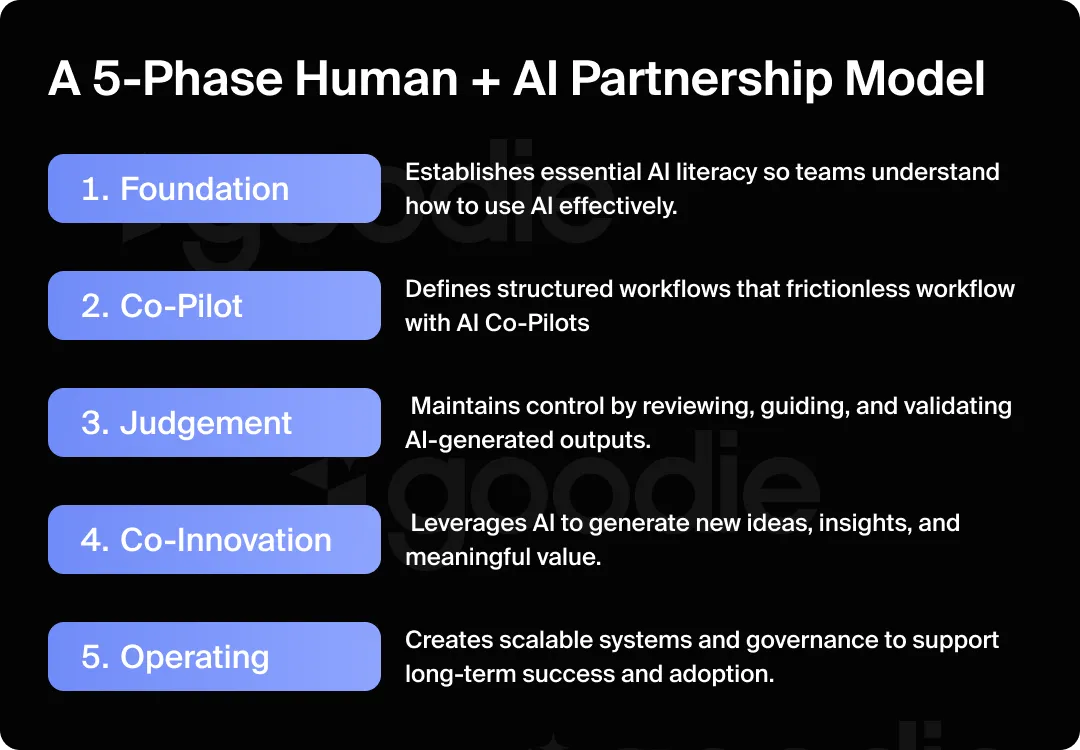
Search has changed. When someone asks Google a question now, they often see an AI summary before they’re even served any blue links. ChatGPT, Perplexity, and Claude answer millions of queries that previously drove traffic to websites. Your content might be excellent, but if AI systems can’t parse, trust, and cite it, you’re losing visibility where it matters most.
This guide shows you exactly how to write content that generative AI selects as source material. We’re covering the concrete changes that get your articles quoted in AI Overviews, referenced in ChatGPT responses, and surfaced in answer engines.
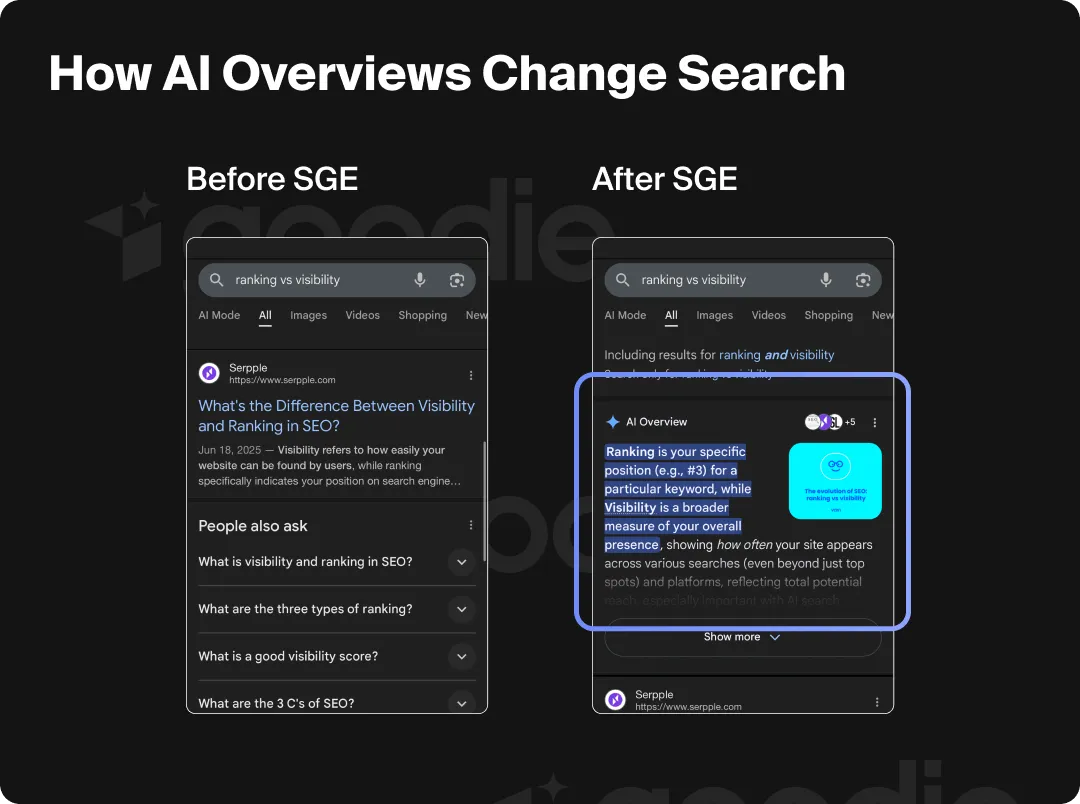
What “AI Friendly” Means
Content that works for AI serves two audiences at once: human readers who want clear answers, and AI systems that need to extract, understand, and cite information reliably.
When Google’s AI Overview pulls your content, or when ChatGPT references your article, that system has scanned your page in seconds. It identified the relevant section, verified your authority signals, and determined your answer matches the query intent. Content that makes this process easy is the content that wins.
The technical term for optimizing content for generative engines is GEO (Generative Engine Optimization). Traditional SEO focuses on ranking in search results. GEO focuses on getting selected as the source AI systems quote when generating answers, according to research from Foundation Inc on generative engine optimization.
Studies from GEO BENCH show that content optimized with citations, statistics, and authoritative sources sees 40%+ higher visibility in AI answers compared to unoptimized baselines. The gap between optimized and ignored content keeps growing.
Why Your Current Content Probably Gets Skipped
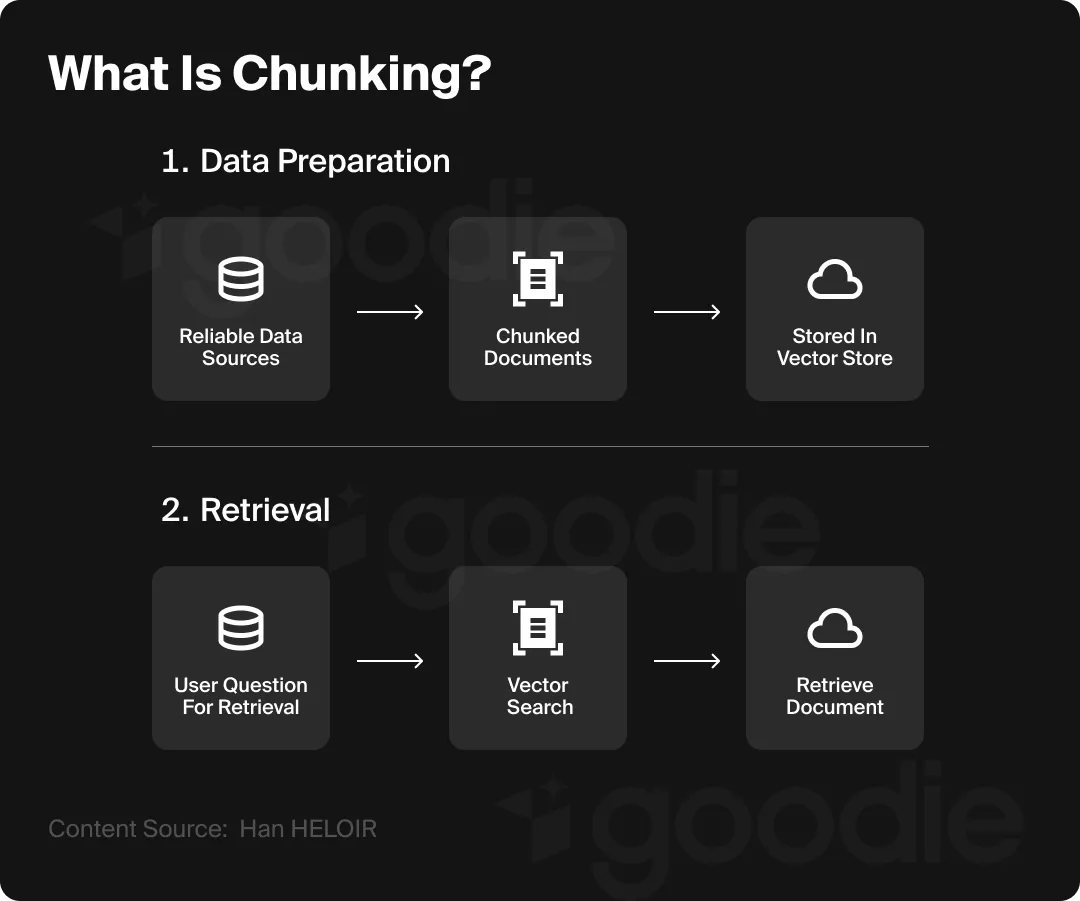
Most content published before 2024 was written for human readers who would scroll through an entire article. AI systems don’t scroll. They chunk.
When an AI model processes your content, it breaks your article into discrete pieces based on headings, paragraphs, and semantic boundaries. If your main point sits buried in paragraph seven, or if your headings fail to signal what’s in each section clearly, the AI might extract wrong information or skip your content entirely.
Common Issues That Block AI Systems
- Vague headings without the actual question or topic
- Long paragraphs mixing multiple ideas together
- Pronouns (it, they, this) referencing information from earlier sections
- Answers requiring 4 to 5 paragraphs to understand
- Missing context about who’s speaking or what specific product you’re discussing
- No clear signals about freshness or expertise
The 9 Changes That Make Content Work for AI
1. Front-Load Answers in Every Section
Place the direct answer to your section’s question in the first sentence or two. AI systems prioritize information appearing early in a content chunk, notes Luminary’s practical guide to writing for AI systems. Let’s look at an example:
Before: “Many factors influence solar panel efficiency. Weather conditions play a role, as do installation angles and local climate patterns. Generally speaking, most residential panels convert between 15 and 20% of sunlight into electricity.”
After: “Most residential solar panels convert 15 to 20% of sunlight into electricity. This efficiency rate varies based on installation angle, local weather patterns, and regional climate conditions.”
The second version gives AI systems the fact they need immediately, with supporting context following naturally.
2. Write Headings as Clear Questions or Statements
Your headings should explicitly state what the section covers, according to BizStream’s guide on AI content best practices. Generic headings like “Overview” or “Key Considerations” tell AI systems nothing about content.
Examples of weak headings:
- Getting Started
- Important Notes
- What You Should Know
Examples of strong headings:
- How Much Does Solar Panel Installation Cost in 2025?
- What Permits Do You Need for Residential Solar?
- How Long Do Solar Panels Last Before Replacement?
Strong versions contain the actual query someone would ask, making it clear when this section should be extracted as an answer.
3. Keep Paragraphs to 1-3 Sentences Maximum
Shorter paragraphs create cleaner boundaries for AI systems to extract information. They also improve readability for humans scanning on mobile devices.
Break up any paragraph containing multiple distinct points. Each mini paragraph should focus on one idea, fact, or argument.
This approach mirrors how technical documentation gets written. Technical docs get quoted by AI assistants constantly because they’re structured for precise information retrieval.
4. Add 5 to 10 FAQ Items to Every Long-Form Article
FAQ sections are perfect for AI extraction. Each question and answer pair forms a self contained unit that maps directly to how people query AI systems.
Source your FAQ questions from:
- Customer service tickets and common support questions
- Sales team’s most frequent prospect questions
- Product team insights about user confusion points
- Social media comments and DMs
- Reddit threads and Quora discussions in your space
Format them with clear schema markup (FAQ schema) so AI systems and search engines can parse them programmatically.
5. Use Consistent Terminology Throughout Content
AI systems get confused when you switch between near synonyms. Calling something a “client dashboard” in one section and “user portal” in another makes models treat these as different features.
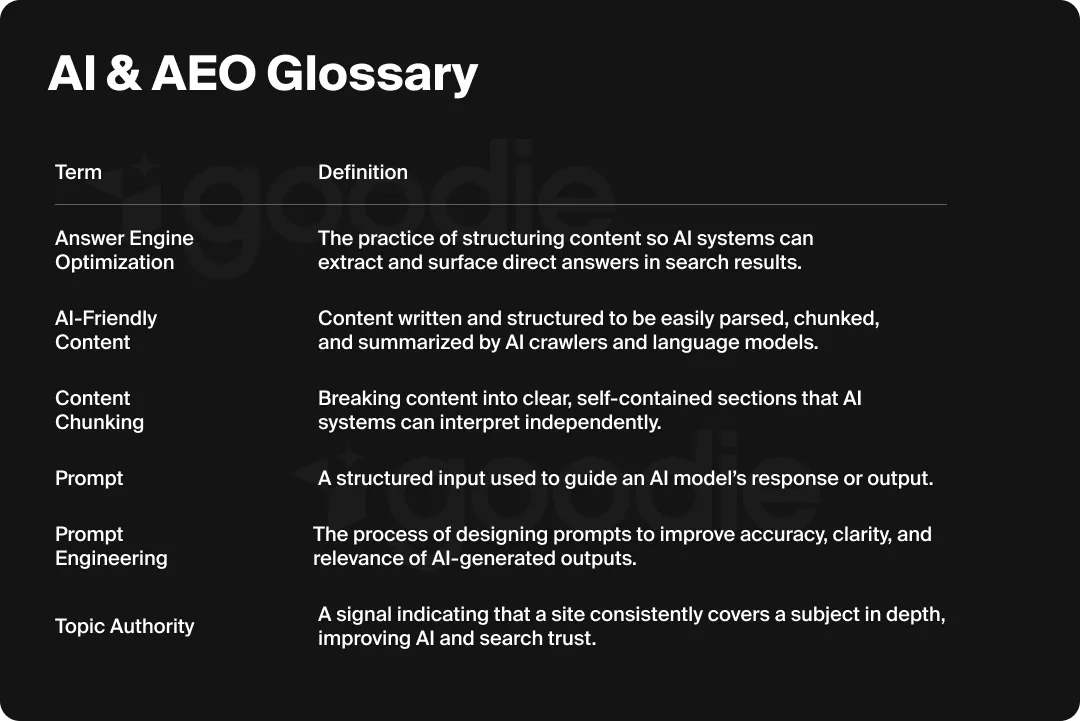
Create a simple glossary of your key terms and stick to those exact phrases. This applies especially to:
- Product names and feature names
- Industry-specific concepts
- Technical processes
- Company-specific terminology
Consistency helps AI systems build accurate connections between different sections of your content and different articles on your site.
6. Eliminate Ambiguous Pronouns Between Chunks
When content gets extracted in pieces, pronouns lose their referents. “It offers advanced analytics” becomes meaningless if the previous sentence naming the product isn’t included.
Repeat the specific noun when starting a new paragraph or section, even if it feels slightly redundant to human readers. AI systems pulling one paragraph in isolation need that context.
Before: “Our platform integrates with Salesforce. It syncs contact data automatically. Users can also map custom fields if they need additional flexibility.”
After: “Our platform integrates with Salesforce. The integration syncs contact data automatically. Users can map custom fields within the Salesforce integration for additional flexibility.”
7. Add Concrete Data Points & Citations
Generative engines strongly prefer content including specific statistics, research findings, and citations to authoritative sources, according to Search Engine Land’s analysis of AI Overviews. Vague claims get ignored.
Weak example: “Most businesses see positive results from email marketing.”
Strong example: “Email marketing generates an average ROI of $36 for every $1 spent, according to Litmus’s 2024 State of Email report.”
When you reference data:
- Include the specific number or percentage
- Name the source
- Add the year or date of the research
- Link to the original source when possible
Government sites (.gov), academic institutions (.edu), and established research organizations carry the most weight as citations.
8. Mark Content Freshness Explicitly
AI systems factor content freshness into source selection. Articles that look outdated or lack clear publication signals lose points.
Add clear date stamps:
- Publication date at the top of articles
- “Last updated: [date]” for evergreen content you refresh
- Year in the title when relevant (“2025 Guide to…”)
- Version numbers for documentation
Update genuinely outdated content or mark it as archived. Don’t try to game freshness by changing dates without updating information. AI systems cross reference claims against other sources and can detect stale data with fresh timestamps.
9. Structure Content With Proper Heading Hierarchy
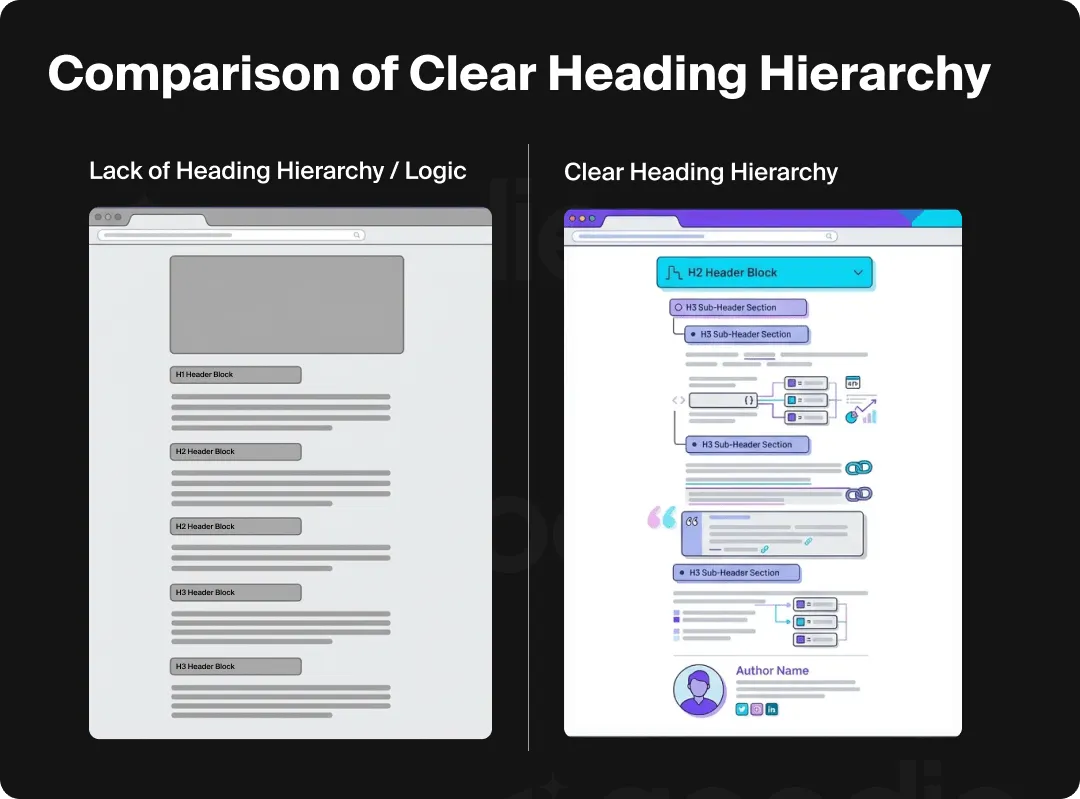
Use H1 for your title, H2 for main sections, H3 for subsections under those, and so on. Never skip levels (going from H2 to H4, for example).
Proper hierarchy helps AI systems understand the relationship between sections and extract the right level of detail for a given query.
Your heading structure should form a logical outline:
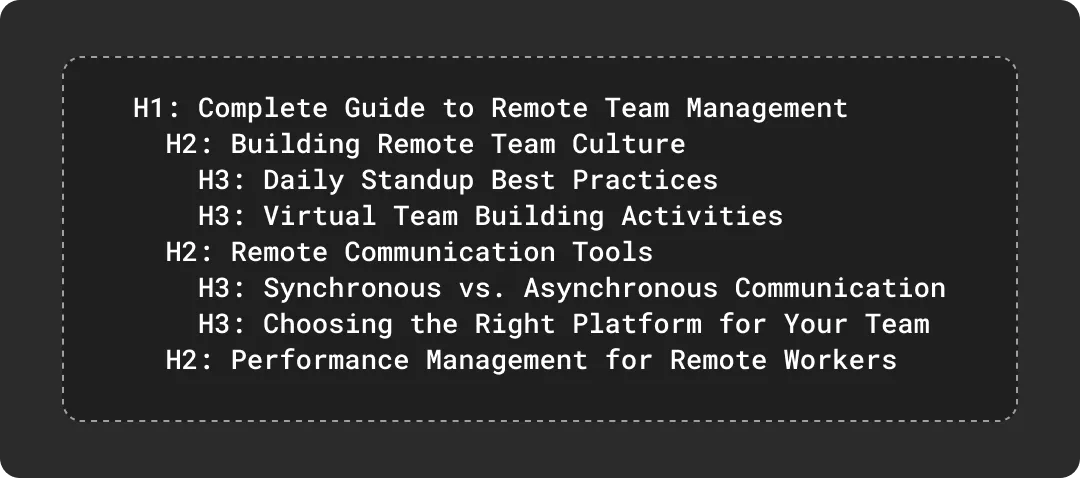
This tree structure tells AI systems exactly how your content is organized and where to look for specific subtopics.
Technical Optimizations for Better AI Visibility
Content changes alone won’t maximize your AI visibility; technical factors matter, too.
Schema Markup
Implement structured data for your content type. Article schema, FAQ schema, How To schema, and Product schema all help AI systems understand what your content is and how to use it. Google’s Structured Data Markup Helper makes this accessible even if you’re not technical.
Page Speed & Core Web Vitals
Slow pages get crawled less frequently and may be deprioritized by AI systems. Aim for a Lighthouse performance score above 90.
Mobile Experience
Training data for AI systems includes massive amounts of mobile content, explains Progress Software’s guide on AI content. If your site is unusable on mobile, you’re teaching AI to skip you.
Create an LLMs.txt File
This emerging standard lets you specify which content on your site should be prioritized for AI training and extraction. Think of it as robots.txt but for AI systems.
Link to Authoritative Sources
Outbound links to high quality, relevant sources improve your content’s trustworthiness signals. Link freely to .gov, .edu, and industry-leading sites that support your points.
E-E-A-T: The Foundation Everything Else Builds On
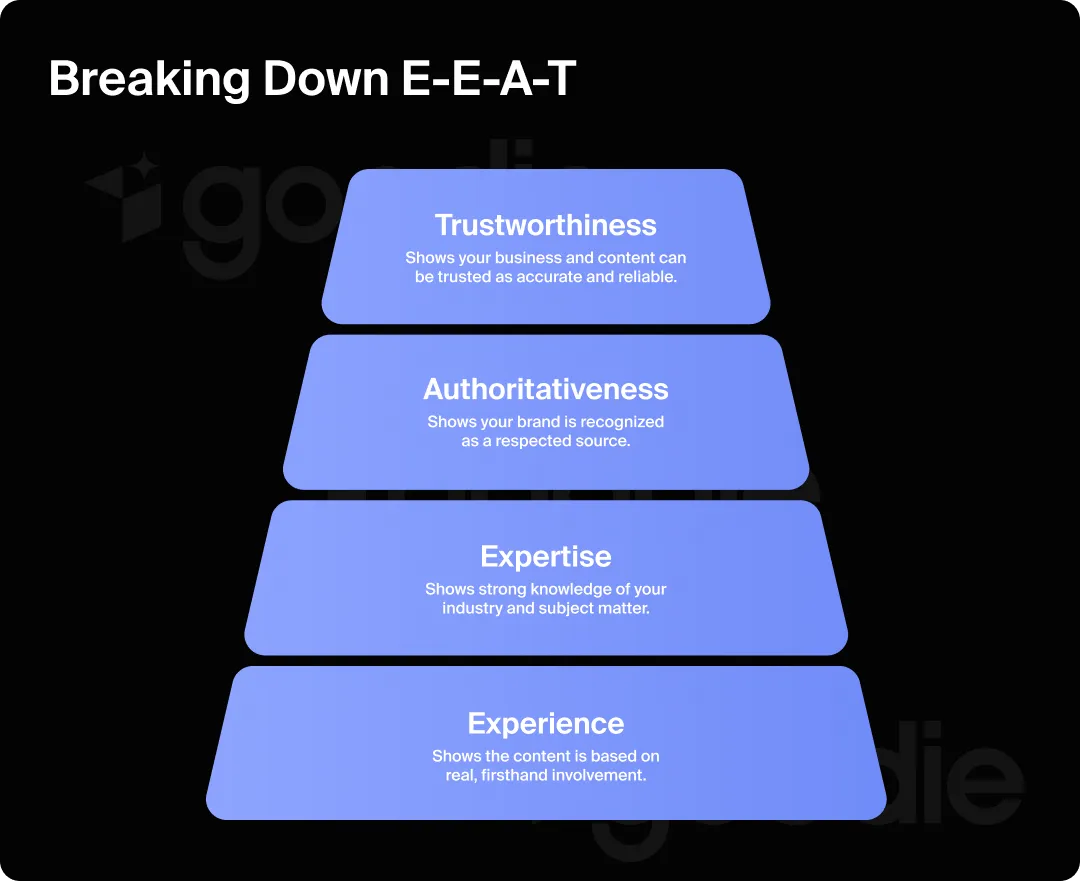
Google’s AI Overviews and other AI systems prioritize content demonstrating Experience, Expertise, Authoritativeness, and Trustworthiness, according to Google’s official guidance on succeeding in AI search.
Experience
Show you’ve done what you’re writing about. Include specific examples, case studies from your work, original research, or firsthand observations. Generic advice gets ignored.
What to include:
- Specific examples from your actual work
- Case studies with real results
- Original research or data you’ve collected
- Firsthand observations from doing the work
- Screenshots or documentation from your processes
Expertise
Clearly establish author credentials. Add author bios specifying relevant background, include bylines, link to author profiles with their work history.
Ways to demonstrate expertise:
- Detailed author bios with relevant credentials
- Links to author profiles showing work history
- Professional certifications or degrees
- Speaking engagements or publications
- Industry recognition or awards
Authoritativeness
Build topical authority by covering subjects comprehensively through multiple interlinked articles. One brilliant article in isolation carries less weight than a cluster of good articles showing depth across a topic.
How to build authority:
- Publish multiple articles on related subtopics
- Create comprehensive guides covering topics in depth
- Interlink related articles to show topical relationships
- Update content regularly to maintain currency
- Get cited by other authoritative sources in your niche
Trustworthiness
Transparent practices signal trust. Disclose when content uses AI assistance, cite sources properly, correct errors publicly when they happen, provide contact information, maintain accurate author information.
Trust signals to include:
- Clear disclosure of AI use in content creation
- Proper citations with links to original sources
- Public corrections when errors are discovered
- Contact information that’s easy to find
- Accurate, current author information
- Privacy policy and terms of service
- About page with real people and company history
Content lacking clear E E A T signals might still rank in traditional search, but AI systems are much more conservative about selecting sources. They default to content where expertise and trustworthiness are obvious.
How to Write Content That Works (Step-by-Step Workflow)
Start with research and planning before you write anything.
- Step 1: Identify the specific question or intent your content will address. Write it out as an actual question someone would ask an AI.
- Step 2: Search that question in Google, ChatGPT, and Perplexity. See what answers appear, which sources get cited, how those sources structure their content.
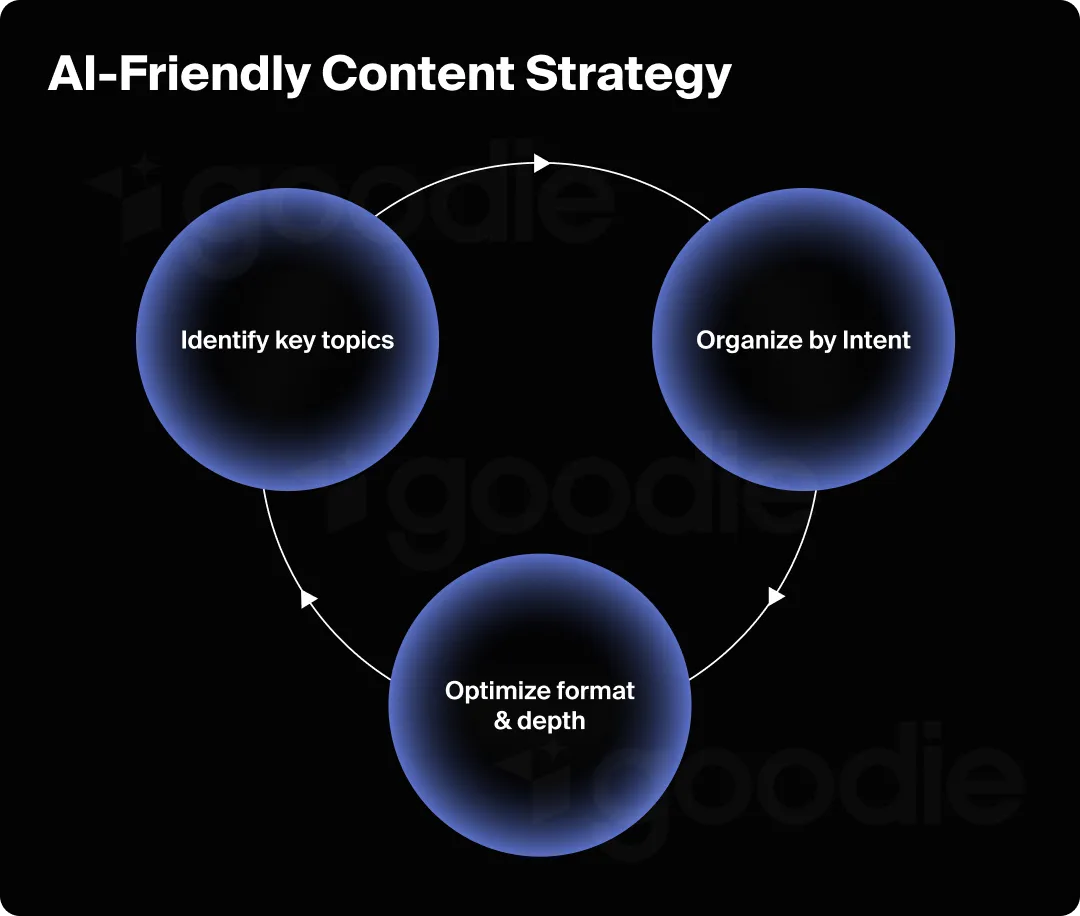
- Step 3: Build an outline using headings with questions. Each heading should map to a subquestion or aspect of the main query.
- Step 4: Write your first draft focusing on clarity and directness, advises MIT Sloan’s guidance on effective prompts for AI systems. Imagine you’re explaining this to someone who has 60 seconds and needs the core answer fast.
- Step 5: Go back and front load each section. Move the answer or main point to the first sentence of each section.
- Step 6: Break up any paragraph longer than 3 or 4 sentences. Add white space.
- Step 7: Add specific data points, statistics, and citations to support major claims. Link to sources.
- Step 8: Write 5 to 10 FAQ questions based on related queries and common follow up questions.
- Step 9: Review for pronouns and ambiguous references. Replace them with specific nouns.
- Step 10: Add schema markup, check heading hierarchy, update metadata.
This process takes longer than throwing words at a page, but you end up with content serving both human readers and AI systems effectively.
Using AI to Help Write Content (The 30% Rule)
You can use AI tools to help create content, but follow the 30% rule: at minimum, 30% of the final work should be human, edited, or enhanced, explains Coco Coders’ analysis of the 30% rule in AI content creation.
Tasks AI handles well:
- Generating initial outlines based on your brief
- Expanding bullet points into structured paragraphs
- Reformatting existing content with better structure
- Creating FAQ questions from raw source material
- Smoothing rough drafts for readability
Tasks humans must handle:
- Strategic thinking about positioning and differentiation
- Original insights from your experience
- Quality control and factual verification
- Brand voice and tone
- Final structural edits
- Adding specific data and citations
The workflow that works: brain dump your knowledge and key points, have AI structure it and fill gaps, then heavily edit to add your expertise, verify facts, and inject your perspective, according to Stellar Content’s guide on AI writing.
Raw AI output sounds generic because the model has no specific expertise or experience to draw from. Your job is to ground the content in actual knowledge and real examples that only you have.