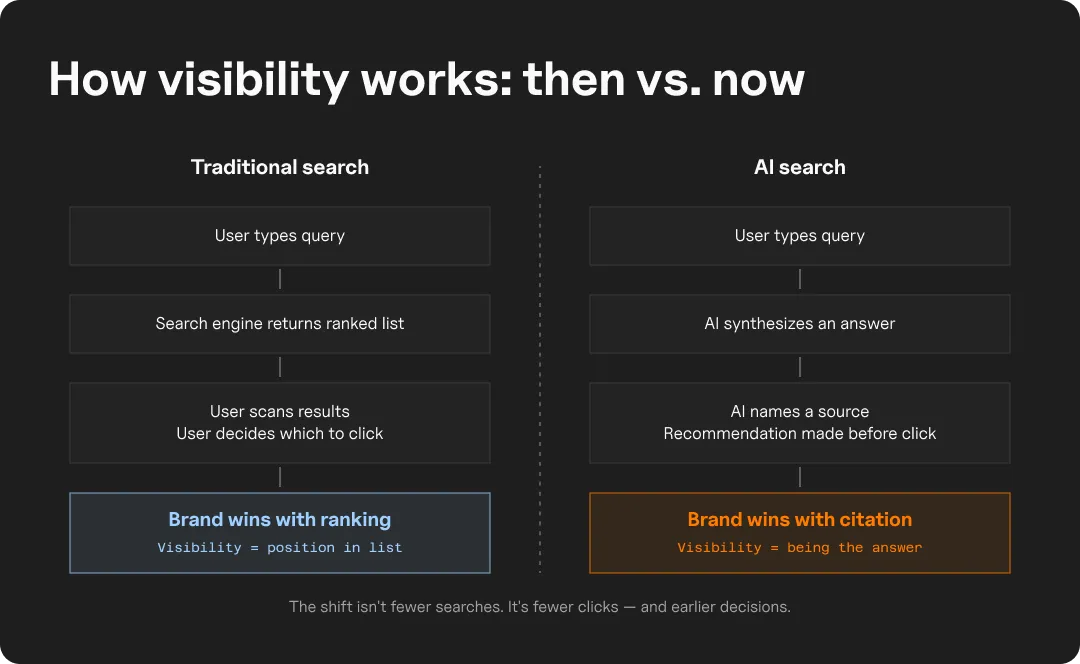
AI search isn’t coming. It’s already the default for a growing slice of queries. ChatGPT, Gemini, Perplexity, and Google’s AI Mode don’t serve lists of links and ask users to decide. They synthesize an answer and name a source. For marketers, that’s a structural change in how visibility works: ranking matters less than being cited, and being cited means the AI already made the recommendation before the user ever clicked.
That’s what AI visibility optimization is about. It’s the practice of ensuring your brand gets recommended by AI search engines (not just indexed by them) by optimizing your content, technical setup, and digital presence so LLMs surface you when users ask relevant questions, rather than a competitor. At Goodie, we treat being the answer as the goal, not just ranking for the keyword.
What Is AI Visibility Optimization?
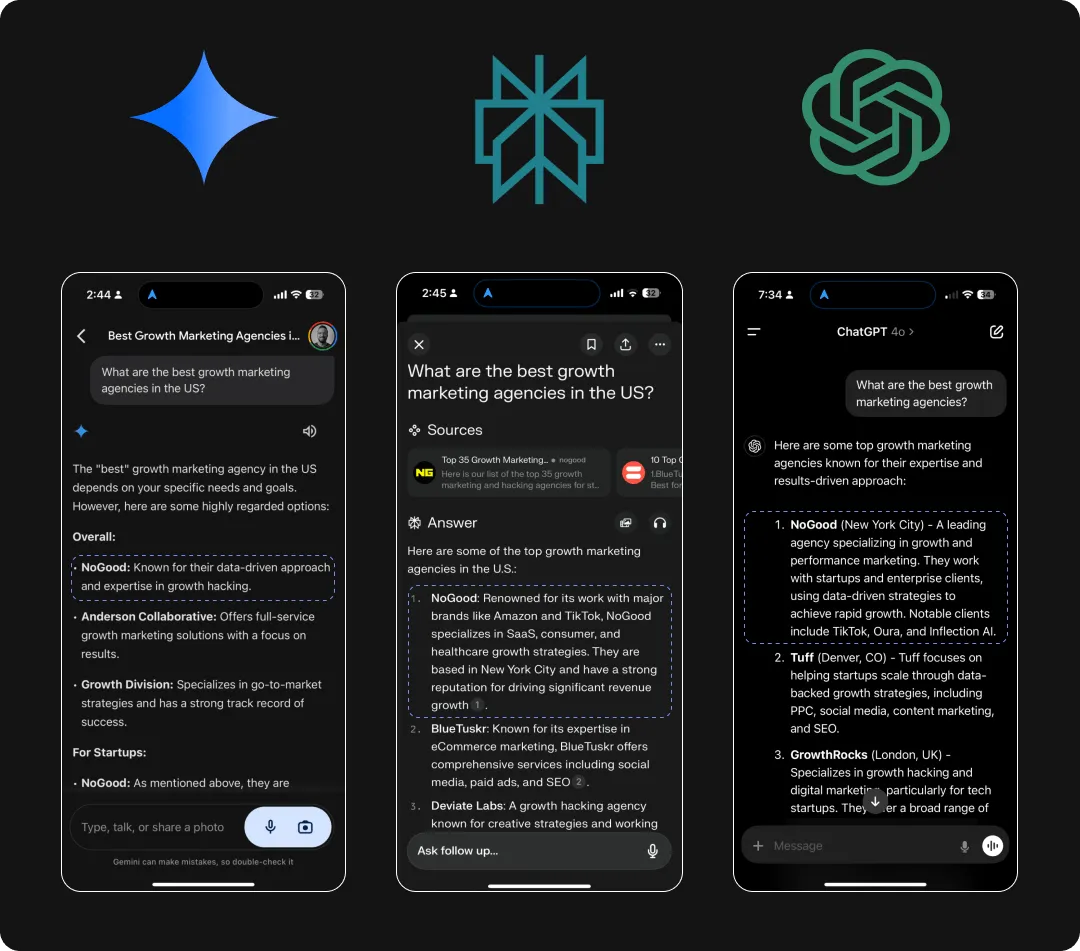
AI visibility refers to how prominently your brand appears across AI-powered search platforms, whether that’s a text-based interface like ChatGPT or Gemini, or a voice-driven one like Siri or Alexa. It’s not just about being indexed. It’s about being recommended.
AI Visibility Optimization (AIVO) is the practice of ensuring that happens consistently. That means optimizing your content, technical setup, and digital presence so that large language models (LLMs) surface your brand when users ask relevant questions, rather than a competitor’s. Where traditional SEO chases rankings in a list of links, AIVO chases the citation inside a generated answer — the moment an AI names your brand as the answer before the user has even clicked anything.
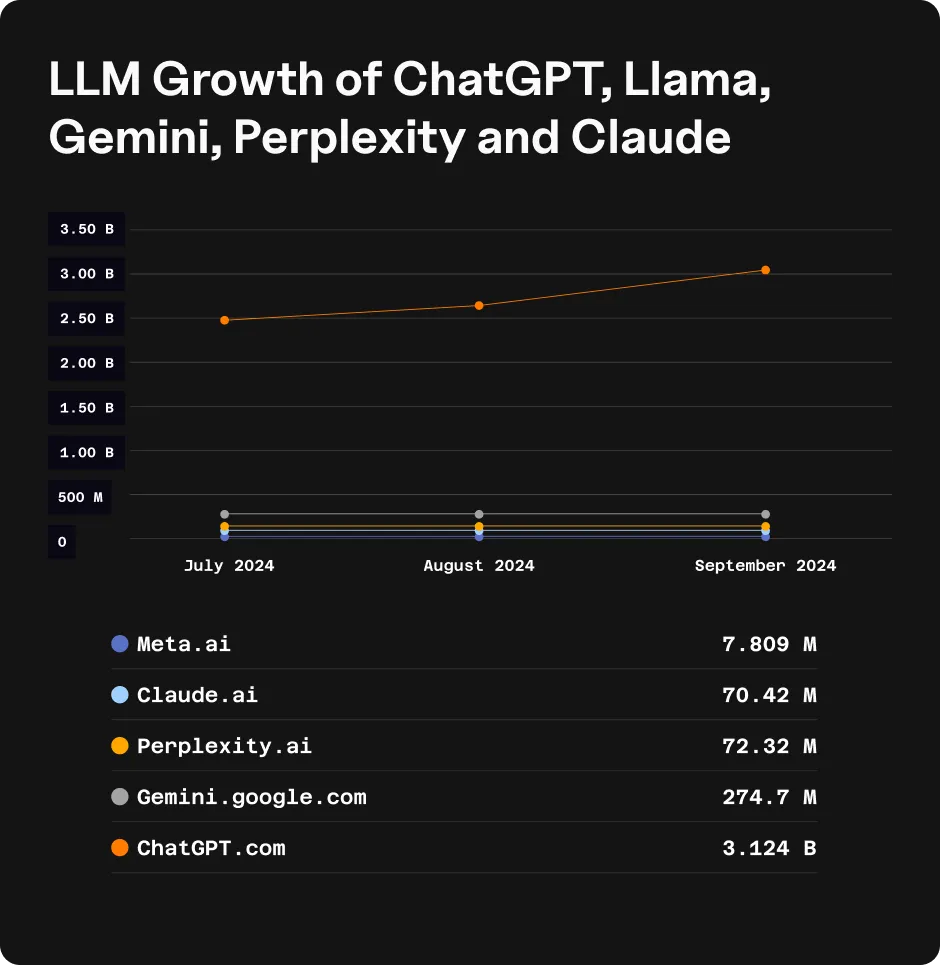
- The AI search landscape is fragmenting fast. ChatGPT’s share of B2B AI referrals dropped from 89% to 63% in eight months while Claude surged from 1.4% to 18.5%.
- AI search traffic is currently the highest-quality referral channel by per-session metrics, with visitors engaging 30% longer than those from Google Organic.
- Most brands are undercounting their AI traffic. GA4 misattributes a significant portion of AI-driven visits, meaning your true AI footprint is likely larger than your analytics show.
- AIVO builds on SEO; it doesn’t replace it. Traditional signals still matter, but AI engines weigh conversational structure, direct answers, and third-party brand mentions more heavily than keyword placement.
Why AI Visibility Matters Now
Traditional search engines index pages and serve a list. The user decides. Answer engines work differently: they interpret the full context of a query, synthesize a response, and name a source. The user doesn’t choose from a list. The AI chooses for them.
The data shows how far that shift has already gone. Gartner predicted in 2024 that traditional search engine volume would drop 25% by 2026. The reality is more nuanced: overall query volume has held up, but organic click-through rates have fallen 61% on queries where AI Overviews appear, and Google search-driven traffic to websites dropped by a third globally in 2025, with US sites down 38%. The shift isn’t fewer searches. It’s fewer clicks. And that distinction is what makes AI visibility strategy so critical right now.
That shift has real commercial weight behind it:
- AI-driven search traffic grew 155.6% in 2025
- AI-referred visits are converting at 2-3x the rate of traditional channels
- Visitors from AI search engines engage 30% longer than those arriving from Google Organic, and roughly 14x longer than visitors from LinkedIn or Reddit
Source: Goodie’s 2026 AI Search Traffic Report
The Citation Gap Is Widening
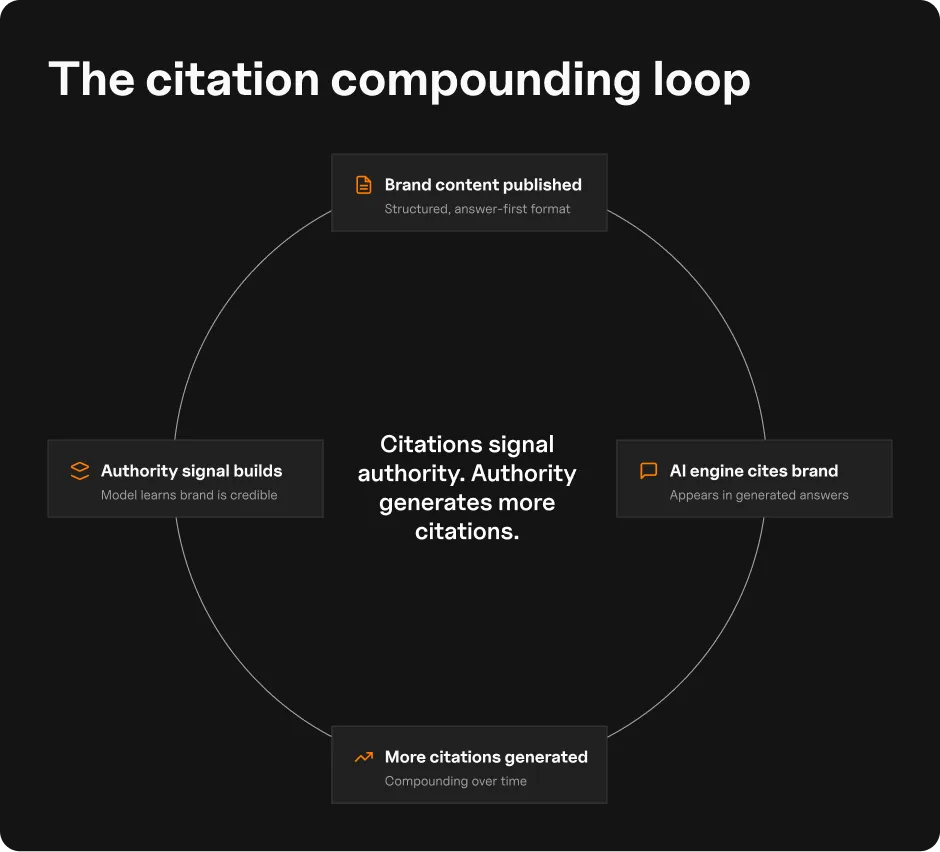
Goodie’s analysis of 58.6 million AI citations found that brands in the top quartile for web mentions receive more than 10x the AI citations of those in the next quartile down. Being cited signals authority to the model, which generates more citations in future responses. Brands cited in AI Overviews also earn 120% more organic clicks per impression than uncited brands on the same queries, meaning AI visibility lifts traditional search performance too, not just your AI footprint.
Most Brands Are Undercounting Their AI Traffic
When users copy a link from ChatGPT or Claude and open it in a new tab, the referrer is stripped. Google bundles AI Mode and AI Overviews clicks into standard organic reporting. Even a conservative estimate of 5% of direct traffic being misattributed to AI would more than double most brands’ reported AI referral totals.
This Isn’t a Signal to Abandon SEO Fundamentals
With Google’s May 2026 core update reinforcing E-E-A-T signals and AI Mode now the default experience for many queries, brands with strong authority across both traditional and AI surfaces are the ones holding their ground. AIVO is an expansion of what’s already working, not a replacement for it.
How AI Search Engines Decide What to Cite
AI engines don’t rank pages. They recommend answers. And the signals they use to decide what to surface are meaningfully different from what drives traditional search rankings.
A few factors that consistently influence AI citation:
Conversational Structure
AI models are trained to parse natural language, which means content written the way real people ask questions consistently outperforms keyword-heavy copy. Lead with the direct answer. Support it with specific detail. Don’t make the model work to find what it’s looking for.
Direct, Answer-First Content
AI systems favor content that resolves a query immediately rather than building to a conclusion. Clear definitions, comparison tables, FAQ sections, and original data all give models something concrete to pull from and cite.
Third-Party Brand Mentions
How prominently your brand appears in AI answers isn’t just a function of your own content. It’s a function of where you exist across the broader information ecosystem. Which platforms mention you, which publications reference you, and which datasets include your content all shape how models represent your brand. This is closely tied to entity optimization — how AI models identify and understand who and what you are.
Authority Signals That Transfer From SEO
Backlinks, site speed, technical health, and content quality still matter. AIVO doesn’t replace your SEO fundamentals. It adds a layer on top of them.
One thing worth being direct about: there’s no single optimization that guarantees citation. AI models update, licensing agreements shift, and platform behaviors change without notice. What works is building a content and authority footprint that’s broad enough and credible enough that models have good reason to surface you regardless of which platform a user is on.
How to Optimize for AI Visibility
AIVO isn’t a single tactic. It’s a set of practices that work together to make your brand more citable, more recognizable, and more accurately represented across AI platforms. Here’s where to focus:
- Structure Content for Direct Answers
Every piece of content should be able to answer a specific question without making the reader (or the model) hunt for it. That means leading with the answer, supporting it with specifics, and using clear headers that signal what each section covers. FAQ sections, definition blocks, and comparison tables are particularly effective because they give models discrete, quotable chunks to work with.
- Build Your Entity Footprint
AI models build a picture of your brand from everywhere you appear across the web, not just your own site. That includes third-party publications, review platforms, data aggregators, and social channels. Consistent NAP data (name, address, phone), accurate profiles across major platforms, and earned coverage in credible publications all contribute to how confidently a model represents you. Think of it as the AI equivalent of off-page SEO.
- Earn Citations in the Right Places
The sources AI models cite most frequently tend to be high-authority, frequently updated, and topically relevant. Getting your brand mentioned in those sources, whether through PR, contributed content, partnerships, or original research other publishers reference, increases the likelihood that models have encountered your brand in a trustworthy context.
- Optimize for the Platforms that Matter
ChatGPT, Claude, Gemini, and Perplexity together account for nearly 99% of measurable B2B AI referrals. Google’s AI Overviews reach over 2 billion users monthly but remain largely invisible in standard analytics. These platforms have different content preferences, different source hierarchies, and different update cycles. A platform-by-platform approach to AI visibility is more effective than treating AI search as monolithic.
- Keep Your Technical Foundation Solid
Fast load times, clean site architecture, structured data markup, and crawlability still matter. AI systems pull from indexed content, and content that’s hard to crawl is content that’s less likely to be cited. Schema markup in particular helps models understand the context and relationships within your content, not just the words on the page.
- Produce Original Data and Research
One of the most reliable ways to earn AI citations is to be the primary source for a statistic or finding that other publications reference. Original research creates a citation trail that flows through the broader information ecosystem and back to your brand. It’s the highest-leverage content investment you can make for AI visibility.
How to Measure AI Visibility
Measuring AI visibility is still more manual than most marketers would like. The most common approach is querying ChatGPT, Gemini, and Perplexity directly and tracking brand mentions by hand. This gives you a snapshot but no trend data, no competitive context, and no way to monitor changes at scale. It’s a starting point, not a strategy.
That measurement gap compounds the GA4 misattribution problem flagged earlier. If your analytics are already undercounting AI visits, manual spot-checking across individual platforms isn’t going to close that gap.
There are three levels to building a real measurement approach:
- Manual querying. Ask the major AI platforms the questions your customers are most likely to ask and note whether your brand appears in the response or citations. Useful for a baseline, not for ongoing tracking.
- Google Search Console. Monitor for AI Overview impressions, which indicate how often your content is being pulled into Google’s AI-generated answer panels.
- Dedicated AI visibility tooling. Automate tracking across all major AI engines, monitor brand mention frequency and sentiment, track competitive share of voice, and measure changes over time.
On that third point: Ahrefs launched an AI Citations index in 2025 that tracks how many times your pages are cited across AI Overviews, ChatGPT, AI Mode, Gemini, Perplexity, Copilot, and Grok in a single view. It’s a useful starting point for understanding your baseline citation footprint, though it stops short of explaining why your visibility is where it is or what would move it.
Want to see if your website is agent-ready? Find out with our free Agent Site Audit tool to see whether AI agents can navigate, retrieve, and digest your content.
Where Goodie Fits
Most AI visibility workflows still rely on manual querying, spreadsheet tracking, and educated guesses about which platforms matter. That works at small scale. It doesn’t work when you’re managing visibility across six or more AI engines, monitoring competitors, and trying to connect citation data to actual revenue.
Goodie is built for exactly this moment. It’s a closed-loop AIVO platform that tracks brand mentions, sentiment, citation frequency, and competitive share of voice across every major model, including ChatGPT, Claude, Gemini, Perplexity, AI Overviews, AI Mode, Copilot, Grok, Meta AI, Amazon Rufus, and DeepSeek.
| Feature | What It Does |
| Prompt Research | Surfaces the exact queries your customers use in AI search for real prompt patterns, not keyword guesses |
| Visibility Monitoring | Tracks brand mentions, sentiment, citation frequency, and competitive share of voice across every model in real time |
| Optimization Actions | Turns data into a prioritized action list including content, metadata, and authority fixes ranked by impact |
| Analytics & Attribution | Closes the loop GA4 leaves open, connecting AI visibility directly to conversions |
The results are measurable. Dermalogica saw a 127% increase in AI conversions and a 2.5x visibility improvement. SteelSeries achieved a 3.2x AI search conversion increase in six months, becoming the most retrieved gaming brand across three major LLMs. Rathbones saw a 106% increase in total AI citations.
AI Visibility Optimization’s Compounding Advantage
AI search has moved beyond experimentation. It’s commercial infrastructure now, and the brands holding ground are the ones that treated visibility as a measurable, manageable asset rather than a byproduct of their SEO work.
That’s the core shift AIVO represents. Not a replacement for what’s working, but an expansion of it. The same authority signals, content quality standards, and technical foundations that drive traditional search performance still matter. What’s new is the layer on top: optimizing for citation inside a generated answer, not just a position in a list of links.
The brands that get there first build a compounding advantage. Citations signal authority to the model, which generates more citations, which widens the gap between them and whoever’s next. That dynamic is already playing out. The question is which side of it you’re on.
Start with a free Agent Site Audit to see where your brand stands today.
AI Visibility Optimization: FAQs
AI visibility optimization (AIVO) is the practice of ensuring your brand is recommended and cited by AI search engines like ChatGPT, Gemini, Perplexity, and Claude, not just ranked in Google. It involves optimizing your content, technical setup, and digital presence so that LLMs surface your brand when users ask relevant questions rather than a competitor’s. At Goodie, we treat being the answer as the goal, not just ranking for the keyword.
They share the same foundations: quality content, authoritative backlinks, and technical site health. Where they differ is in what success looks like. Traditional SEO optimizes for a position in a list of links. AIVO optimizes for the citation inside a generated answer, where the AI has already made the recommendation before the user clicks anything. AI engines also weigh signals differently: conversational structure, direct answers, and third-party brand mentions carry more weight than keyword placement alone.
There are three levels. First, manually query ChatGPT, Gemini, Perplexity, and Claude with questions your customers actually ask and note whether your brand appears. Second, monitor Google Search Console for AI Overview impressions. Third, use a dedicated platform like Goodie to automate tracking across all major AI engines, monitor brand mention frequency and sentiment, and measure competitive share of voice over time.
One important caveat: standard GA4 data significantly undercounts AI traffic, so your true AI footprint is likely larger than your analytics currently show.
At minimum, optimize for ChatGPT, Claude, Gemini, and Perplexity, which together account for nearly 99% of measurable B2B AI referral traffic. The landscape is shifting fast, though: ChatGPT’s share dropped from 89% to 63% in eight months while Claude surged from 1.4% to 18.5%, meaning single-platform strategies are already losing coverage. Google’s AI Overviews represent the largest surface by user reach, over 2 billion monthly users, but don’t appear separately in standard analytics, making them easy to underestimate.
Frequently. Authoritas found that 70% of pages ranking in AI Overviews change within a two-to-three month window, and that AI Overview rankings shift independently of organic results. This is why ongoing monitoring matters more than one-time optimization, and why tools that track changes over time are more useful than periodic manual spot-checks.