Your best-performing page can still get skipped by ChatGPT, Perplexity, or Google’s AI Overviews. Not because it ranks poorly. It’s because the model can’t verify who wrote it, can’t extract a clean answer from it, or can’t confirm the claims inside it are backed by anything real.
That’s the actual mechanic behind AI citations and AEO content. Models don’t reward the most polished paragraph. They reward the source they can identify, trust, and stand behind. Getting cited means engineering for that trust directly: verifiable authorship, answer-first structure, sourced claims, and markup a model can parse without guessing.
That’s what Goodie’s Content Engine (part of the Content Studio suite) is built to produce. Instead of a blank prompt box, it runs content through the same signals AI models check before citing a source, then hands you a draft built to those specs from the first pass.
Here’s what that looks like end-to-end, using a real example built inside the tool.
What Makes Content “Citation-Worthy” for AI?
Citation-worthy content gives an AI model everything it needs to trust and extract an answer without leaving your page: a verifiable author, a direct answer near the top, claims backed by sources, and markup that spells out what the page is about instead of making the model guess.
That’s a different bar than ranking well. A page can hit every traditional SEO checkbox (keyword in the title, solid backlinks, clean meta description) and still get passed over in an AI Overview because none of those signals tell a model whether to trust what’s on the page.
The mechanics that show up across every AI answer engine’s citation behavior are consistent:
- Answer-first structure: the direct answer sits in the first two to three sentences, not buried after a windup paragraph
- Clear entity definitions: your brand, product, and category are named consistently, not described a different way on every page
- Source citations: claims are backed by a specific reference, not asserted on authority alone
- Schema markup: structured data tells a model what a page is (an article, a person, a product) instead of leaving it to infer
- Freshness: recently updated or published content signals an active, maintained source
- Question-based formatting: headers phrased as the questions people actually ask, with the answer immediately underneath
Individually, none of these guarantee a citation. Together, they’re what separates a page a model can structure content around from one it has to work to interpret. The rest of this piece shows what building for those signals actually looks like in practice, not just what to aim for.
A Disclaimer on AI-Generated Drafts
Before we dive into our walkthrough, we’re compelled to emphasize the fact that nothing replaces a good (human) editor. Goodie’s Content Engine helps users get a structurally sound, citation-ready draft that hits the answer-first structure, entity, clarity, query-focused, and schema signals that models look for before citing a source.
It’s up to you to confirm all claims within the piece are accurate, brand-aligned, and that the overall piece is human-centered.
Inside Goodie’s Content Engine: Building a Citation-Ready Draft
Here’s what building for those signals looks like in practice, using a real example generated inside the tool, start to finish.
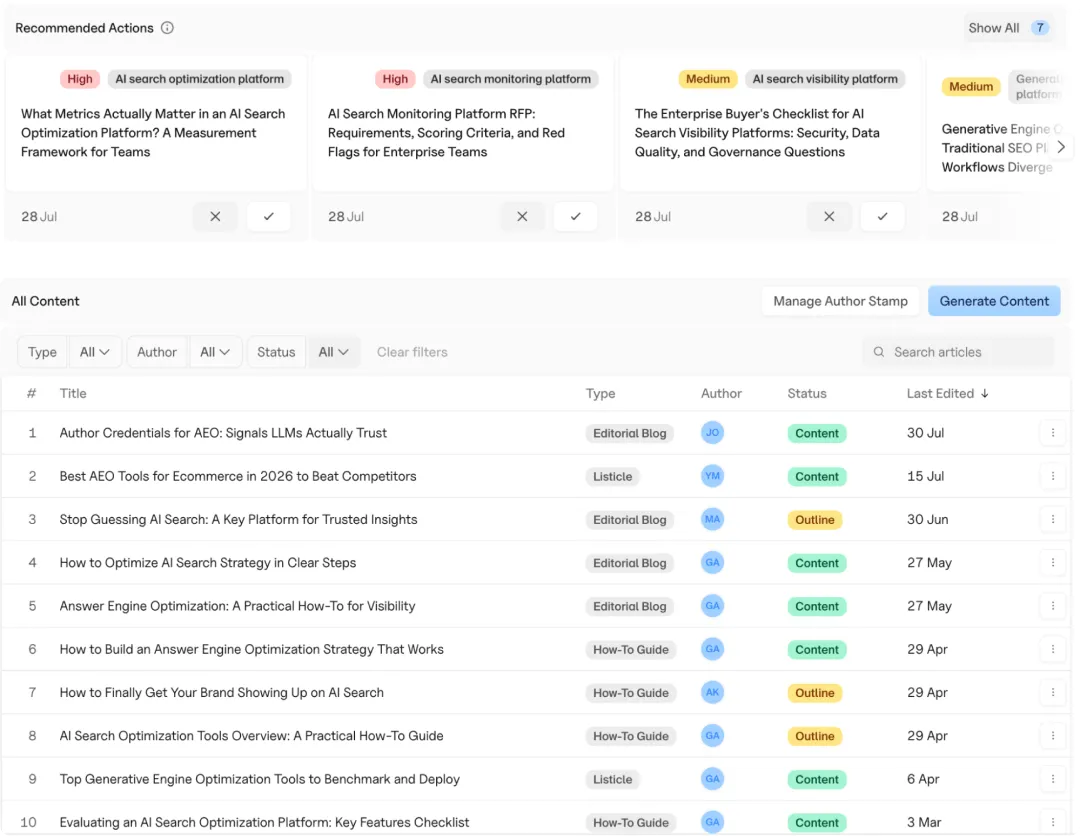
The Content Engine lives under the Actions tab in Goodie. From there, you can either work off Recommended Actions (AI-generated topic suggestions based on your real-time AEO visibility data, prioritized from High to Low) or start from scratch with Generate Content. This walkthrough starts from scratch.
Step 1: Configure and Define the Topic
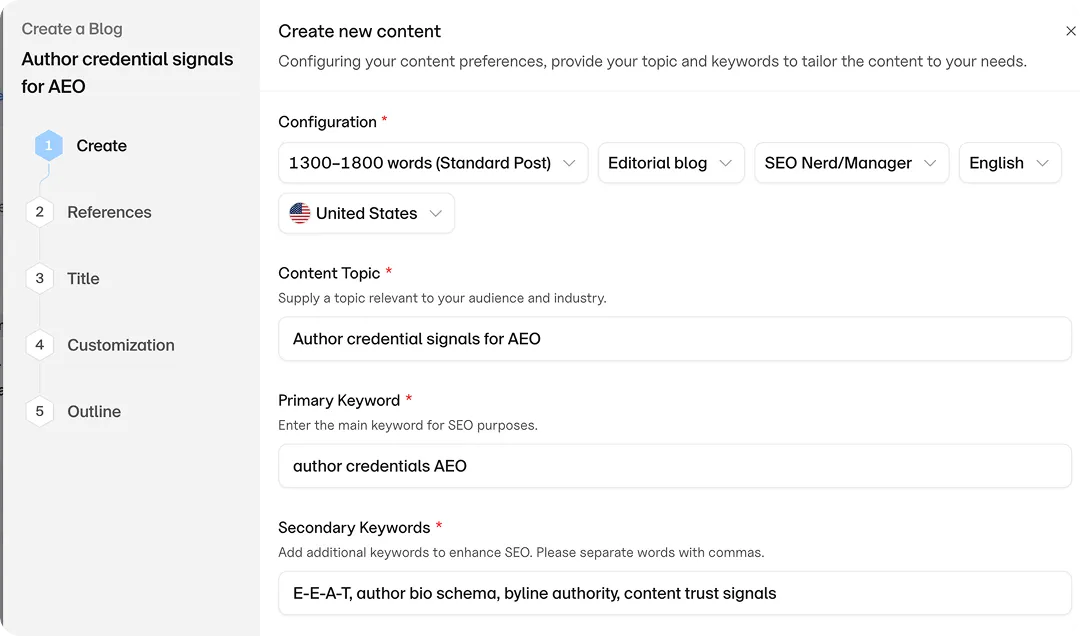
The first screen sets the shape of the piece before any writing happens: word count, content type, persona, language, and country, then the actual topic, primary keyword, and secondary keywords. Three checkboxes round it out: generate FAQs automatically, exclude your own domains from suggested references (so the tool doesn’t cite you as a source for your own claims), and apply Author Stamp, the feature that references a specific author or brand’s writing style.
For this example: an editorial blog, 1,300–1,800 words, SEO Nerd/Manager persona, topic “Author credential signals for AEO,” primary keyword “author credentials AEO.
Step 2: Select Reference Sources
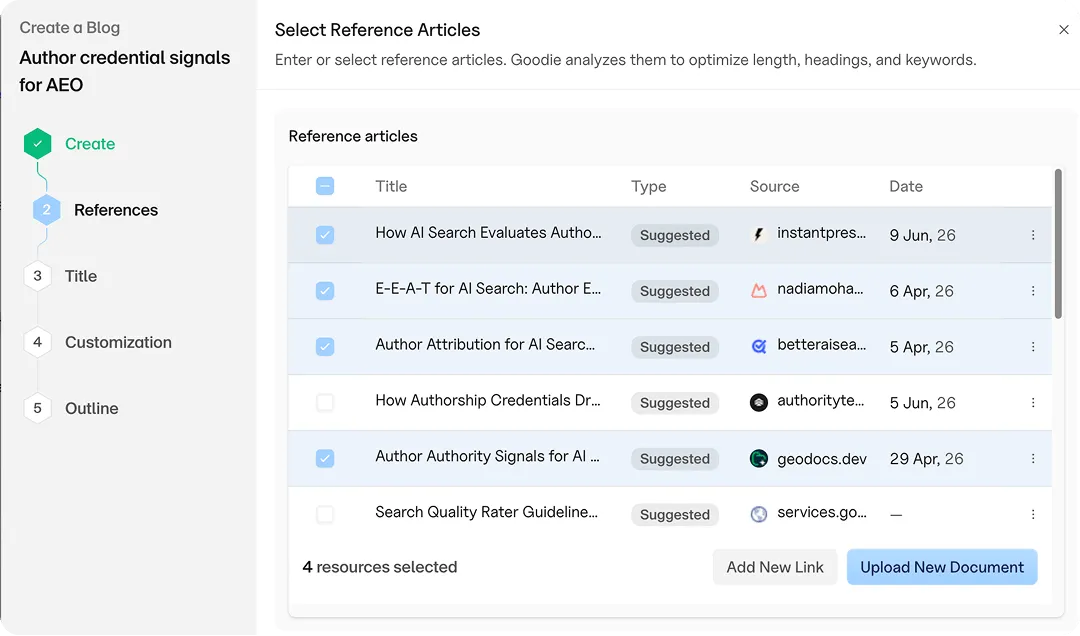
Next, the Goodie surfaces suggested reference articles pulled from real sources relevant to the topic. You can select up to four, add your own links, or upload a document instead. This is the step that keeps the draft grounded in something other than the model’s own training data.
Step 3: Choose a Title
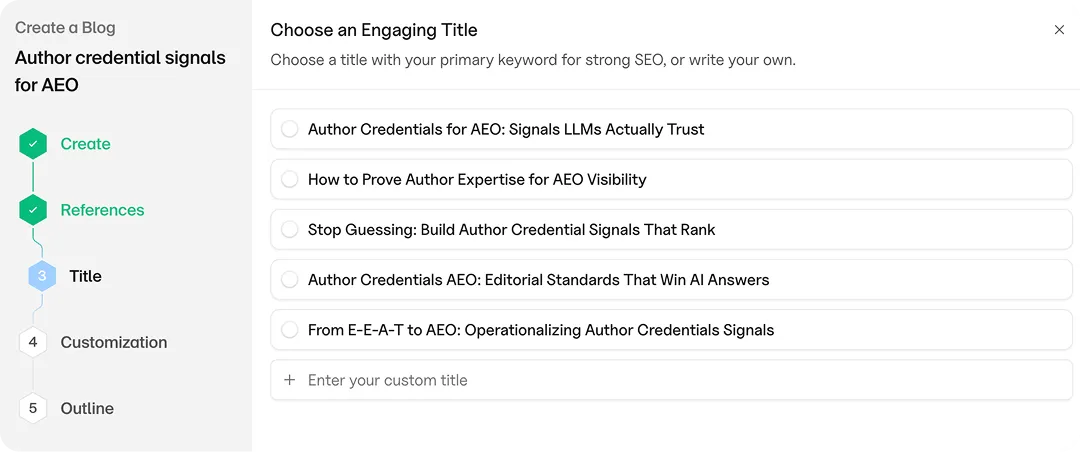
The tool generates five title options built around your primary keyword, or you can write your own. For this example: “Author Credentials for AEO: Signals LLMs Actually Trust” was chosen.
Step 4: Review & Edit the Outline
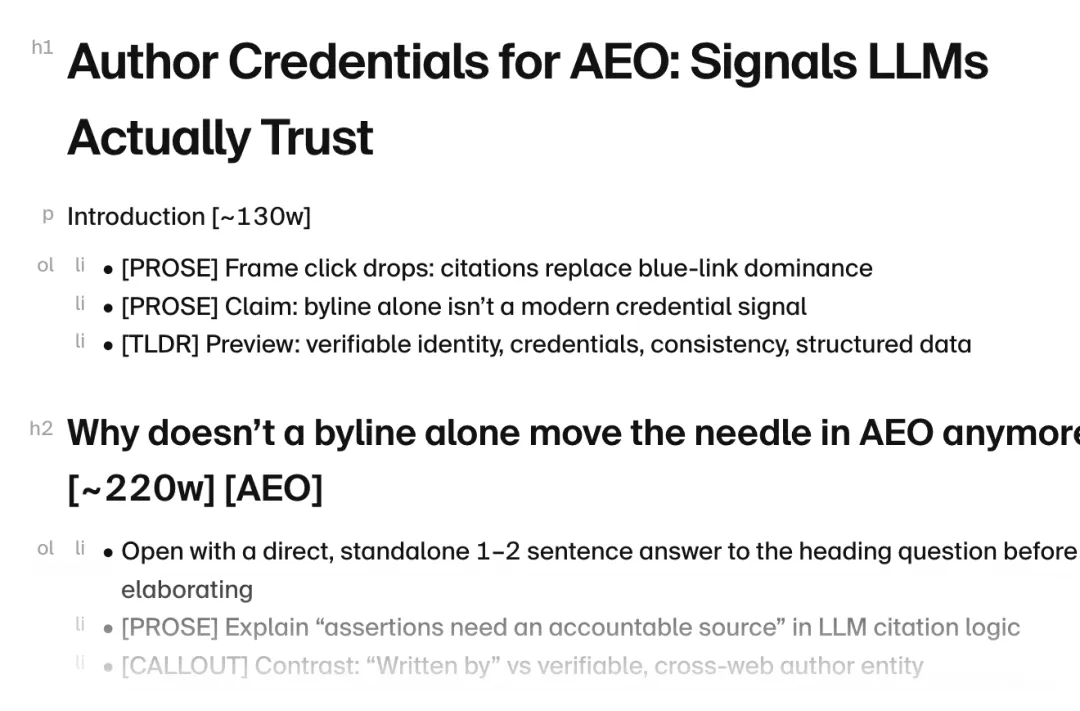
Once the tool processes all of the submitted information, it provides an outline. Goodie reviews your selected references and builds a structured outline around your topic and settings. Once it lands, you get a full section-by-section breakdown before any prose is written: estimated word counts per section, structural tags marking what each block should be, and a standing instruction under every H3 to answer the header’s question directly in the first sentence before elaborating.
You can edit anything here before generating the draft. Reviewing this step is important if you want the output to say something specific instead of something generic.
The Guidelines field is where you feed the tool an actual point of view, a stat, a directive, anything that gives the draft a stance instead of a summary. It’s the same principle behind net information gain: content that only restates what’s already ranking doesn’t add anything worth citing. The internal links field lets you manually pair the draft with existing pages you want it to reference.
Step 5: Review, Refine, & Publish
Hitting generate from the outline runs through four stages: Loading Blueprint, Generating Draft, Applying Your Voice, Polishing Output. That third stage is where Author Stamp gets applied, if you turned it on back in Step 1. It didn’t run in this example, which is a good reminder that voice-matching is opt-in, not automatic.
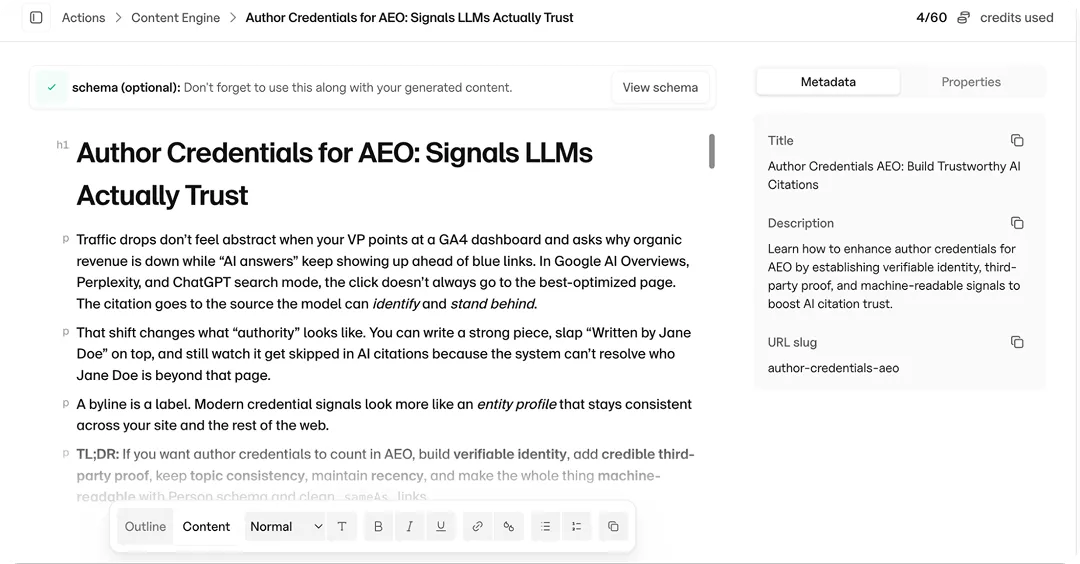
What lands afterward is a full draft alongside a schema reminder (with a “View schema” option so you actually use the structured data the tool generated, not just the prose) and two side panels: Metadata, which shows a search-optimized title and description distinct from your on-page H1, plus the URL slug, and Properties, which shows word count, persona, model used, keywords, and Author Stamp status at a glance.
You can edit directly in the window or copy the draft out to Word or Google Docs for your existing review process.
This is also the step that matters most, and it’s worth being honest about why.
In this example, the draft came back structurally strong: question-based H2s, a working TL;DR, schema recommendations, entity-consistency framing that mirrored the topic itself. But it also attributed specific statistics (citation-rate percentages, timelines to impact) to the reference sources it pulled from—the kind of numbers that need a human to verify before anything ships.
That’s the reason why a review step is essential. A draft can hit every structural signal a model checks for and still need someone to confirm the claims inside it are real. That’s the same standard this entire piece has been describing: citation-worthy content earns trust by being both structurally sound and factually accountable. Goodie gets you to the first part fast. The second part is still your job.
Start Building Content Models Actually Cite
The signals that get content cited aren’t a mystery: verifiable authorship, answer-first structure, sourced claims, and markup a model can parse without guessing. What’s harder is doing all of it consistently, on deadline, across every piece your team ships.
That’s the gap Goodie’s Content Engine closes. It builds each draft around those signals from the outline stage forward, so the structural work is done before a writer opens the document, and the review step becomes about verifying claims and sharpening the argument instead of retrofitting schema and entity consistency after the fact.
The example in this piece took five steps and produced a full draft with working schema, structured entity signals, and a citation-ready format. What you do with the review step after that is what actually earns the citation.
Ready to See How Our AEO Content Studio Can Get Your Brand Cited?
Writing Citation-Worthy Content with Goodie: FAQs
Citation-worthy content pairs verifiable authorship with answer-first structure, sourced claims, and schema markup a model can parse without inference. Structure gets a page noticed. Sourced accuracy is what earns the citation.
Yes, and the reason is specific: a generated draft can satisfy every structural signal a model checks for (schema, entity consistency, question-based headers, answer-first sections) while still attributing statistics or claims to sources that haven’t been verified. Structure is something a tool can produce reliably. Whether a specific number or claim inside that structure is actually accurate still requires a person to check it against the source. Publishing a structurally perfect draft with an unverified stat doesn’t just risk a factual error; it undermines the exact trust signal the content was built to earn in the first place.
Schema markup isn’t required for a citation, but it significantly improves the odds. Structured data tells a model directly what a page is (an article, a product, a person) instead of forcing it to infer it from unstructured text. Article schema, author/Person schema, and FAQ schema are the most directly relevant for AEO, since they map to exactly the signals models weigh most: who wrote this, what is this page about, and does it answer a specific question.
Existing content can usually be optimized without a full rewrite. The highest-impact fixes are structural: adding a direct answer near the top of each section, adding or correcting schema markup, tightening entity consistency (naming, author attribution), and backing existing claims with a specific source instead of an unsupported assertion. A rewrite becomes necessary when the underlying content has no real point of view or original insight to begin with. Structure can be retrofitted, but a missing perspective can’t.