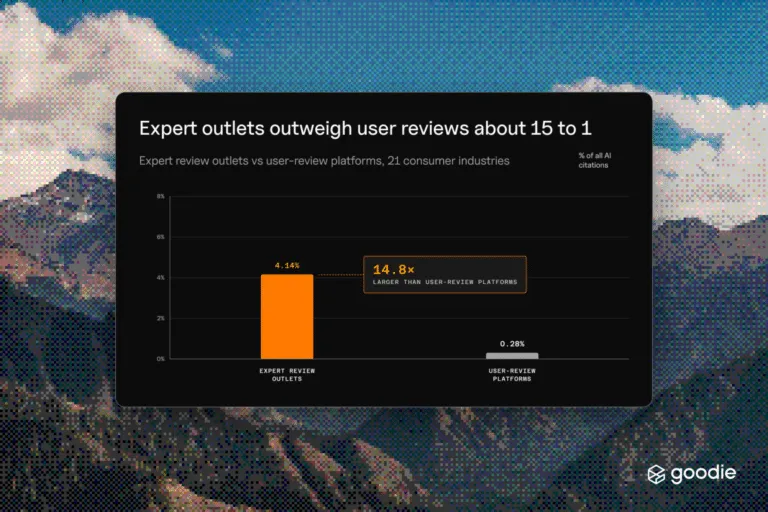
Earned media accounts for 84% of all citations in AI answers, according to Muck Rack’s May 2026 analysis of more than 25 million links across ChatGPT, Claude, and Gemini. Paid and advertorial content accounts for just 0.3%. That puts the question of which specific domains AI engines cite about your brand squarely inside PR’s wheelhouse, even though most brands and marketers are still focused on that 0.3% sliver of the citation pie. This piece walks through how to pull the sites AI actually cites when it answers questions about your brand, and what to do once you have the list.
TL;DR
- An AI citation source audit identifies which domains AI engines pull from when answering questions about your category, then sorts them by type.
- Goodie’s command center gives you access to your brand’s visibility score, share of voice, most cited domains, and citation share broken out by source type.
- Goodie’s Monitor suite takes citations beyond the domain level to specific URLs and tracks how sentiment moves across models.
- Optimization Actions ranks the gaps by projected impact, with an earned media category that names publications and journalists.
What Is an AI Citation Source Audit?
An AI citation source audit identifies the array of domains AI engines cite when they answer questions about your category.
The unit of analysis is the cited domain, which is what separates an audit from a rank check or a mention count. Those measure your brand. An audit measures the sources feeding the answer, and that shift is what makes the output usable by a comms team.
A domain list can be sorted. Group the results by source type and the same list starts assigning work:
- Press and trade publications are a media relations target list, ranked by how often each outlet actually feeds AI answers in your category.
- Review and listing sites are a partnerships and outreach job, since comparison pages get written with or without your input.
- Community platforms show where opinion about your category forms before it reaches a publication.
- Your own domains show how much of your visibility rests on pages you control.
The proportions between those groups tell you where your category’s citation weight sits. Some categories run on trade press. Others run on affiliate roundups or on a handful of subreddits. Built this way, the audit gives you a working picture of where AI answers in your category come from, which is how you plan earned media for an AEO strategy.
Why Does This Audit Belong to PR and Comms Teams?
Because the majority of domains AI engines pull from are ones a comms and PR team can influence, and only one sits under a web team’s control. That’s a continuation of the shift LLMs have forced on PR’s job more broadly: the coverage a team earns now shapes what AI says about a brand, not just what a journalist writes.
Goodie’s analysis of more than 58.6 million citations across ChatGPT, Gemini, Claude, and Perplexity found that roughly 74% of the most-cited domains fall into tiers where marketing and PR activity can affect citation share. What remains is the academic, scientific, and medical tier, where citations accrue through peer review and institutional standing. Most campaigns do not reach that tier. The other three quarters respond to work PR teams already do.
There is an additional finding in the citation data that argues for this PR-for-AEO measurement: between two study windows six months apart, eight major news outlets dropped out of the top 20 most-cited domains entirely, with gaming and tech review sites taking their places. The set of publications worth pitching shifted inside two quarters. A team working from last year’s media list has no way to know which half of it went cold.
How Do You Run a Manual AI Citation Audit?
Run a fixed set of category questions through each engine in a clean session, then log every domain that appears in the citations. Below is a method, along with some caveats to watch out for.
Build the Prompt Set
We recommend starting with fifteen to twenty questions a buyer would ask before they know your brand exists. Branded questions can heavily skew the data, so avoid those. Cover category questions (“best project management software for agencies”), comparison questions (“Asana vs Monday for creative teams”), and problem questions (“how do I stop my team missing client deadlines”). Save brand-name prompts for last, since asking an engine about you by name pulls your own site into the results and tells you little about discovery.
Open a clean session on each platform. Every major engine has one, under a different name:
- ChatGPT calls it Temporary Chat. Skips saved memories, creates none, stays out of your history.
- Gemini calls it Temporary Chat as well. Excluded from Recent Chats and from Gemini Apps Activity, held for 72 hours.
- Claude calls it an incognito chat. Does not use existing memory and is not included in future memory entries.
- Perplexity calls it Incognito Mode, reached from the profile menu.
Run the Same Prompts on Every Engine
Goodie’s AEO Periodic Table V4 found that each engine weighs author authority and freshness differently, among other factors. Holding your prompts constant is what lets you see those differences in your own results. Change the wording between platforms and you cannot tell whether a domain appeared because of how that engine sources information or because you asked a different question.
The Limits of a Manual Audit
Running this process once gives you a baseline, and you can repeat it as a visibility process, but four things get in the way of running it well:
1. Memory
Temporary Chat and things of that nature do not use existing memories or create new ones. It does, however, still follow your custom instructions if you have them enabled, so check those before you start. A saved instruction that tells the model to favor certain sources, compare against specific competitors, or answer in a particular format will quietly bias every response in the audit, and that bias won’t show up anywhere in the transcript. Log out of any account-level personalization you can’t disable, and treat a prompt run through someone’s personal, logged-in account as a red flag rather than a shortcut.
2. Location
Results shift by geography and language. Ask the same category question from a UK IP versus a US one, or in French versus English, and the citation set can look meaningfully different, sometimes pulling in local publications and review sites the other market never surfaces at all. One analyst running prompts from one login in one country produces one slice of the picture, with no way to tell from that single run whether it’s representative of your other markets or an outlier. A brand operating across several regions needs the audit repeated per market and per language, not a US read assumed to hold everywhere.
3. Variance
Answers move between runs, and not by a small margin. Goodie’s own citation research logged sixteen distinct sourcing changes across five AI models in a seven-month window, five of which reversed an earlier change, none of which were announced by the AI companies themselves. A single pass captures one sample of a system that moves like that. A stable read requires running each prompt repeatedly, ideally three to five times, on every engine you care about, then reading the pattern across runs rather than trusting any single answer.
You can prompt every day the way AEO software providers do, but that’s too time-consuming to sustain by hand. Prompt more sparingly, and you’ll miss the sourcing shifts that complete inside a two-to-three-week window and reshape your citation mix before your next scheduled check.
4. Time
Twenty prompts across five engines at five runs each comes to 500 sessions, transcribed by hand (or by AI) into a spreadsheet, repeated weekly or monthly to catch turnover. Scripting the querying step against each platform’s API cuts collection time, but it doesn’t touch the slower bottleneck: someone still has to read each response, extract every cited domain, classify it by source type, and reconcile inconsistent naming (is “wsj.com” the same row as “The Wall Street Journal”) before the data is usable. That classification pass is manual regardless of how the prompts get sent, and it’s the part that doesn’t scale.
All in all, a software solution gets the best results at this scale of tracking. A manual audit is possible but inadvisable.
What Does Goodie Show You in the First Five Minutes?
Goodie’s command center opens on four numbers that together answer the audit question.
What Is On the Main Goodie Command Center?
Four key PR-for-AEO metrics:
- Visibility score. Where your brand stands overall across tracked models.
- Share of voice. A chart splitting mention share between you and your named competitors, so you can read what percentage of the category conversation each brand holds.
- Most cited domains. The ranked list of domains producing citations for your prompt set, each tagged with its citation type.
- Citation share. The overall split across source types for your category.
The citation type tags are what turn this from a general analytics view into a PR view. A ranked domain list tells you where citations come from. Tagging each domain by type tells you whether earned coverage is carrying your category and which specific publications are doing the carrying. Across Goodie accounts, earned sources typically lead that split, often above 80% of citation share.
Where Does the Prompt Set Come From?
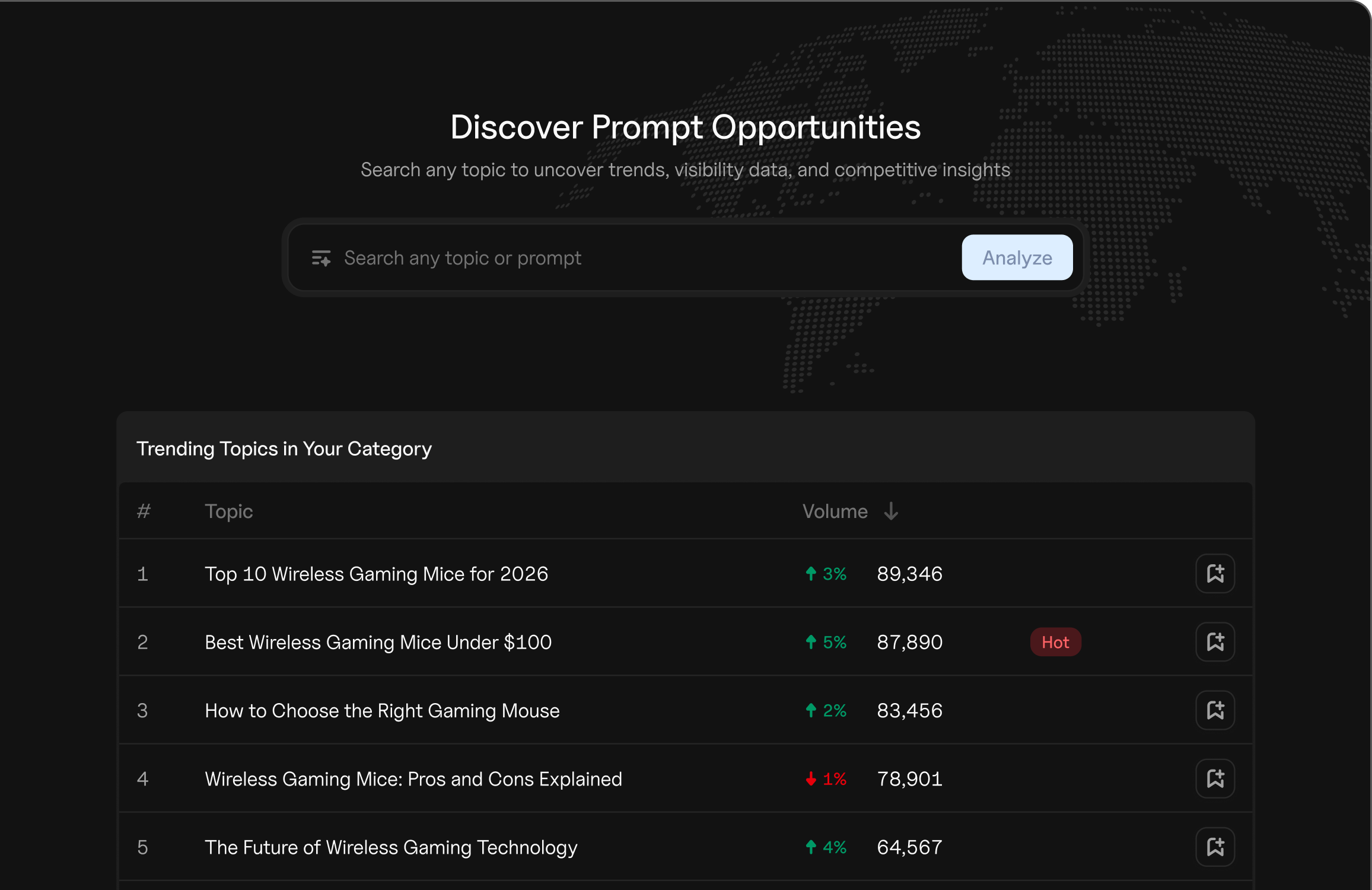
From what buyers are asking. Prompt Research tracks conversational queries across the major AI platforms and groups them into clusters with conversation volume, seasonality, and intent signals attached. That replaces the guesswork of a hand-written prompt list, which tends to reflect how a marketer talks about the category rather than how a buyer does.
From Domain to Cited URL: How Does It Work?
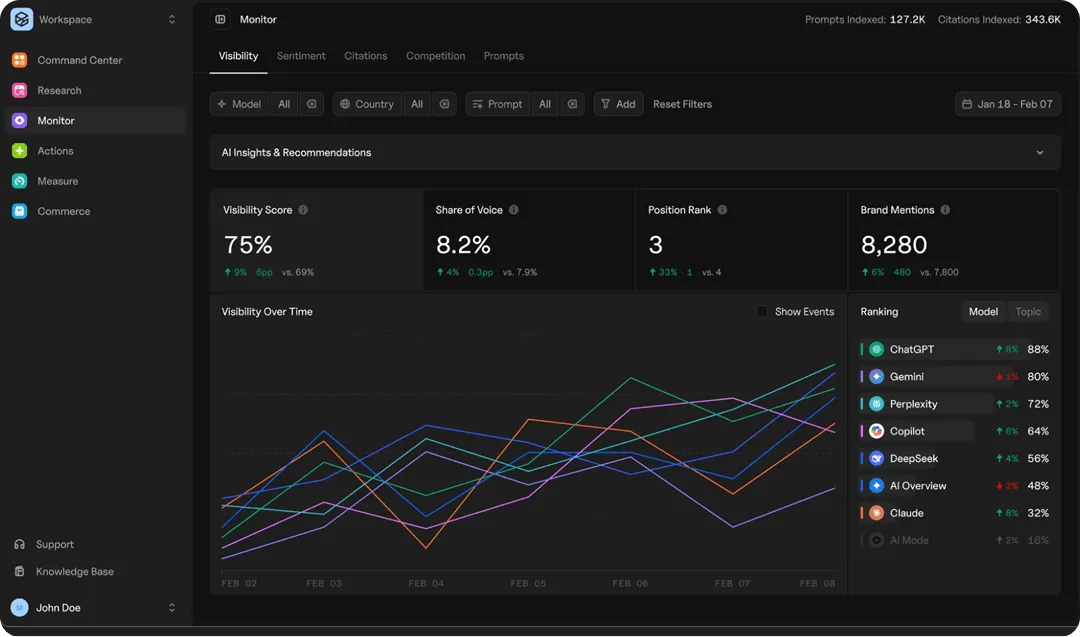
The Monitor section breaks citations down past the domain to individual pages and shows which brands appear on each one.
Citations
Starts with top domains, opens into the top URLs inside each domain, and shows which brands are mentioned on those URLs. This turns a domain-level finding into an outreach target. You learn that a particular trade publication drives citations in your category, which articles on that publication are producing them, and whether competitors appear inside those articles while you sit outside. That gives you a pitch with a named target and a stated reason. You just need to find your angle and personalize it.
Sentiment
Tracks how models describe your brand rather than how often they name it. Visibility Monitoring updates daily across ChatGPT, Gemini, Perplexity, Claude, and the other major models, so a comms team can watch framing move week to week. A brand cited constantly and described badly has a problem that mention volume will never surface.
Performance also segments by geography, persona, model, language, and topic category. That segmentation is the part a manual audit cannot account for, since one person running prompts from one login in one country produces one slice of the picture and no way to know how representative it is.
How Do You Turn Citation Gaps Into a PR Plan?
Work backward from the URLs. Once the audit has surfaced the specific pages feeding AI answers in your category, you have bylines, editors, and review site contacts attached to each one, which is a media list built from citation data rather than from a database.
From there, the work looks like communications work. Two paths, depending on what the page says about you.
Alter the Source
The page describes you inaccurately, or lists your category and leaves you out. That is a correction pitch or an inclusion pitch, aimed at a named writer, with a specific reason the piece is incomplete as it stands. Review sites and roundups often have update cycles, so timing an outreach around a refresh tends to work better than a cold ask.
Replace the Source
The page is fine and cannot be moved, or the outlet has no reason to revisit it. The play then is publishing or placing something stronger on the same topic, in a venue AI engines already cite for your category. You are competing for the citation slot rather than for the page.
Which path you pick depends on the sentiment read and on whether the URL belongs to a domain you can reach. A trade publication that has covered you before is an alter target. A three-year-old affiliate roundup with no editorial contact is usually a replace target.
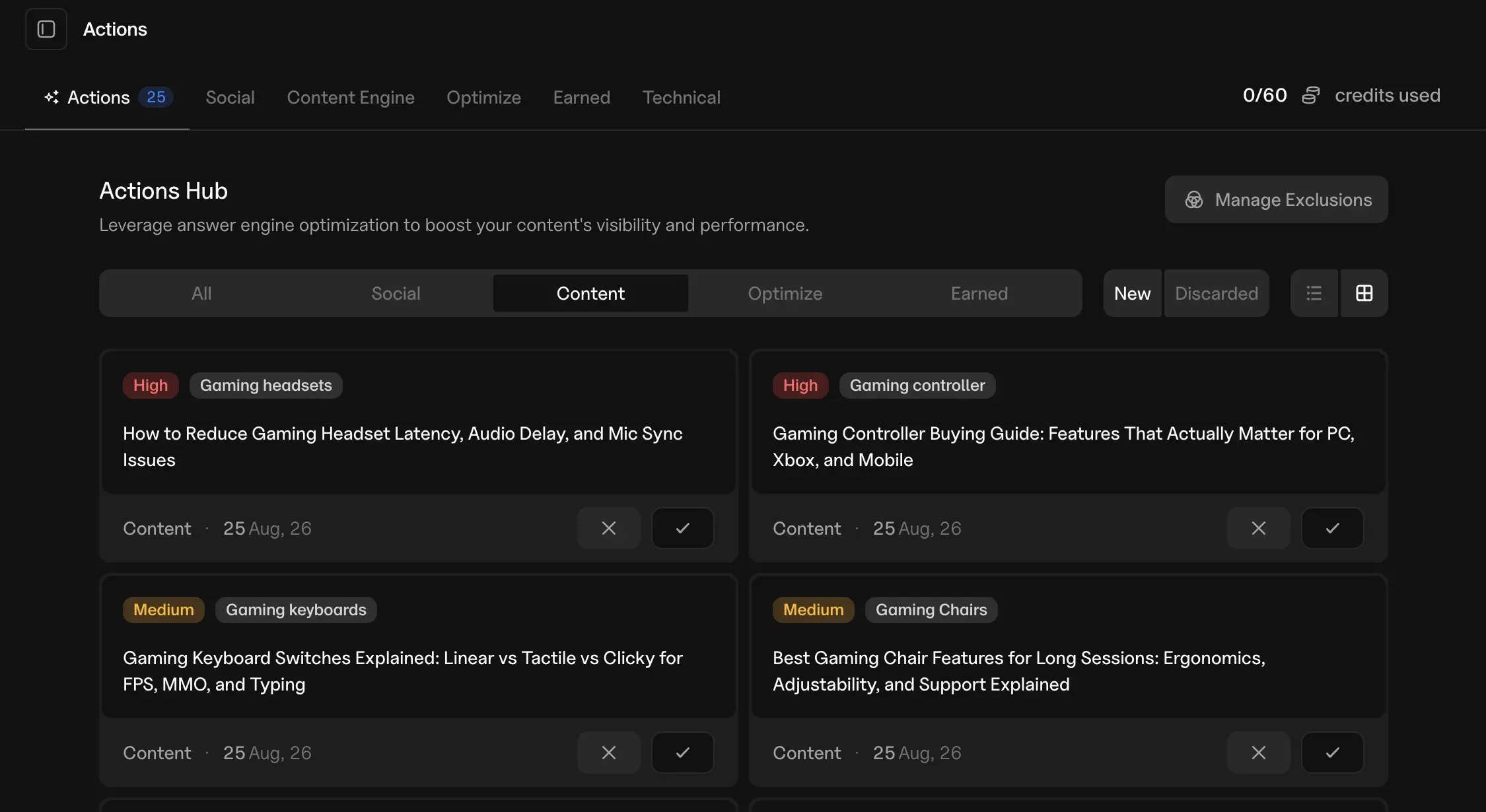
Optimization Actions shortens this. It ranks the gaps by projected impact, calculated from competitive gap size, current mention frequency, and prompt volume for the topic. The earned media category names specific journalists and publications to target, selected on topic authority. Recommendations filter by action type, so a PR lead can pull the earned work and leave technical fixes and content updates with their own owners.
How Do You Prove the PR Work Moved AI Visibility?
Analytics & Attribution tracks visibility, traffic, and conversions in one system, so a change in citation share can be traced to what happened after it.
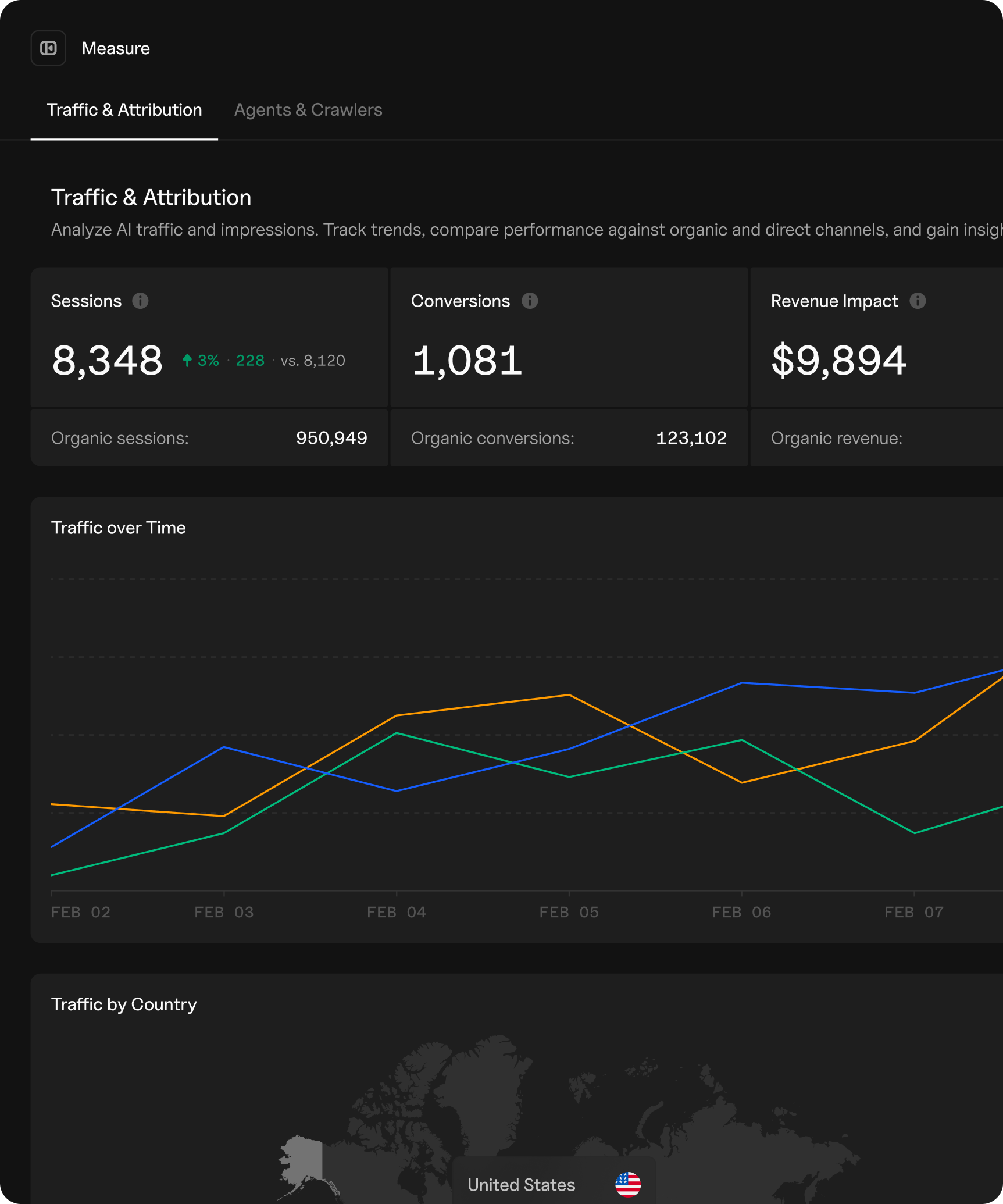
This sequence is what PR teams struggle to show end to end. On Goodie, you see: coverage lands on a target publication, citation share on that domain moves, and AI-sourced traffic from ChatGPT, Perplexity, and Gemini gets identified through Google Analytics integration and traced through the conversion funnel, with revenue attributed by platform, prompt category, and content theme.
Visibility data updates daily, making the audit a standing report. That changes what a comms update looks like. Placements secured becomes an input rather than the headline number, and citation share on the domains that matter becomes the output. The distance between those two is where the useful conversations start.
Turn Your Domain List Into a Media Plan
The domain list itself isn’t the deliverable. What it gives you is a way to stop guessing which outlets matter to AI visibility and start working from evidence: named publications, specific URLs, and a read on how each one is currently describing you.
Run the manual version once to see the shape of your category’s citation mix. Then treat it the way the data itself argues you should: as something that moves every few weeks, not something you check once a quarter and file away. The brands earning citation share right now are the ones pitching the outlets actually feeding AI answers, not the ones on last year’s media list.
See Which Domains Are Citing Your Brand
Your citation sources are measurable, and most brands have never looked at the list. See yours across ChatGPT, Gemini, Perplexity, and Claude.
AI Citation Source Audit: FAQs
Run a fixed set of category questions through each major AI engine in a clean session and log every domain that appears in the citations. The manual version works for a first baseline. Getting a stable read means repeating each prompt across engines and markets, which is where a monitoring platform saves the hours. Goodie surfaces the ranked domain list for your prompt set with each domain tagged by citation type.
Rank tracking measures your brand’s position inside an answer. A citation source audit measures the pages the engine read before writing that answer. The output is a domain list rather than a position, which is what makes it useful to a comms team: every domain on it has an owner you can reach, an editor who can update it, or a community you can join.
Quarterly at minimum, monthly if your category moves quickly. The turnover justifies the cadence. Goodie’s citation research found eight major news outlets dropped out of the top 20 most-cited domains across two study windows six months apart. A domain list filed once and referenced for a year will point your outreach at publications the engines have already moved past.
Start with the engines your buyers use, then add coverage as your program matures. ChatGPT, Gemini, Perplexity, and Claude cover most B2B and consumer discovery today, with Google AI Mode and AI Overviews mattering more for categories with heavy search demand. Because the engines weigh authority and freshness differently, checking a single platform gives you a partial picture of where your brand stands.
Because the pages the engine read when building that answer mention them and omit your brand, product, or service. Pull the citations on the prompts where your competitor appears and you can see the specific URLs doing it, which is usually a roundup, a trade article, or a comparison page you were left out of. That list is your outreach target set, and each one is either a page you can get added to or a page you need to outrank with something better on the same topic.
It varies by engine. Engines grounded on live retrieval pick up new coverage fastest, while engines leaning on training data move slowly and reward sources that have been established for a while. A placement that appears on one platform within days may take considerably longer to register on another, so judge a campaign on the engine you targeted rather than on an average across all of them.