Which Brands Have Notably Succeeded by Integrating AI Into Their Search Strategies?
Looking across all seven of these examples, the brands succeeding at AI search aren’t necessarily the biggest or the oldest. They share a different set of characteristics:
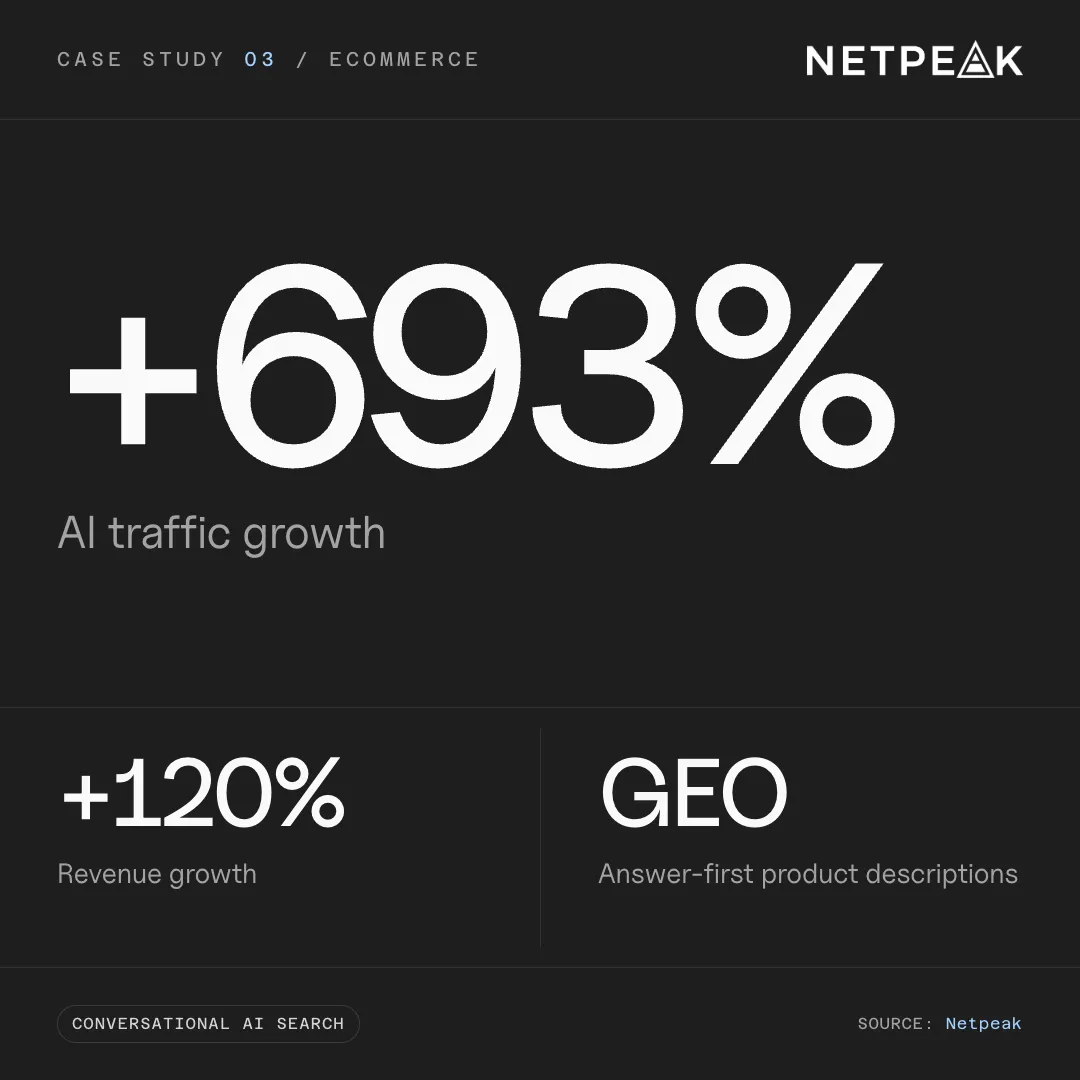
- They built the technical foundation first. Every case here (from Rathbones to Netpeak to HubSpot) started with making sure AI systems could actually crawl, parse, and trust their content. No AEO strategy works on a broken technical foundation.
- They understood prompt-level intent. The brands winning AI citations know what their customers are actually asking AI, not just what keywords they search. That’s a meaningfully different research problem, and it requires different tools (like Goodie’s Prompt Research feature) to answer.
- They measured AI-specific metrics. Impressions, rankings, and sessions don’t tell you how you’re doing in AI search. Citation rate, share of voice in AI answers, sentiment accuracy, and AI conversions are the metrics that matter, and the brands in these case studies were tracking all of them.
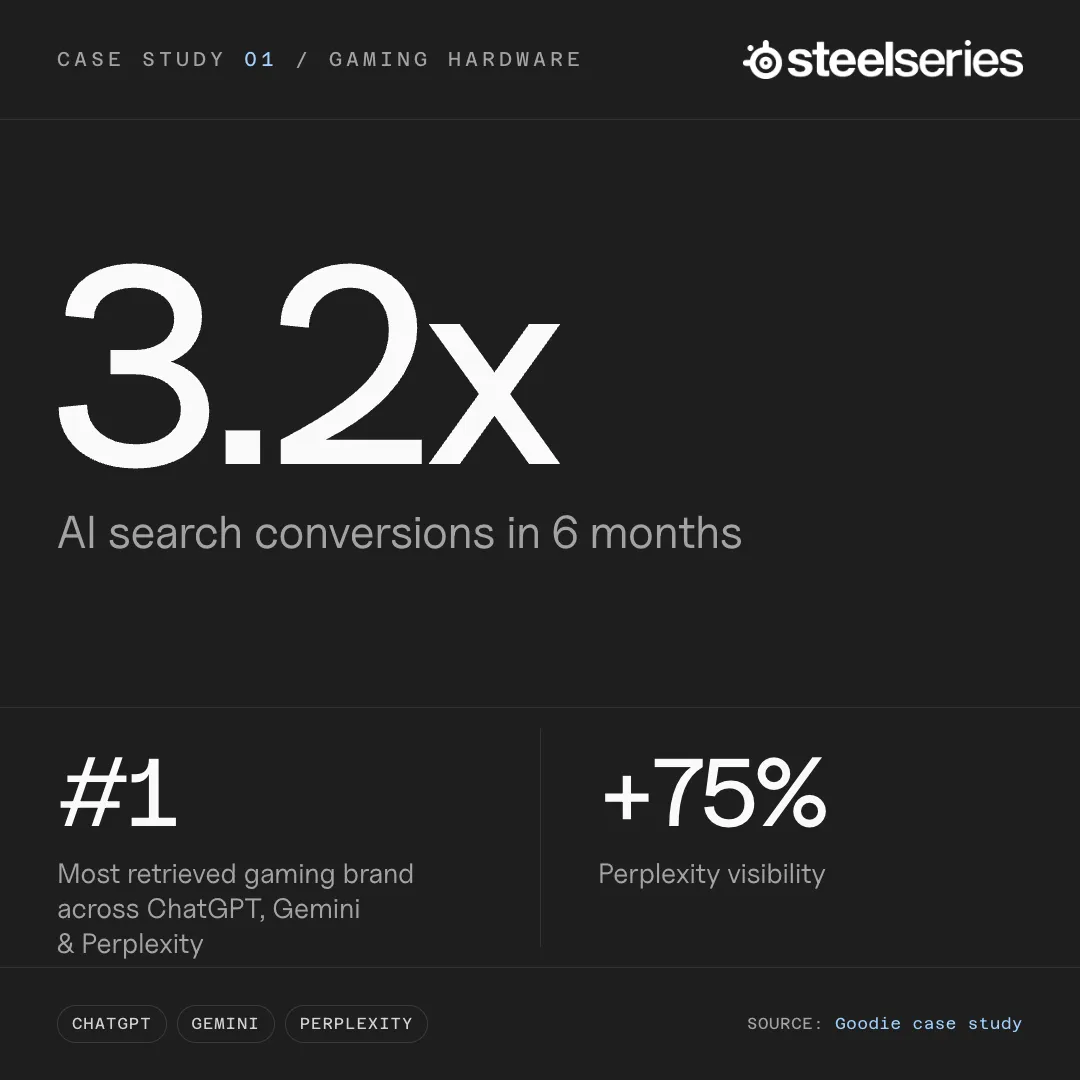
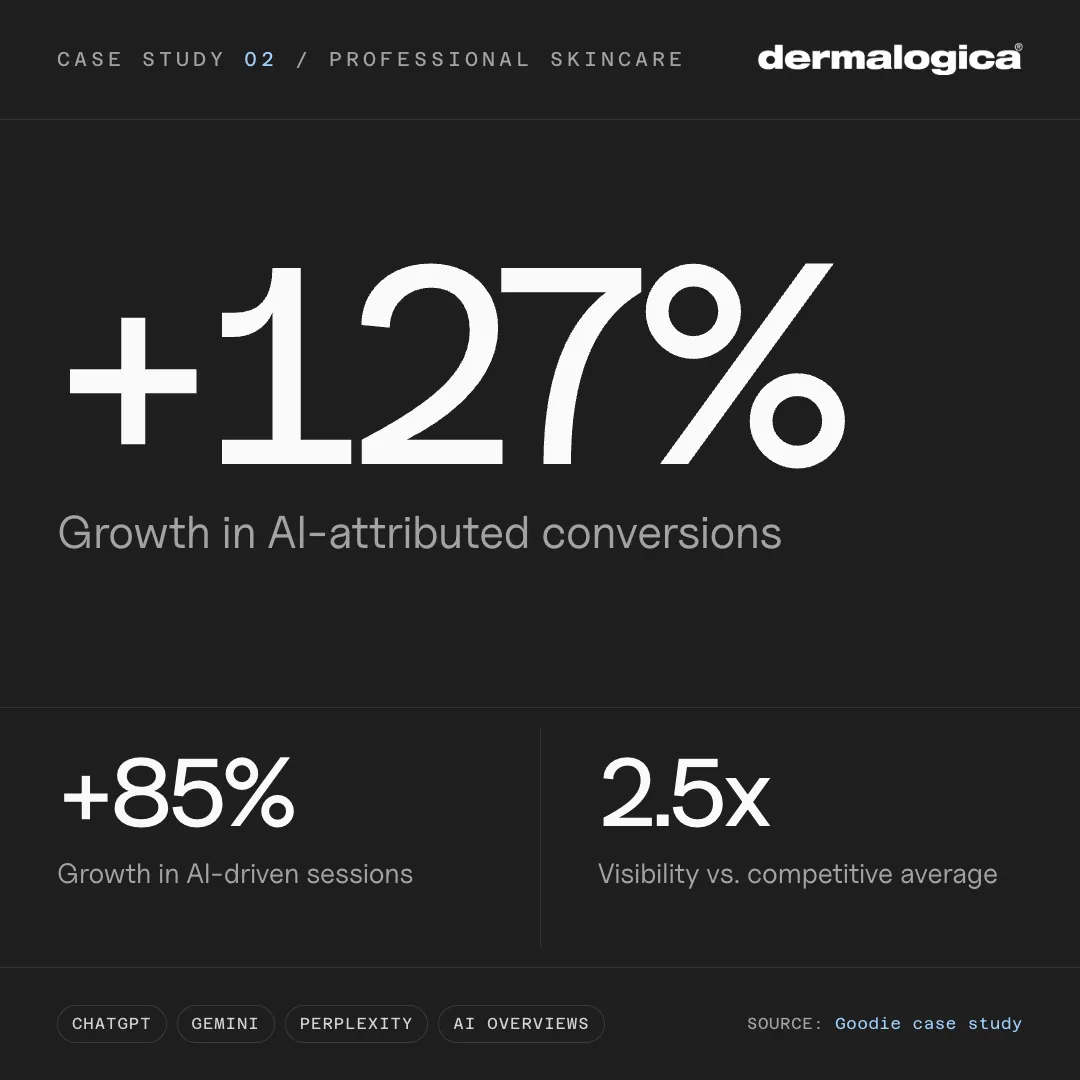
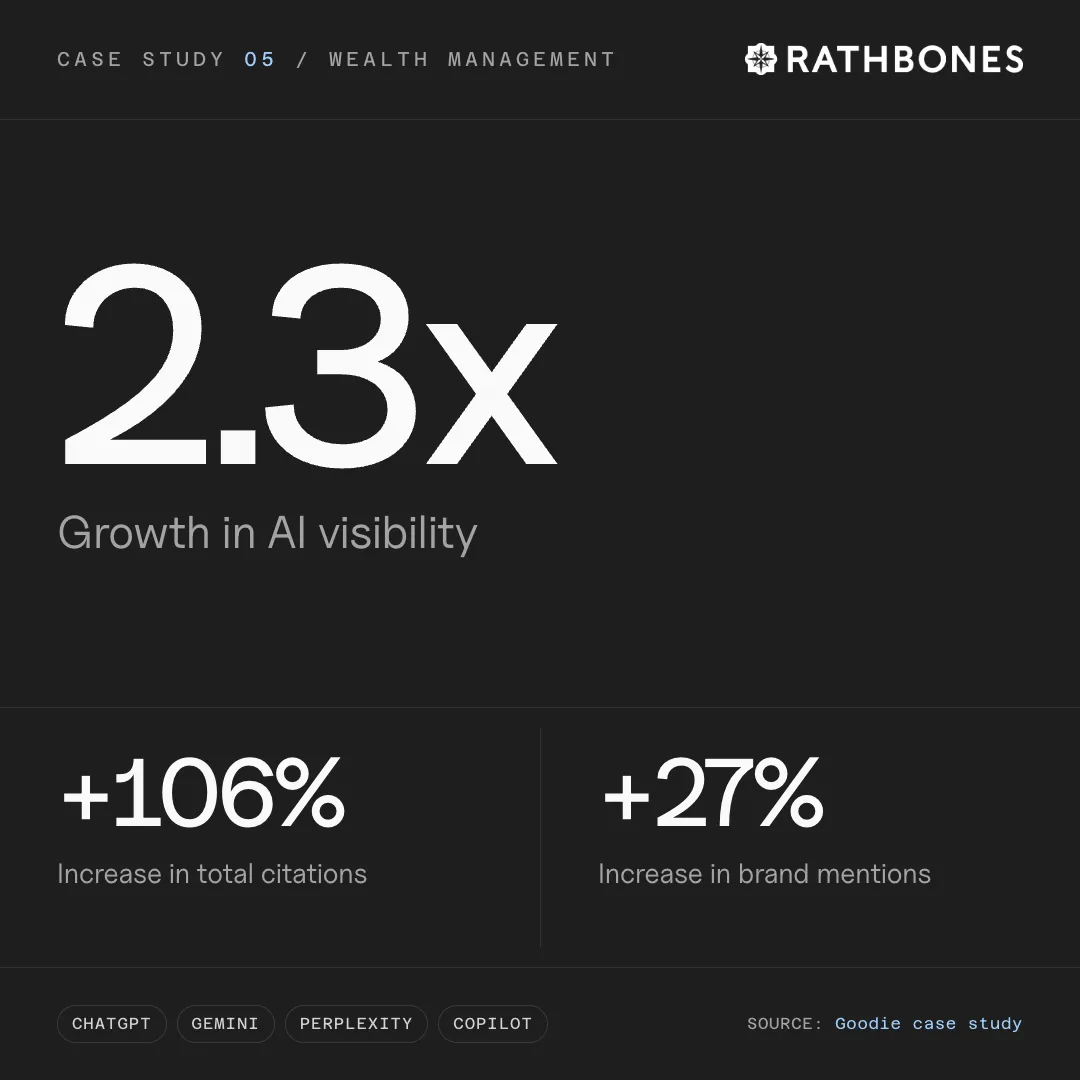
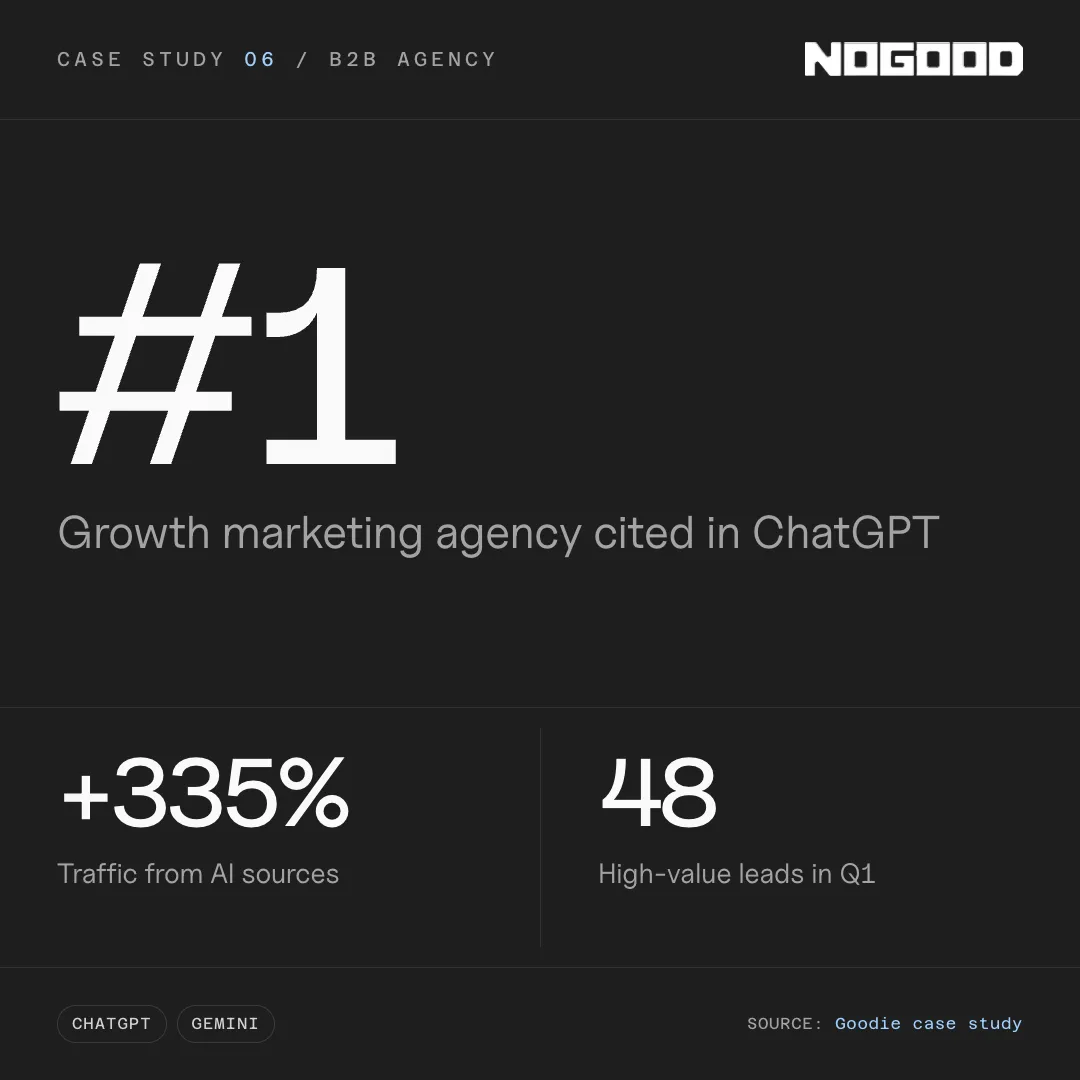
- They treated it as ongoing optimization, not a one-time project. SteelSeries, Dermalogica, Rathbones, and NoGood all hit their most significant results at the six-month mark, because AI visibility compounds. The brands that treat AEO as a campaign rather than a program consistently underperform those that don’t.
How Does AI Search Technology Enhance Customer Experience for Brands?
The customer experience angle is worth addressing directly, as it often gets lost in the performance metrics conversation.
When AI search works well for a brand, it’s not just the brand that benefits, it’s the user. AI answers to product queries mean users get faster, more relevant responses. They don’t have to click through ten websites to compare gaming headsets; they ask ChatGPT and get a recommendation that actually reflects their needs. When that recommendation cites SteelSeries accurately and confidently, SteelSeries has delivered a better customer experience than any traditional ad or SEO result could.
For Dermalogica, the same dynamic plays out differently. A skincare consumer asking “what’s the best serum for sensitive, combination skin with hyperpigmentation” gets a personalized, professional-grade answer. When Dermalogica earns that citation, they’re reaching a consumer at the exact moment of peak intent, with the exact information they need.
According to the 2026 HubSpot State of Marketing report, 58% of marketers say visitors referred by AI tools convert at higher rates than traditional organic traffic. That conversion premium exists because visitors coming from AI systems arrive pre-qualified. The LLM or AI assistant has already done the work of matching them to your brand.
What Metrics or KPIs Do Brands Track to Measure Success With AI Search?
If you’re reading this trying to figure out how to report on your own AI search program, here’s the framework the brands in these case studies are working from:
Visibility metrics (leading indicators that move first):
- AI citation rate: How often your content is sourced in AI answers
- AI mention rate: How often your brand name appears across AI engines
- Share of voice: Your citations vs. competitors for relevant prompts
- Sentiment accuracy: Is AI describing your brand correctly?
Traffic metrics (lagging indicators that confirm momentum):
- AI referral traffic in GA4 (custom channel group for ChatGPT, Perplexity, Claude, Gemini)
- Text fragment events in GTM (confirming AIO clicks via #:~:text=)
- Direct traffic lift; AI-influenced sessions where referrer headers were stripped
Revenue metrics (the ones that prove the program):
- AI-attributed conversions in GA4
- AI-sourced pipeline in your CRM
- Conversion rate of AI traffic vs. organic (AI traffic typically converts higher)
Initial reports indicate that visitors who come from LLMs convert at twice the rate in one-third the number of sessions compared to traditional channels, which means AI search has long stopped being a visibility play. It’s now also a conversion rate play. The brands tracking all three layers of these metrics are the ones that can make that case internally.
What These Case Studies Have in Common
Seven brands, different industries, different starting points. But the pattern is consistent:
The brands succeeding at AI search are the ones that moved before it was obvious, built the technical and content foundation that AI systems need to trust them, and measured the right things to know whether it was working.
If you’re ready to see where your brand stands in AI search today, Goodie’s Agent Site Audit gives you a baseline in minutes. And if you want to build the kind of program that produces results like the ones in this article, book a demo with our team.
Succeeding in AI Search: FAQs