The future of brand management is here, powered by AI. This isn’t simply a technological shift, but a strategic imperative offering precision and agility for modern brands. This guide provides crucial insights on leveraging AI in brand management to gain a competitive edge, foster customer relationships, and ensure long-term relevance.
How Is AI Used in Branding?
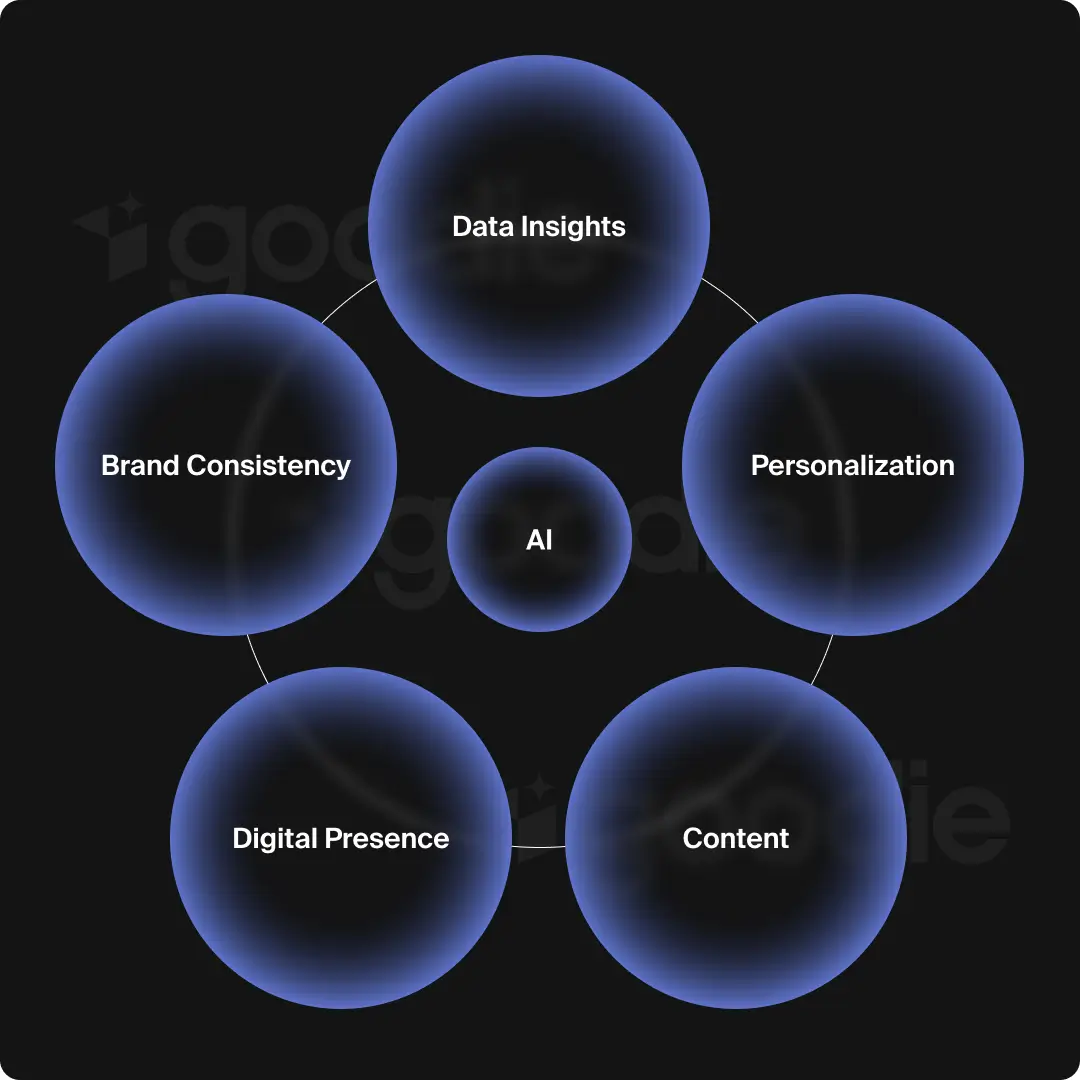
AI is making its mark on branding, changing how brands are created, managed, and perceived by offering marketing teams accuracy and flexibility. AI is not just a support tool; it’s a strategic partner that optimizes every facet of a brand’s customer journey.
Unlocking Deep Consumer Insights & Predictive Foresight
AI in brand management transforms raw data into insights, shifting from reactive data analysis to predictive analytics of consumer behavior. AI can sift through social media conversations and customer feedback to market trends in the present moment. This enables brand professionals to:
- Formulate Proactive Strategies: Instead of just reacting to what’s already happened, AI helps you anticipate consumer behavior. This means you can identify underserved market segments or predict demand for upcoming trends, allowing your brand to be a trendsetter rather than a follower.
- Identify Market Shifts: AI’s advanced algorithms can detect subtle changes in market dynamics, competitor activities, and economic indicators that might go unnoticed by human analysts. This early warning system enables agile strategic adjustments.
- Enhance Social Listening: Beyond monitoring mentions, AI tools provide advanced social listening capabilities. They analyze sentiment, identify key influencers, and pinpoint emerging topics of conversation around your brand and industry, offering a granular understanding of public perception.
- Monitor AI Visibility: Crucially, AI allows brands to track their presence within LLMs. This includes monitoring brand mentions and citations within LLM responses and AI Overviews, assessing the sentiment and context of those mentions, and understanding your share of voice against competitors in AI-generated answers. You can use a tool like Goodie to ensure your brand is accurately represented by AI systems.
Crafting Hyper-Personalized Customer Experiences
At the heart of modern brand management is individual customer connection. AI enables personalization at scale, transforming interactions into tailored engagements that foster stronger customer relationships and brand loyalty. AI’s predictive insights lead to:
- Enhanced Customer Experience (CX): Imagine a website that anticipates a user’s interests based on previous sessions, presenting the user the most salient information first. AI delivers this by personalizing content, product recommendations, and navigation paths, making every touchpoint feel relevant.
- Efficient Customer Service: AI virtual assistants and chatbots are on the front lines, providing personalized customer service 24/7. They can answer complex queries, guide users through processes, and even anticipate follow-up questions.
- Targeted Communication: Beyond websites and chatbots, AI refines email marketing campaigns, ensuring each message, offer, or update is relevant to the recipient. This precision reduces irrelevant communications and increases open rates, click-throughs, and conversions.
By leveraging AI, brands can move beyond basic segmentation to cater to each customer’s individual preferences, turning every interaction into an opportunity to build trust and strengthen the brand bond.
Revolutionizing Content Creation & Brand Consistency
In brand management, the demand for fresh content is constant; this is where AI comes into play. Generative AI can act as a powerful engine for content generation while safeguarding brand identity.
Unlocking Creative Velocity & Scale
Generative AI can assist in producing marketing and visual assets. It helps teams with drafting copy, updates, or scripts, allowing them to focus on complex creative tasks. Text-to-image generators enable brands to create graphics and mock-ups, supporting design exploration and reducing bottlenecks.
Goodie has an AI Writer feature built-in, minimizing the need to use LLMs that don’t understand your brand identity or customer journey.
Safeguarding Brand Identity & Cohesion
Maintaining consistent brand identity is essential. AI ensures adherence to your brand guidelines by reviewing new digital assets and content against defined standards such as voice, tone, and style. This check ensures every communication reinforces your brand’s personality and message.
Optimizing Digital Presence & Marketing Performance
AI in digital marketing offers tools to refine your brand’s digital footprint and achieve core marketing objectives, with capabilities that transform digital performance through:
- Dynamic Social Engagement & Listening: AI elevates social media engagement by providing real-time insights into conversations, identifying trending topics and optimal response times. This allows relevant interactions that boost your brand’s presence on social media.
- Precision-Driven Campaign Optimization: For advertising, AI in marketing translates insights into performance gains. Through predictive modeling, AI forecasts outcomes and identifies receptive segments, fueling programmatic platforms to ensure your brand’s ads are delivered to the right people, at the right time, and on the right channels.
- Comprehensive Digital Exposure Tracking: AI offers methods like brand logo detection, which scans online content to uncover every instance your logo appears. This provides valuable data on organic brand exposure from sponsorships or influencer collaborations.
Goodie can target these key areas, allowing you to focus on strategy while we take over and ensure your brand has a memorable digital presence.
Extending AI’s Reach to Employer & Personal Branding
AI in brand management extends its influence to a company’s internal operations and employees’ professional trajectories. AI in employer and personal branding is re-defining how organizations attract talent and how individuals cultivate their professional reputations.
For businesses, AI streamlines the process of attracting and retaining top talent. AI tools can analyze candidate data to identify ideal profiles, personalize outreach to prospective employees, and optimize job descriptions for better visibility. This ensures a more targeted approach to showcasing a company’s culture and values.
Similarly, AI empowers individuals to manage their online professional identity with intention. It helps craft resumes, suggest content for thought leadership, and analyze their digital footprint for consistency and positive perception.
Which AI Tools Are Best for Branding?
Identifying the “best” AI tool isn’t about finding a single solution; rather, it’s about assembling an ecosystem tailored to your brand’s strategic objectives. There are many AI branding tools designed to enhance various areas of brand management. Here’s a look at key categories and examples.
Generative AI Tools
Generative AI tools are enhancing the speed and scale at which brands can streamline routine creative tasks, allowing teams to focus on strategy and innovation:
- AI for Copywriting: Platforms like Jasper AI, Copy.ai, and Goodie produce marketing copy, headlines, and blog content, adaptable to your brand identity.
- AI for Visual Assets & Design: Tools like Midjourney, DALL-E, and Adobe Firefly enable rapid creation of graphics and mock-ups from design ideas into digital assets.
Analytics & Listening Platforms
For a data-driven approach to brand management, these AI tools provide insights into customer sentiment and market dynamics:
- Social & Media Monitoring: Brand24, Brandwatch and Goodie excel at social listening, analyzing conversations for sentiment, trend identification, and competitor intelligence.
- Content Intelligence & Optimization: Platforms like MarketMuse and Goodie utilize predictive analytics to guide content strategy, suggesting topics and keywords for SEO and audience performance.
Customer Experience (CX) Tools
These AI tools are designed to optimize customer interactions for a seamless journey, building brand loyalty:
- Intelligent Chatbots & Virtual Assistants: Platforms like Intercom, Zendesk AI, and HubSpot offer virtual assistants for 24/7 customer service, handling queries and personalizing support.
- Customer Journey Orchestration: AI tools like Customer.io, Coveo, and MoEngage personalize and automate journeys across touchpoints, triggering relevant communications for a cohesive customer experience.
- Feedback & Sentiment Analysis for CX: Platforms like Qualtrics, Medallia, and Sprinklr AI leverage AI for sentiment analysis on customer feedback, identifying pain points and enabling proactive issue resolution.
Automation & Workflow Tools
To ensure your marketing objectives are streamlined, AI technology automates and optimizes workflows for operations of any size.
- Marketing Automation Orchestrators: Zapier connects marketing applications, automating campaign workflows (e.g., lead nurturing, social scheduling), reducing manual effort and improving operational flows.
- Programmatic Advertising Optimization: Albert.ai manages and optimizes digital advertising across programmatic platforms, learning and adjusting for maximum ROI analysis.
The strategic adoption of a well-chosen suite of these AI tools is critical for any brand aiming to achieve sustained growth and impact in the modern marketing landscape.
| AI Tool Category | Primary Purpose & Impact | Specific Tool(s) | Functionality & Key Benefits |
|---|---|---|---|
| Generative AI Tools | Enhances speed and scale for content generation. |
| Produces:
|
| Generative AI Tools | Enhances speed and scale for content generation. |
| Generates graphics via text-to-image generators. |
| Analytics & Listening Platforms | Provides deep insights into customer sentiment and market dynamics. |
| Can:
|
| Analytics & Listening Platforms | Provide deep insights into customer sentiment and market dynamics. |
| Uses predictive analytics to:
|
| Customer Experience (CX) Tools | Optimizes customer interactions for a personalized journey. |
| Offers sophisticated virtual assistants that provide 24/7 Customer Service, handling queries and personalizing support. |
| Customer Experience (CX) Tools | Optimizes customer interactions for a personalized journey. |
| Personalizes journeys, triggering relevant communications for a cohesive customer experience. |
| Customer Experience (CX) Tools | Optimizes customer interactions for a personalized journey. |
| Leverages AI for sentiment analysis on customer feedback (surveys, reviews, calls). |
| Automation & Workflow Tools | Streamlines marketing objectives by automating and optimizing workflows. |
| Connects marketing applications, automating campaign workflows. |
Will AI Replace Branding Professionals?
As AI in brand management continues its ascent, many may wonder: will human branding professionals become obsolete? The answer is no. Far from replacing human talent, AI empowers professionals to achieve new levels of strategic impact and creativity. Instead of an existential threat, AI emerges as a powerful partner in modern branding.
The Enduring Imperative of Human Creativity & Strategic Vision
While AI excels at data processing and pattern recognition, it lacks true intuition, emotional intelligence, and the capacity for abstract strategic thinking. AI can generate text and images, but it cannot independently inject a brand personality with soul.
The professional’s role remains key in:
- Defining Core Brand Strategy: Only a human brand manager can develop the brand strategy that aligns with a company’s mission, values, and long-term vision. This involves synthesizing market insights with creative foresight to establish a distinct narrative.
- Crafting Authentic Narratives: Building a compelling brand story that people connect with requires an understanding of human desires, cultural nuances, and the ability to persuade consumers. AI can assist with creative tasks, but the emotional depth, ethical considerations, and strategic direction come from human insight.
- Providing Creative Direction: While AI can produce design ideas or ad copy, it’s humans that provide the creative brief, refine the output, and ensure all efforts align with marketing objectives.
AI serves as a powerful assistant, but the strategic direction, creative spark, and empathetic connection that define a brand remain firmly in human minds.
Nurturing Brand Trust & Ethical AI Implementation
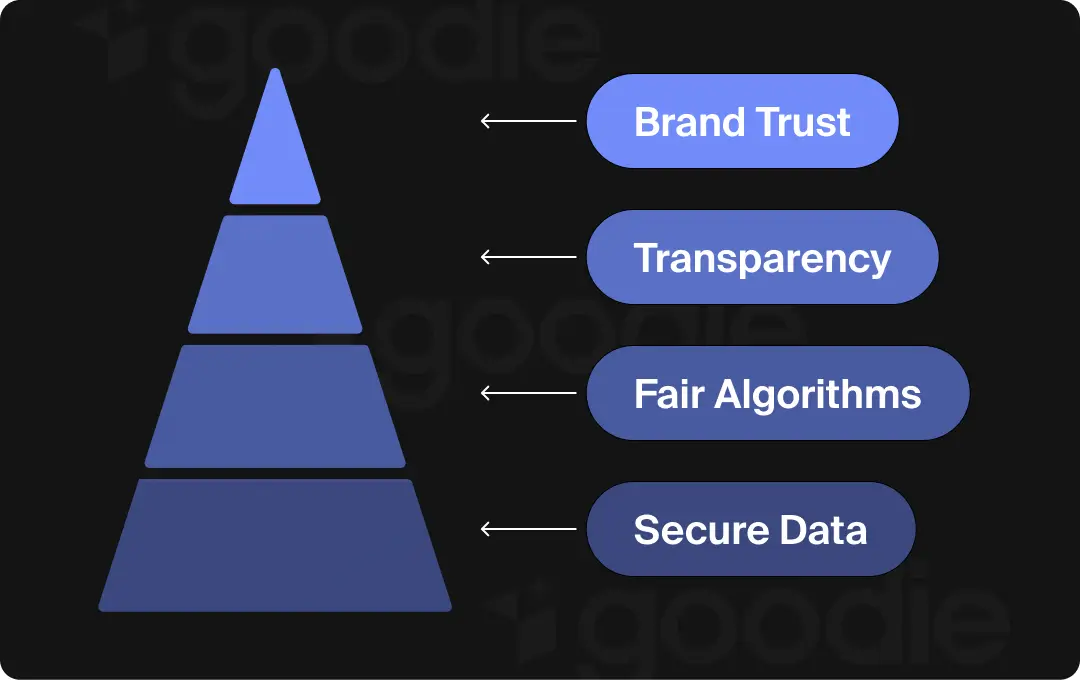
While AI presents promising opportunities in brand management, it also introduces ethical complexities. For any brand, protecting brand trust is essential, and irresponsible AI implementation can erode it. The primary challenges revolve around the inherent nature of AI’s data processing and autonomous decision-making.
The professional’s critical role in this area includes:
- Establishing Robust Data Privacy Protections: AI models are data-hungry, making data privacy protections non-negotiable. Brand professionals must ensure that customer data collected and used by AI complies with regulations and aligns with customer expectations for privacy. This means enacting transparent data collection practices and secure handling to prevent breaches.
- Mitigating Algorithmic Bias: AI systems learn from the data they’re fed. If this data contains historical biases, algorithms can potentially amplify these biases in its outputs, such as personalized recommendations, ad targeting, or content generation. The brand manager and their team must actively monitor AI outputs for biased outcomes and implement strategies to detect and correct algorithmic bias.
- Ensuring Transparency & Accountability: Brands must be transparent about when and how AI is being used in customer interactions or content creation. Consumers increasingly value authenticity, and clarity about AI’s role, which helps build trust.
By addressing these ethical challenges, brand professionals shield brand trust and ensure that their AI initiatives enhance the brand’s reputation.
The Evolving Skillset: From Execution to Orchestration
The integration of AI in brand management signifies a shift in the roles and required skillsets for marketing professionals. As AI tools automate repetitive tasks, the focus for human talent is elevated from execution to strategy. AI isn’t replacing roles, but rather redefining them.
The future demands a refined set of capabilities:
- Strategic Interpretation of AI Insights: Professionals must interpret AI insights, understanding data’s meaning for brand performance and translating complex analytics into strategic thinking for campaigns.
- Mastery of Prompt Engineering: As generative AI evolves, crafting precise prompts becomes crucial. This guides AI models to produce relevant, on-brand content and assets, ensuring its output aligns with the brand’s voice and objectives.
- Enhanced Critical Thinking & Ethical Leadership: With AI handling repetitious work, human professionals can focus on critical thinking, problem-solving, and ethical decision-making. This includes navigating the complexities of AI bias, data privacy, and brand authenticity.
In essence, the modern branding professional becomes a strategic interpreter, leveraging AI’s power to support human innovation and achieve brand growth.
How Can I Future-Proof My Brand?
As the role of AI in marketing and branding continues to evolve, strategic leaders must focus on imperatives to ensure their brand’s relevance, resilience, and growth. Adopting AI tools isn’t enough; it requires a rethinking of processes, developing new skills, and embedding AI at the core of your brand strategy.
Cultivating AI Literacy & Strategic Adoption
To future-proof your brand, an organization-wide understanding of AI’s capabilities is vital. All marketing teams need to understand how AI tools can augment their roles and workflows. This involves:
- Upskilling Teams: Invest in comprehensive training to elevate AI literacy across your marketing and branding department, fostering a culture of ongoing learning and experimentation.
- Initiating Pilot Programs & Scaling Strategically: Launch pilot programs where AI can deliver immediate value, measuring ROI analysis, and leverage results to scale AI integration across your brand function.
Prioritizing Data Governance & Ethical Frameworks
In the AI era, a brand’s most valuable asset might be its data – and the trust consumers place in how it’s used. Therefore, prioritizing data governance under GDPR and CCPA and establishing clear ethical frameworks is fundamental to preserving brand trust. This involves:
- Ensuring Data Integrity & Compliance: AI models are only as good as the data they’re trained on. Strategic leaders must ensure that all data feeding their AI systems is clean, accurate, and compliant with evolving privacy regulations.
- Developing Robust Ethical Guidelines: Brands must establish clear ethical AI guidelines. This commitment ensures AI decisions align with brand values, addressing algorithmic bias and transparency issues.
Embracing Continuous Learning & Adaptation
The landscape of AI is not static; it’s a realm of continuous innovation. To future-proof your brand and ensure its relevance, strategic leaders and marketing professionals must embed a culture of non-stop learning and adaptation.
This imperative involves:
- Staying Ahead of Emerging AI Developments: Brands must monitor and understand breakthroughs, from generative AI model capabilities to the potential within immersive environments. This includes monitoring developments in virtual reality, online search, and AI enhancements within existing platforms.
- Fostering a Culture of Experimentation: Encourage your teams to experiment with AI functionalities. This approach to adopting AI technology allows your brand to identify what works best for its specific context and adapt its strategies.
By committing to a forward-thinking strategy to embrace AI tools, brands can not only keep pace with change but ensure they remain innovative, relevant, and connected to consumer behaviors.
Conclusion
AI in brand management isn’t just for tech giants anymore; it’s a game-changer for every type of business. AI brings efficiency, makes connections more personal, and adds depth to your brand strategy. It frees up your team to focus on what they’re best at: the creative, human work that makes your brand special.
The future belongs to brands ready to use AI intelligently. As you tackle this exciting journey, consider Goodie as a partner in your brand’s AI transformation.