Marketing attribution has always been about connecting effort to outcome. But as AI systems increasingly shape how people discover, evaluate, and choose brands, that connection is getting harder to see.
Today, buyers don’t just click through results: they ask questions, get synthesized answers, and form opinions inside AI experiences. Those moments rarely show up in analytics, yet they still influence demand, conversions, and revenue.
This article explores how attribution needs to evolve for that reality: expanding beyond clicks and conversions to account for brand visibility, influence, and impact inside AI search (and how marketers can start measuring what actually shapes decisions).
What Is Marketing Attribution in the Context of AI Search?
Marketing attribution has traditionally been about assigning credit to marketing touchpoints that lead to a conversion (a click, a form fill, a purchase). That model assumes a fairly linear customer journey: a user sees a campaign, clicks through, and converts. But with AI in the picture now, that journey isn’t so linear.
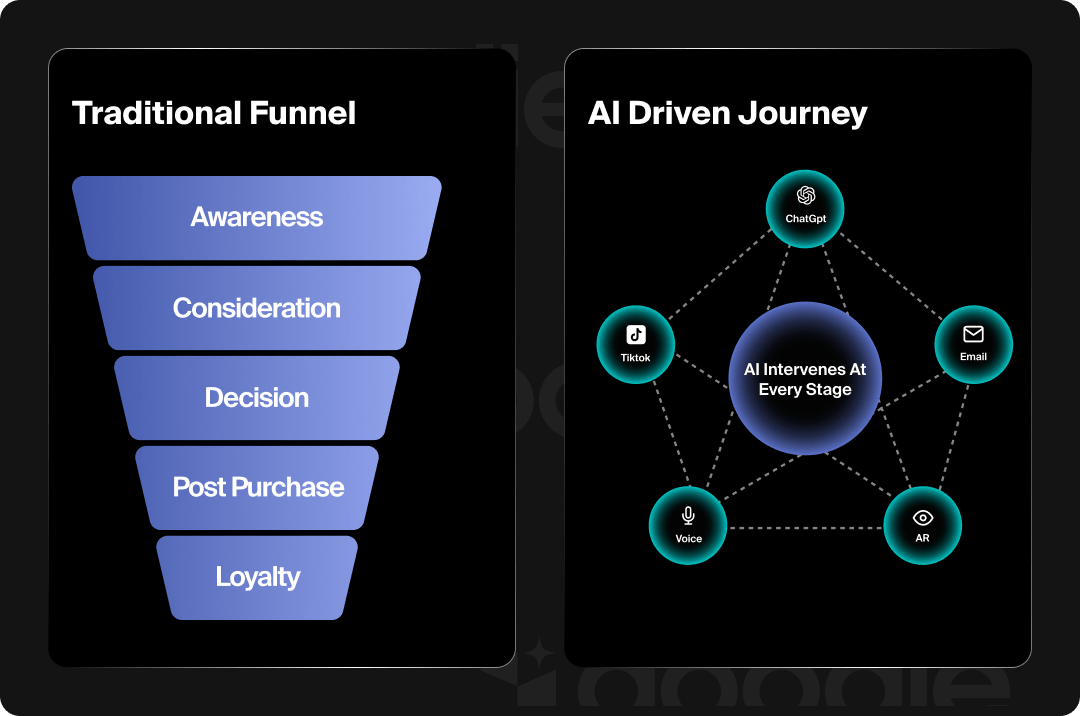
In AI search and discovery environments (LLMs, AI Overviews, voice assistants, and recommendation engines), brands influence decisions without necessarily generating a visit. Users get answers, recommendations, comparisons, and reassurance directly inside AI interfaces. By the time they search your brand, visit your site, or talk to your sales team, the decision has often already been shaped.
In this context, marketing attribution needs to expand beyond conversion credit to include visibility and influence that happen before, without, or outside the click.
Attribution Shifts From “What Converted?” to “What Shaped the Decision?”
Attribution in AI search is less about pinpointing a single moment of conversion, and more about understanding how demand is formed. That includes:
- Brand visibility in AI-generated answers
- Topic and entity association (what your brand is known for in AI systems)
- Sentiment and framing (recommended vs. mentioned vs. warned against)
- Assisted and influenced outcomes that show up later as branded search, direct traffic, pipeline, or revenue
In short, attribution must account for pre-click influence, not just post-click behavior.
Why This Is a Fundamental Change (Not Just a New Channel)
AI search isn’t just another marketing channel to tag or track. Instead, it acts as an intermediary layer between brands and buyers, synthesizing information from across the web and presenting it as a single, authoritative response.
That means:
- Multiple sources contribute to a decision, but none may receive a click
- Influence is cumulative, not linear
- Traditional attribution models miss value creation happening upstream
If attribution only measures what happens after a session begins, it ignores a growing portion of how modern buyers research, compare, and decide.
A More Accurate Definition of Attribution for AI Search
In the context of AI search, marketing attribution is the practice of measuring how brand visibility, topic presence, and sentiment across AI-mediated discovery environments influence downstream demand, conversions, and revenue.
This doesn’t replace existing attribution models; rather, it extends them. Clicks, sessions, and conversions still matter, but they’re no longer the full story. Attribution frameworks must now connect impressions → influence → outcomes, even when those impressions happen in places that traditional analytics can’t see.
This shift sets the foundation for how marketers should rethink attribution models, dashboards, and success metrics in an AI-shaped discovery landscape, which is exactly what we’ll explore next.
Why Traditional Attribution Models Fail in AI Discovery
To adapt attribution for AI-driven discovery, it’s important to understand why existing models struggle in this environment. It’s not that our attribution frameworks were built incorrectly, but they were built for a different internet.
1. Attribution Is Still Click-Centric
Classic attribution models (first-touch, last-touch, linear, even multi-touch) depend on one core signal: the click.
AI search often removes that step entirely.
When users:
- Get product comparisons directly in AI Overviews
- Ask LLMs for recommendations
- Validate decisions through AI-generated summaries
…the influence happens without a measurable interaction. No session is created, no UTM fires, and no touchpoint receives credit, despite the brand playing a meaningful role in the decision.
2. Influence Happens Before Analytics Can See It
Traditional attribution assumes influence begins once a user enters a measurable environment (site visit, ad click, form fill). AI shifts influence upstream, into places most analytics stacks weren’t designed to observe.
That includes:
- Brand mentions inside AI answers
- Topic-level authority shaping recommendations
- Sentiment framing that narrows or expands consideration sets
By the time a user converts, attribution tools often capture the outcome, but not the influence that led them there.
3. Multi-Touch Models Still Miss “Invisible” Touchpoints
Even sophisticated multi-touch attribution models struggle when inputs are incomplete.
AI discovery introduces:
- Non-click interactions
- Cross-device research without continuity
- Offline validation after AI exposure
These touchpoints don’t register as cleanly. As a result, attribution skews toward the last measurable action instead of the most impactful one.
4. The Result: Undervalued Brand & Overvalued Conversions
When attribution ignores AI influence, marketers tend to:
- Over-credit bottom-of-funnel channels
- Underinvest in visibility and authority
- Miss early indicators of future demand
This creates a distorted view of performance. One that optimizes for what’s easiest to measure, not what actually drives growth.
The New Attribution Inputs: AI Visibility Signals That Matter
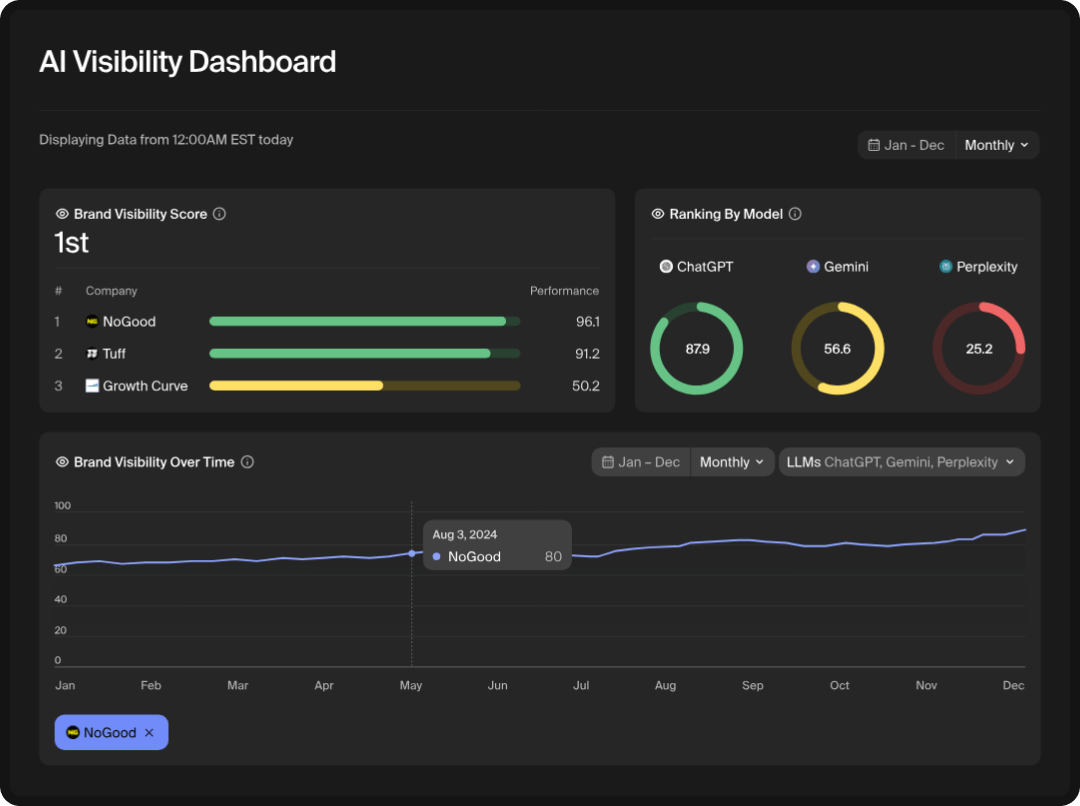
If attribution models are failing in AI search, it’s not because the math is wrong; it’s because the inputs are incomplete.
AI discovery introduces new forms of influence that don’t show up as clicks, sessions, or conversions, but still shape demand in very real ways. To adapt attribution for AI search, marketers need to expand what counts as a meaningful signal.
This is where attribution starts to shift from tracking interactions to measuring exposure and influence.
1. Brand Visibility in AI Answers
In AI search environments, visibility means whether your brand appears at all, and how often.
Key questions attribution needs to answer:
- Is your brand being mentioned in AI-generated responses?
- How frequently does it appear compared to competitors?
- Is it consistently present or intermittently surfaced?
This type of visibility functions like a new kind of impression layer. Even without a click, repeated exposure inside AI answers can:
- Prime brand recall
- Reduce consideration friction
- Influence downstream branded searches and direct traffic
Ignoring these impressions means ignoring the top of a rapidly growing funnel.
2. Topic & Entity Association (What AI Thinks You’re Known For)
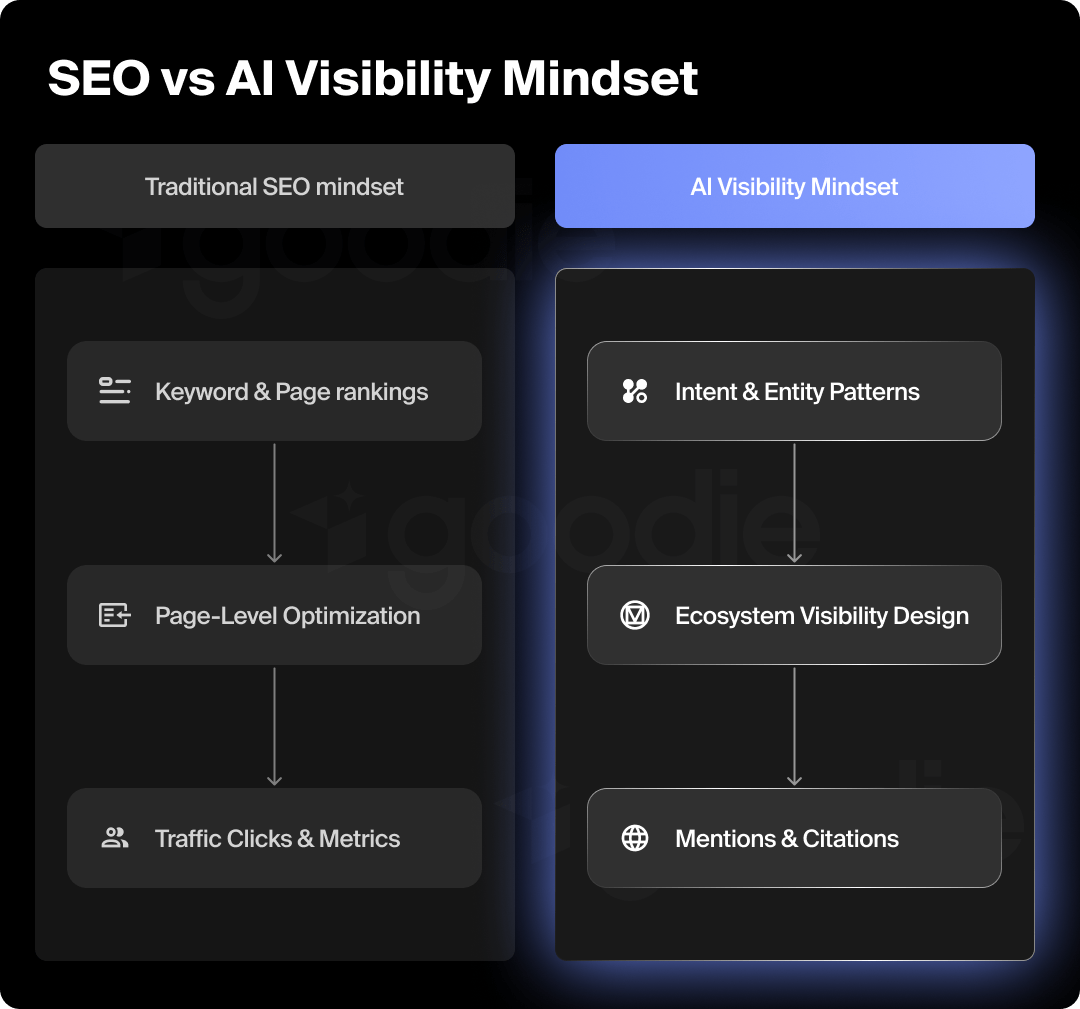
AI systems don’t just mention brands; they associate them with topics, categories, and use cases.
Attribution needs to capture:
- Which topics and use cases your brand is linked to in AI responses
- Whether those associations align with your intended positioning (e.g. leader vs. alternative, strategic vs. tactical)
- How often competitors appear alongside you (and which competitors AI groups you with)
- The consistency of those associations across prompts and platforms, not just one-off mentions
- Where your brand is absent from topics you expect to own, signaling gaps in visibility or authority
- How frequently your brand is used as an example, recommendation, or reference point, versus a passing mention
This matters because AI recommendations are rarely neutral. Being mentioned as an example, a leader, or an alternative all carry very different levels of influence.
From an attribution perspective, topic visibility helps explain why certain channels or campaigns convert better later, even when the immediate touchpoints don’t show a clear cause.
3. Sentiment & Framing Inside AI Responses
Not all mentions are equal.
AI answers often frame brands in specific ways:
- Recommended vs. listed
- Trusted vs. questioned
- Best-in-class vs. budget-friendly alternative
Attribution systems that only track presence miss this entirely. But sentiment and framing directly affect:
- Trust formation
- Shortlists and exclusions
- Conversion likelihood later in the journey
When a buyer converts after exposure to AI content, sentiment often explains why they chose one brand over another, even if that influence never produced a measurable interaction.
4. Ai-Influenced Demand Signals (The Downstream Effects)
While AI visibility itself may be unclickable, its impact shows up elsewhere, just not in obvious ways.
Common downstream signals include:
- Increases in branded search volume
- Direct traffic growth
- Higher conversion rates on later visits
- Self-reported “heard about you via AI” responses
- Assisted conversions across longer journeys
These signals don’t prove causation on their own, but together, they form patterns of influence that attribution models can learn from and weight appropriately.
5. Why These Inputs Change the Role of Attribution
Once AI visibility signals are included, attribution stops being a backward-looking exercise and becomes a diagnostic system:
- Not just what converted, but what shaped intent
- Not just which channel closed, but which exposure mattered
- Not just past performance, but future demand creation
This doesn’t replace existing attribution models and instead extends them upstream, allowing marketers to connect AI-mediated influence to outcomes they already track.
How Attribution Models Must Evolve to Include AI Influence
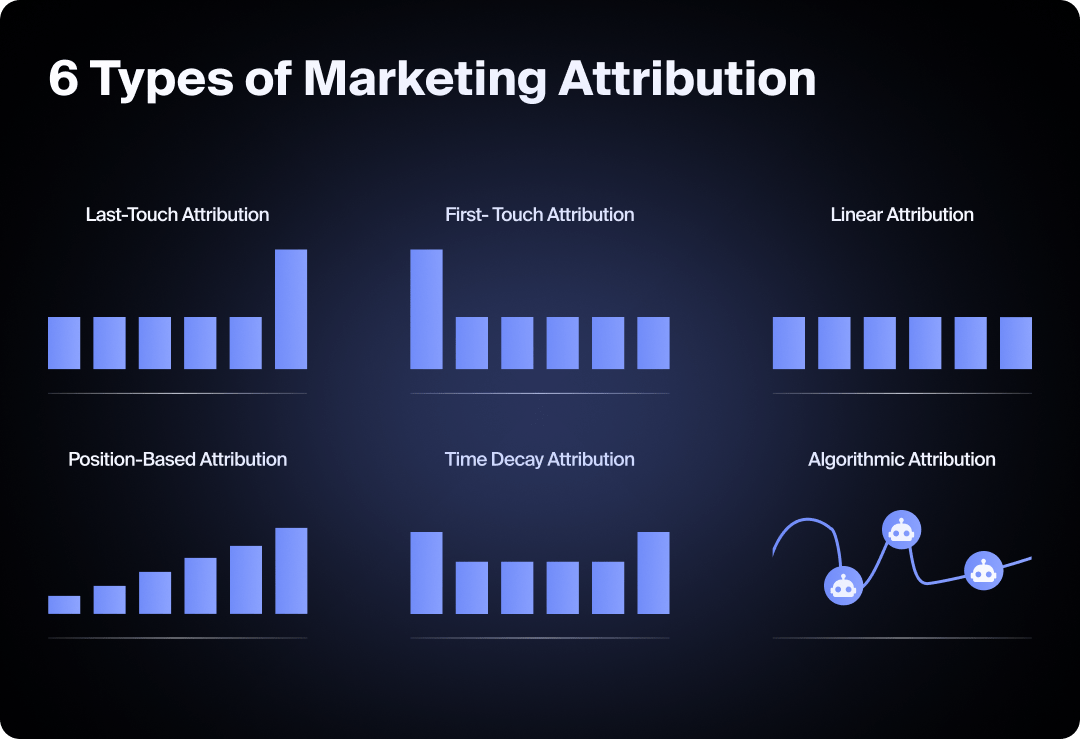
Once AI visibility signals are added to the picture, a hard truth emerges: most attribution models weren’t designed to handle influence without interaction. That doesn’t mean they’re obsolete, but it does mean they need to evolve.
Now, if the panic is starting to set in, rest in knowing that the goal here isn’t to invent a brand-new model for AI search. Instead, we must expand existing attribution frameworks so they can account for probability, influence, and upstream exposure.
From Conversion Credit to Influence Weighting
- Traditional attribution asks: Which touchpoint gets credit for the conversion?
- AI-era attribution needs to ask: Which exposures increased the likelihood of conversion?
That’s a subtle but important shift.
Instead of assigning 100% of the value to a final click or form fill, evolving attribution models:
- Influence is weighted rather than owned
- Assisted and incremental lift become measurable inputs
- Some touchpoints shape intent without ever appearing in a conversion path
- Visibility earlier in the journey earns partial value instead of being ignored
AI visibility becomes an input to influence, not a competitor to conversion metrics.
Embracing Probabilistic, Not Deterministic, Measurement
In AI search, certainty is unrealistic (and it probably won’t be for a long time).
You often can’t say: “This AI answer caused this conversion.”
But you can say:
- Exposure to certain AI topics correlates with higher conversion rates
- Brand mentions precede increases in branded search
- Certain framings reduce drop-off later in the journey
Modern attribution models need to:
- Accept probabilistic signals
- Look for patterns over time, not one-to-one matches
- Combine qualitative exposure with quantitative outcomes
This makes attribution less binary and far more honest.
Expanding the Customer Journey Upstream
Most attribution models start once a user enters a measurable environment. AI influence often happens before that point.
To evolve, attribution needs to:
- Extend beyond site visits and ad clicks into awareness and consideration
- Treat AI-generated answers as pre-funnel touchpoints
- Account for long research cycles, especially in B2B and high-consideration categories
- Recognize that preferences may be formed before any analytics event fires
When attribution only begins at the point of measurable interaction, it captures outcomes (not the forces that shaped them).
Blending Models Instead of Forcing a Single “Truth”
AI influence doesn’t map neatly to a single attribution model.
Modern frameworks increasingly:
- Combine multi-touch, data-driven, and incrementality approaches
- Apply different weighting logic at different stages of the journey
- Use AI visibility signals to explain why certain channels perform better downstream
Attribution becomes a system of interpretation rather than a rigid formula.
What Changes & What Doesn’t
What changes:
- Attribution inputs expand beyond clicks
- Influence becomes something that can be modeled and compared
- Visibility earns weight, not just credit
What doesn’t:
- Revenue remains the anchor
- Conversions still matter
- Attribution exists to support better decisions, not vanity metrics
Where This Leads Next
Once attribution models can incorporate AI influence, the next challenge becomes operational: How do you turn impressions and influence into something marketers can actually use?
That’s where the framework comes in.
Building an Impression → Influence → Revenue Attribution Framework
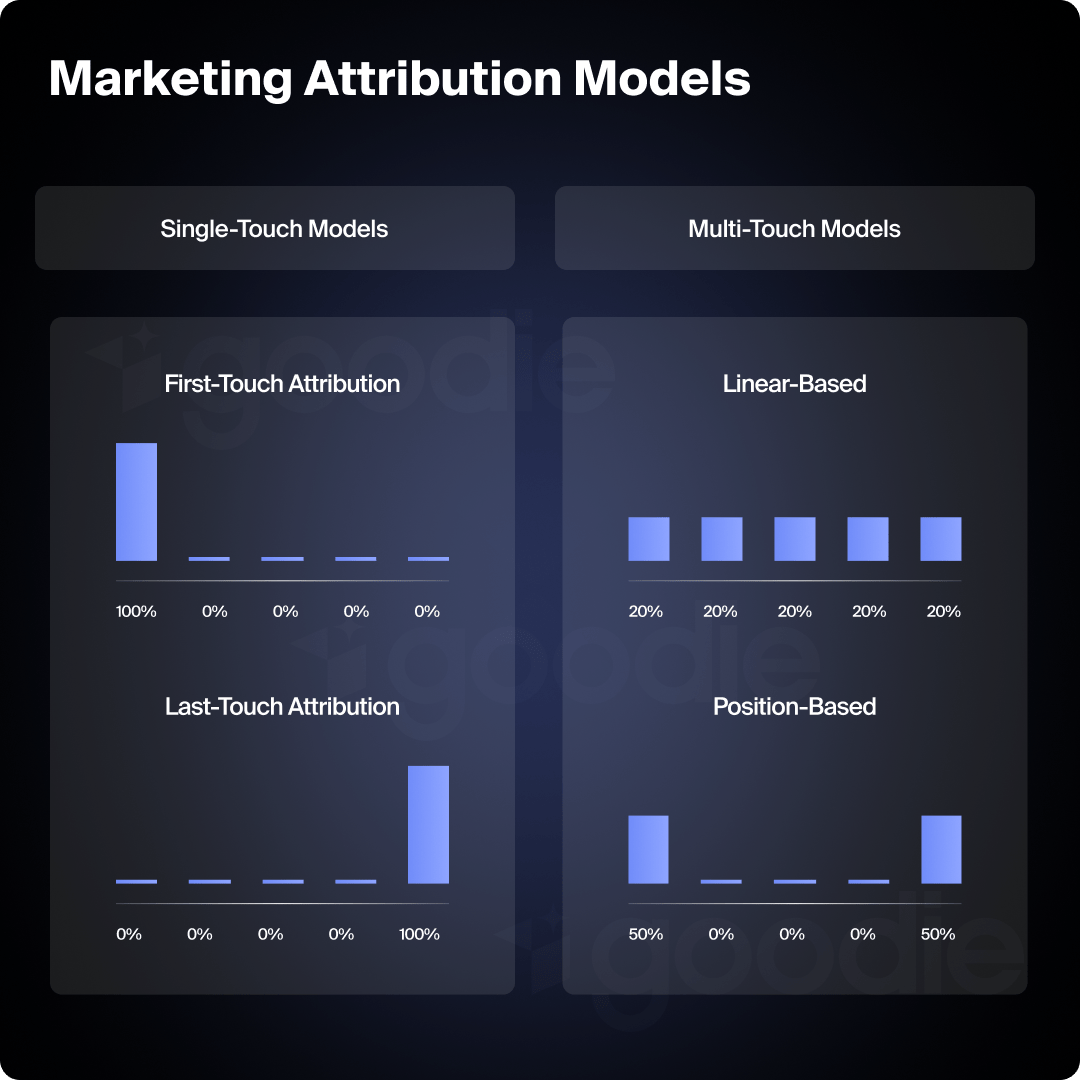
Once attribution models expand to include AI influence, the question shifts from “what should we measure?” to “how do we structure this in a way that’s usable?”
That’s where an Impression → Influence → Revenue framework becomes useful. Not as a rigid model, but as a way to organize signals that already exist and connect them to outcomes marketers care about.
Impressions: Measuring AI-Era Visibility
The first layer captures whether and where your brand is visible in AI-mediated discovery environments.
This is about exposure, not just rankings or clicks.
Impression-level signals include:
- Brand mentions in AI answers
- Share of Voice across relevant prompts and topics
- Frequency and consistency of appearance over time
- Competitive presence (who shows up instead of, or alongside you)
These impressions function like a new top-of-funnel layer. They don’t convert on their own, but they shape familiarity, recall, and trust long before a user takes an action you can track.
Influence: Understanding How Visibility Shapes Decisions
Impressions alone don’t tell the full story. Influence explains how that visibility actually affects consideration.
This layer focuses on context rather than volume.
Influence signals often include:
- Sentiment and framing (recommended, neutral, cautionary)
- Topic alignment with your intended positioning
- Role in answers (primary recommendation vs. supporting example)
- Repetition across different questions and surfaces
Influence is where attribution starts to move from counting appearances to interpreting impact. Two brands may appear equally often in AI responses, but the way they’re framed can lead to very different downstream outcomes.
Revenue: Connecting Influence to Business Outcomes
The final layer anchors everything back to what ultimately matters: revenue and growth.
AI influence rarely maps cleanly to last-touch conversions, but its impact shows up through patterns such as:
- Lift in branded search and direct traffic
- Higher conversion rates on later visits
- Increased assisted conversions across long journeys
- Stronger pipeline velocity or deal confidence in B2B contexts
Rather than forcing AI influence to “own” revenue, this layer looks at correlation, lift, and contribution.
Why This Framework Works
What makes this structure useful is that it mirrors how buyers actually move:
- They’re exposed to ideas and brands
- Those exposures shape perception and preference
- Decisions materialize later, often somewhere else
By separating impressions, influence, and revenue into distinct layers, marketers can:
- Diagnose where visibility gaps exist
- Understand why certain channels perform better downstream
- Make smarter investment decisions without pretending everything is directly trackable
You don’t have to replace your existing attribution setup; you’re just giving it a missing dimension that reflects how AI now participates in discovery.
Where This Gets Practical
Once this framework is in place, the next step is operational: how these layers come together inside a dashboard that marketers can actually use.
That means combining AI visibility data, analytics, and CRM signals into a single view, without turning attribution into an unreadable science project.
What a Unified AI Attribution Dashboard Looks Like
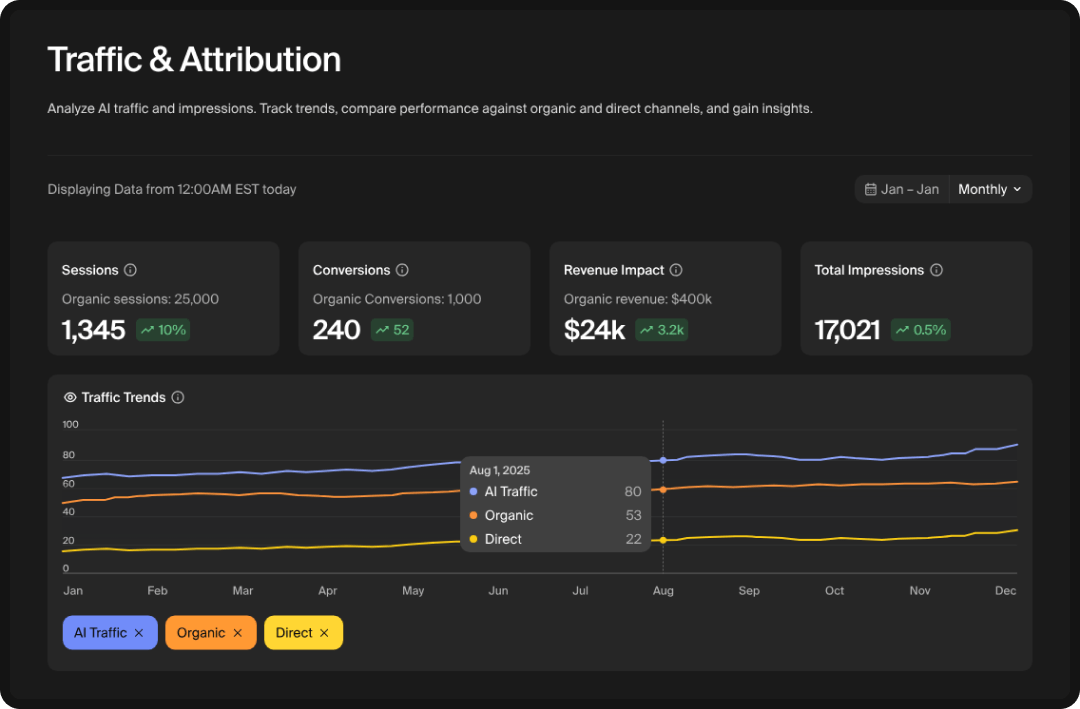
Once impressions, influence, and revenue are treated as connected layers, attribution stops living in separate tools and starts functioning as a single system. A unified AI attribution dashboard brings both new and existing signals into one coherent view.
It Starts With Visibility, Not Conversion
Most dashboards default to revenue and work backward. An AI-aware attribution dashboard flips that order.
At the top, marketers should be able to see:
- Where their brand appears in AI-generated answers
- Which topics they’re visible (or invisible) for
- How that visibility changes over time
- How they compare to competitors in the same prompts and categories
This layer answers a simple but critical question: are we even part of the conversation AI systems are shaping?
Without that context, downstream performance is easy to misread.
Influence Adds Meaning to Exposure
The next layer interprets visibility rather than just counting it.
Here, dashboards start to show:
- How AI systems frame the brand (recommended, neutral, alternative)
- Whether the brand appears as a primary answer or a supporting reference
- How often exposure is reinforced across different questions and platforms
This is where marketers begin to understand why certain campaigns, channels, or content strategies perform better later, even when the attribution trail isn’t obvious. Influence metrics turn exposure into insight.
Revenue Anchors the Entire System
The final layer connects everything back to the outcomes leadership teams care about.
Instead of forcing AI visibility to “own” conversions, a unified dashboard looks for:
- Lift in branded search and direct traffic
- Changes in assisted conversion rates
- Pipeline velocity or deal confidence tied to exposure periods
- Revenue patterns that correlate with visibility and sentiment trends
This approach keeps attribution honest. AI influence is modeled, not overstated, but it’s no longer invisible.
Designed for Decision-Making, Not Just Reporting
A strong AI attribution dashboard doesn’t try to answer every question at once. It’s built for different users:
- Executives want to understand impact and direction
- Marketing leaders want to see where to invest or pull back
- Operators want to diagnose what’s working and why
When impressions, influence, and revenue live in the same system, teams stop arguing about attribution models and start aligning around strategy.
Why This Matters Now
AI systems are already shaping discovery, preference, and demand. The brands that adapt fastest won’t be the ones with the most complex models; they’ll be the ones with the clearest picture of influence.
A unified attribution dashboard makes that possible, without pretending the journey is perfectly trackable.
Limitations, Tradeoffs, and What AI Attribution Can and Can’t Tell You
As marketing attribution expands to include AI-driven visibility and influence, expectations matter. While these signals unlock a clearer view of how demand is shaped, they don’t magically make attribution perfect, and pretending they do would undermine trust.
The value of AI-aware attribution isn’t certainty. It’s clarity where there used to be blind spots.
What AI Attribution Can Do Well
AI-aware attribution frameworks are especially strong at revealing patterns that traditional models miss.
They can:
- Surface where and how your brand influences buyers before a click ever happens
- Explain downstream performance shifts that don’t map cleanly to campaigns
- Reveal gaps between how you think you’re positioned and how AI systems present you
- Help teams prioritize visibility, authority, and consistency, not just conversion efficiency
This makes attribution more strategic. Instead of reacting to last-touch performance, marketers can proactively shape demand upstream.
What AI Attribution Can’t Promise
There are also hard limits (and they’re important to acknowledge).
AI attribution cannot:
- Deterministically link a specific AI answer to a specific conversion
- Replace first-party analytics, CRM data, or revenue tracking
- Eliminate uncertainty from complex, multi-touch buyer journeys
- Fully capture private conversations, offline influence, or every decision trigger
Influence in AI search is often diffuse, cumulative, and indirect. Any system that claims otherwise is oversimplifying reality.
The Tradeoff: Precision vs. Relevance
Traditional attribution often feels precise because it’s narrow. AI-aware attribution feels messier because it’s more representative of how decisions are actually made.
The tradeoff looks like this:
- Less certainty at the individual interaction level
- More confidence at the strategic and directional level
- Fewer false conclusions driven by incomplete data
For most marketing teams, that’s a worthwhile exchange.
Why This Is Still a Step Forward
Ignoring AI influence makes attribution incomplete.
As AI systems continue to mediate discovery, comparison, and validation, attribution frameworks that exclude these signals will increasingly over-credit the final step and underinvest in what created demand in the first place.
AI-aware attribution doesn’t replace rigor, but it does re-apply it to a more realistic version of the buyer journey.
Conclusion: If AI Shapes Demand, Attribution Must Measure It
Marketing attribution has always been about understanding what worked. In an AI-shaped discovery landscape, it’s increasingly about understanding what mattered, even when that influence never showed up as a click.
AI systems now sit between brands and buyers. They summarize, recommend, compare, and validate long before a user visits a website or speaks to sales. When attribution frameworks ignore that layer, they miss data and misinterpret performance. Channels look stronger than they are, brand-building looks weaker than it is, and demand creation gets confused with demand capture.
That’s why modern attribution needs to expand. Measuring AI visibility, topic presence, and sentiment alongside traditional performance metrics gives marketers a more complete picture of how decisions are actually shaped. Not perfect certainty, but better context, better judgment, and better strategy.
This is the gap platforms like Goodie are designed to fill. By making AI visibility and influence measurable and connectable to downstream outcomes, Goodie helps teams understand how AI search participates in their growth, not just whether a campaign converted.
Marketing Attribution for AI Search: FAQs
What is marketing attribution in the context of AI search?
Marketing attribution in AI search focuses on measuring how brand visibility, topic presence, and sentiment inside AI answers influence downstream demand, not just which click led to a conversion. Because AI systems often shape decisions without sending traffic, attribution must account for pre-click and no-click influence that shows up later as branded search, direct traffic, pipeline, or revenue.
How is AI search different from traditional marketing channels for attribution?
Traditional channels create measurable interactions (impressions, clicks, sessions). AI search often creates exposure without interaction. A brand can be recommended, compared, or validated inside an AI response without generating a visit, which means classic attribution models miss that influence unless visibility and influence signals are explicitly included.
Can AI answers really impact revenue without clicks?
Yes. AI-generated answers frequently act as decision-shaping moments. They reduce research time, narrow consideration sets, and validate choices. While the revenue doesn’t show up as “AI traffic,” its impact often appears indirectly through increases in branded search, higher conversion rates on later visits, faster pipeline movement, or improved close rates.
How do you measure AI influence if it isn’t directly trackable?
AI influence is measured probabilistically, not deterministically. Instead of tying one answer to one conversion, marketers look for patterns over time: correlations between AI visibility, sentiment, topic ownership, and downstream performance. The goal isn’t certainty; it’s understanding contribution and directional impact.
Some icons and visual assets used in this post, as well as in previously published and future blog posts, are licensed under the MIT License, Apache License 2.0, and Creative Commons Attribution 4.0.
https://opensource.org/licenses/MIT