Your potential customers asked ChatGPT about your industry this morning. They asked Perplexity to compare you to a competitor. They saw your brand mentioned (or didn’t) in a Google AI Overview.
This is happening millions of times a day. ChatGPT has 800 million Weekly Active Users (WAU). Google Gemini has 650 million Monthly Active Users (MAU). Perplexity users spend an average of 23 minutes per session doing research. The question you should be asking yourself is no longer whether AI search matters for your brand; it’s which platforms to prioritize.
Lucky for you, we’ve tested, tracked, and analyzed the leading AI search engines to give you a clear picture of where to focus.
What Is an AI Search Engine?
Traditional search engines match keywords to content and return ranked lists of links. You type a query, you get ten blue links, you click through, and you find your own answers.
AI search engines work differently: they use Large Language Models to understand the intent behind your query, pull information from multiple sources, and synthesize a direct answer. Instead of giving you a list of pages to read, they read those pages for you and summarize the key points.
The practical difference? When someone searches “best project management software for remote teams” on Google, they get a list of articles to browse (and it’s likely that those articles will each be a list of their own). When they ask the same question in ChatGPT or Perplexity, they get one synthesized set of recommendations with reasoning, often citing specific brands by name. And users have come to trust these recommendations.
For marketers, this changes everything. Your goal isn’t just to rank on a results page. It’s to be the brand that gets mentioned in the answer.
What Is the Best AI Search Engine Right Now?
If you had asked this question in 2023, ChatGPT would have undoubtedly been the answer. The truth is, there’s no single “best” anymore. The AI search market has split into two camps: AI answer engines (like Perplexity and ChatGPT) built specifically for conversational search, and traditional giants (Google’s AI Overviews, Bing Copilot) layering generative AI onto existing search infrastructure.
Here’s the breakdown of the platforms that matter most for brand visibility in 2026:
1. ChatGPT
Best For: Conversational queries, research tasks, follow-up questions
ChatGPT has evolved into a legitimate search competitor. With SearchGPT (which started as a separate product and eventually merged with ChatGPT as an integrated component) and real-time web access, ChatGPT has become the go-to for users who want answers synthesized rather than a list of links to click through.
ChatGPT also benefits from a significant first-mover advantage. As the first generative AI tool to achieve mainstream adoption, it reached 100 million users within two months of launch, making it the fastest-growing consumer application in history. That head start translates to brand recognition: when most people think “AI assistant,” they think ChatGPT first.
It’s worth noting that ChatGPT uses Bing’s index when browsing the web for real-time information. This means traditional SEO performance in Bing directly influences what ChatGPT surfaces in its answers.
- Monthly Active Users: 800 million
- AI Market Share: ~60-64%
Why Your Brand Should Care: ChatGPT dominates the AI search market. When users research products, compare solutions, or ask for recommendations, this is where a majority of those conversations happen. Being absent from ChatGPT responses means missing the largest AI audience (for now).
How to Optimize: Since ChatGPT relies on Bing for web browsing, prioritize Bing Webmaster Tools and ensure your site is indexed there. Focus on being mentioned and linked by third-party sources, as ChatGPT tends to surface brands that appear across multiple authoritative sites. Structured FAQ content and clear product/service descriptions help ChatGPT pull accurate information about your brand. Consider how your brand appears on Wikipedia, industry publications, and review sites, as these heavily influence ChatGPT’s responses.
2. Google AI Overviews (Powered by Gemini)
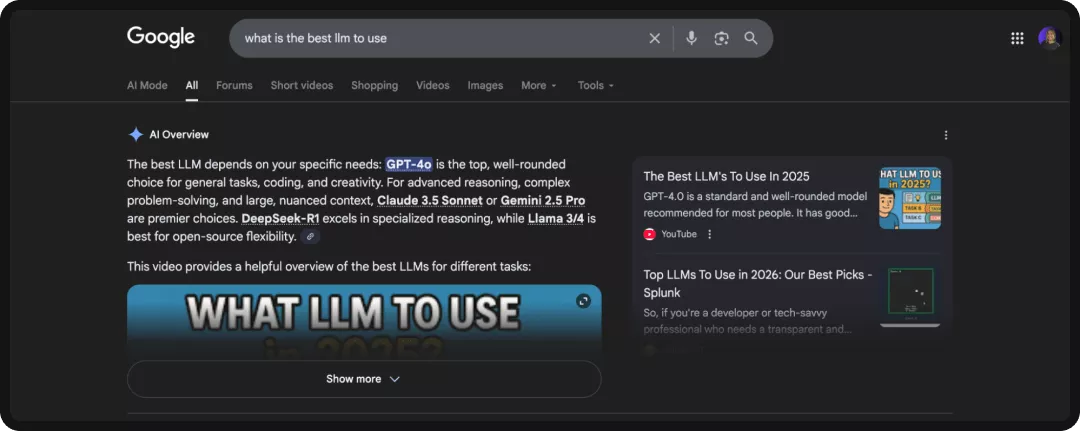
Best For: Users who are already in the Google ecosystem, multimodal queries, and local search
Google’s AI search presence spans three interconnected products:
AI Overviews appear automatically at the top of standard Google search results, providing AI summaries for approximately 18% of queries. Users don’t need to opt in; this is now the default search experience 1/5 of the time, and we expect that percentage to grow.
AI Mode is a dedicated conversational search interface within Google Search, designed for users who want deeper, multi-turn research conversations.
Gemini is Google’s standalone AI assistant, accessible via its own app and deeply integrated across Google Workspace (Docs, Sheets, Gmail, Drive).
These three products share the same underlying AI models and pull from Google’s massive search index, but serve different user intents. AI Overviews catch users during standard searches. AI Mode serves users actively seeking AI-assisted research and those who want to expand on the AI Overview they received. Gemini serves as a traditional AI chatbot, much like ChatGPT, and embeds AI directly into productivity workflows and Google Suite apps.
- Monthly Active Users: User Base: 650M MAU (Gemini); AI Overviews reach 2B monthly users across Google Search
- Integration: Gmail, YouTube, and Google Docs, Drive, Maps
Why Your Brand Should Care: Google’s AI features reach users who aren’t actively seeking out AI search. Unlike ChatGPT or Perplexity, which require users to choose those platforms, Google’s AI Overviews appear whether users want them or not. This makes Google AI placements uniquely valuable: they capture both AI-curious users and the massive population still using Google out of habit. The deep integration of Google into daily workflows (email, documents, maps, calendar) means these AI touchpoints are woven into behaviors your customers already have.
How to Optimize: Target featured snippet opportunities, as AI Overviews often pull from the same content. Use clear heading structures (H2s that match common questions), concise answer paragraphs in the 40-60 word range, and schema markup for FAQs, products, and organization info. Google’s AI favors content that directly answers questions in the first few sentences before expanding. Local businesses should prioritize Google Business Profile optimization, as AI Overviews heavily incorporate local pack data.
3. Perplexity AI
Best For: Research, fact-checking, sourced answers
Perplexity has carved out a serious niche as the “answer engine” for people who need citations. Unlike ChatGPT or Gemini, every response shows exactly where the information came from, which makes it popular with researchers, journalists, and professionals who need verifiable data.
- Average Session Time: 23+ minutes (indicates deep engagement)
- Unique Feature: Model switching between GPT, Claude, and Gemini
Why Your Brand Should Care: Perplexity users are high-intent researchers. They’re not casually browsing; they’re actively investigating options, comparing solutions, and making decisions. The 23-minute average session time reflects deep engagement. For B2B brands especially, appearing in Perplexity answers puts you in front of decision-makers during active evaluation.
How to Optimize: Perplexity weights .edu, .gov, and established publication domains heavily. Get cited in industry reports, academic papers, or major news outlets. Publish original research with specific data points and statistics that journalists and analysts will reference. Unlike Google, Perplexity doesn’t care much about keyword optimization. It cares whether credible sources mention you. Focus on PR and earning citations rather than on-page SEO.
4. Microsoft Copilot (Bing)
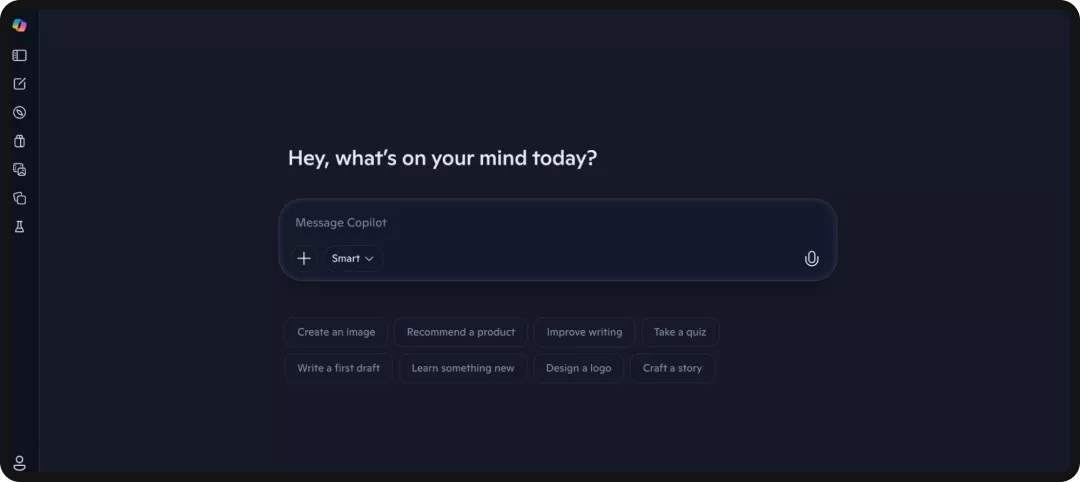
Best For: Microsoft ecosystem users, enterprise search, SEO professionals
Bing handles about 4% of global searches. That might sound small, until you realize that’s still hundreds of millions of queries from a demographic with higher spending power. Copilot integration brings GPT-4 directly into the search experience.
- Monthly Active Users: 100M+
- Key Advantage: Microsoft has massive governmental and corporate contracts, so many people must use Copilot for their work
Why Your Brand Should Care: Bing often gets overlooked, but its influence extends beyond its own platform. Microsoft’s enterprise dominance means decision-makers in large organizations are often using Bing and Copilot by default. More importantly, Bing’s index powers ChatGPT’s web browsing. Strong Bing rankings directly improve your visibility in ChatGPT responses, making Bing optimization a two-for-one opportunity.
How to Optimize: Submit your sitemap directly to Bing Webmaster Tools (many brands skip this). Bing places more weight on social signals than Google does, so active LinkedIn and Facebook presence can help. Bing also favors exact-match keywords more than Google, so don’t over-optimize for semantic variations. Ensure your Microsoft ecosystem presence is strong: LinkedIn company page, Microsoft AppSource listings if relevant, and Bing Places for local businesses.
5. Brave Search (With Leo AI)
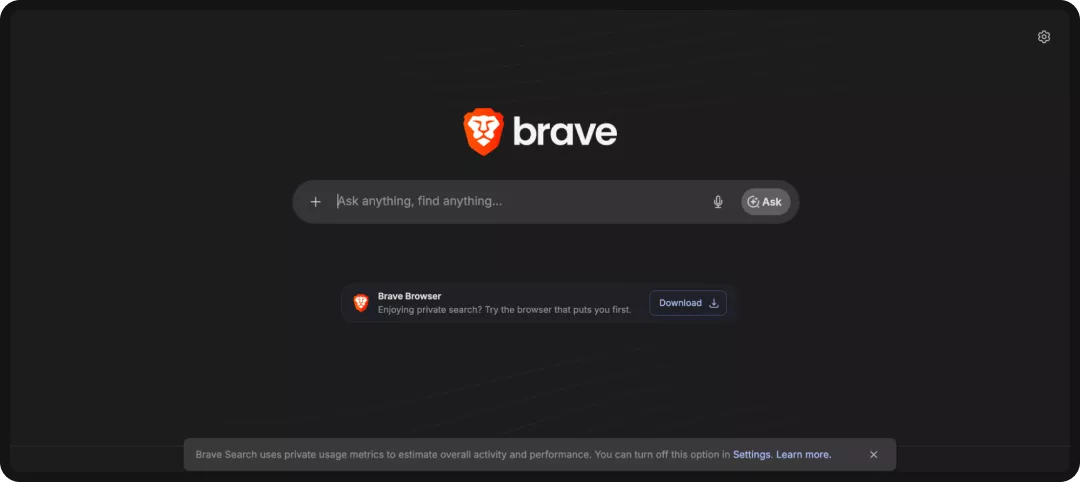
Best For: Privacy-conscious users, ad-free search
Brave’s AI assistant Leo works without requiring a login or tracking your searches. For users who’ve grown skeptical of Google’s data practices, it’s an increasingly popular alternative.
- Monthly Active Users: 100+ million
- Key Advantage: No tracking, no ads
Why Your Brand Should Care: Privacy-focused users tend to be more intentional searchers. They’ve actively chosen to avoid mainstream platforms, which often correlates with higher research standards and deliberate purchase decisions. They’re a smaller audience, but often higher-intent.
How to Optimize: Brave penalizes ad-heavy and tracker-heavy sites, so clean page experiences matter more here. Focus on fast load times, minimal scripts, and straightforward content structure. Brave users often use privacy-focused tools, so ensure your site works without requiring cookies or tracking consent to function.
AI Search Engines Comparison Table
| Platform | Best For | Users Base | Brand Optimization Priority |
|---|---|---|---|
| ChatGPT Search | Conversational queries, research, follow-ups | 800M WAU | High: dominates AI market share |
| Google AI Overviews | Local search, transactions, Google ecosystem | 650M MAU | High: largest search surface area |
| Perplexity AI | Research, citations, fact-checking | 15M+ MAU | High: influences B2B decisions |
| Bing Copilot | Enterprise users, Microsoft ecosystem | 100M+ MAU | Medium: valuable B2B demographic |
| Brave Search (Leo) | Privacy-conscious users, ad-free search | 100M+ MAU | Low-Medium: niche but high-intent |
Where Should Your Brand Focus?
The right AI search strategy depends on your audience, your industry, and where your customers actually do their research.
Start with your customer journey. Where do your prospects go when they’re evaluating solutions? B2B buyers doing due diligence likely use Perplexity or ChatGPT for research. Local service businesses need Google AI Overviews. Enterprise software companies should prioritize Bing given its dominance in corporate environments.
Consider your current visibility. If you already rank well in Google, you’re likely appearing in AI Overviews. If your Bing presence is weak, you’re probably invisible in ChatGPT’s web-browsing responses too. Audit where you stand before deciding where to invest.
Match platform strengths to your content. Perplexity rewards original research and cited sources. ChatGPT favors well-structured, authoritative content. Google values comprehensive coverage and strong traditional SEO signals. Play to each platform’s preferences rather than applying a one-size-fits-all approach.
Prioritize based on effort vs. impact:
- Google AI Overviews: If you’re already investing in SEO, you’re partially there. Focus on structured data and direct answer formatting to capture AI Overview placements.
- ChatGPT: Build content worth citing. Third-party mentions and strong Bing rankings improve your chances of surfacing in responses.
- Perplexity: Invest in authoritative, research-grade content. This takes more effort but reaches high-intent decision-makers.
- Bing: Often the lowest-hanging fruit. Less competition, direct influence on ChatGPT, and a valuable enterprise audience.
The AI search landscape is fragmenting, and that’s actually good news for brands willing to adapt. There’s no single algorithm to game anymore. Instead, there’s an opportunity to build genuine authority across multiple platforms.
AI Search Engines: FAQs
Is Google AI better thanChatGPT?
It depends on what you’re optimizing for.
ChatGPT wins on:
- Conversational depth and follow-up questions
- Creative tasks and content generation
- Complex reasoning and multi-step problems
- Maintaining context across long conversations
Google wins on:
- Comprehensive results (images, videos, news, local)
- Real-time information accuracy
- Transactional and commercial queries
- Integration with everyday tools (Maps, Gmail, Calendar)
Here’s the reality: 95% of ChatGPT users still also use Google. These aren’t competing platforms; they’re complementary. Users go to ChatGPT for synthesis and explanation, then verify or transact through Google.
For brand optimization, the answer is clear: you need both. Google handles the discovery and transaction layer; ChatGPT handles the research and consideration phase.
Which browser has the best AI?
The browser wars have entered a new phase. AI integration is no longer optional. It’s the battleground.
Microsoft Edge (Copilot) leads for users who want AI without switching their workflow. Copilot is baked directly into the browser, can summarize pages, draft content, and answer questions about what you’re viewing. For enterprise environments, it’s the default choice.
Brave (Leo) wins for privacy-first users. No login required, no data tracking, and surprisingly capable AI features for summarization and content generation.
Arc Browser rethinks the entire browsing experience with AI-native features, though it’s macOS-only and geared toward power users.
New entrants to watch: Google has added agentic browsing capabilities to Chrome, allowing the browser to take actions on your behalf. ChatGPT’s Atlas browser, Perplexity’s Comet, and Yahoo’s Scout are also pushing into this “agentic” space. These are browsers that don’t just help you search, but can navigate, fill forms, and complete tasks autonomously.
For most users in 2026, Edge with Copilot and Chrome with Gemini offer the best balance of AI capability and everyday usability. But if privacy matters, Brave’s Leo is legitimately impressive for a free, no-signup solution.
Which AI deep search is best?
“Deep search” or “deep research” features have become the new frontier. These tools don’t just find information. They synthesize multi-source reports on complex topics.
Perplexity remains the leader for research transparency. Every claim links to its source, and you can filter searches by academic papers, social discussions, or financial filings. For verifiable research, it’s hard to beat.
ChatGPT Deep Research (available with Plus subscription) processes dozens of sources and produces comprehensive reports. It’s excellent for synthesis, though citations are less prominent than Perplexity’s.
Gemini Deep Research integrates with Google Drive, Gmail, and Docs, meaning it can pull from your private documents alongside web sources. For users embedded in Google Workspace, this context-awareness is powerful.
Consensus deserves mention for academic and scientific research specifically. It searches peer-reviewed literature and clearly shows scientific consensus on questions.
The verdict: Perplexity for citation transparency, ChatGPT for creative synthesis, Gemini for Google ecosystem integration.