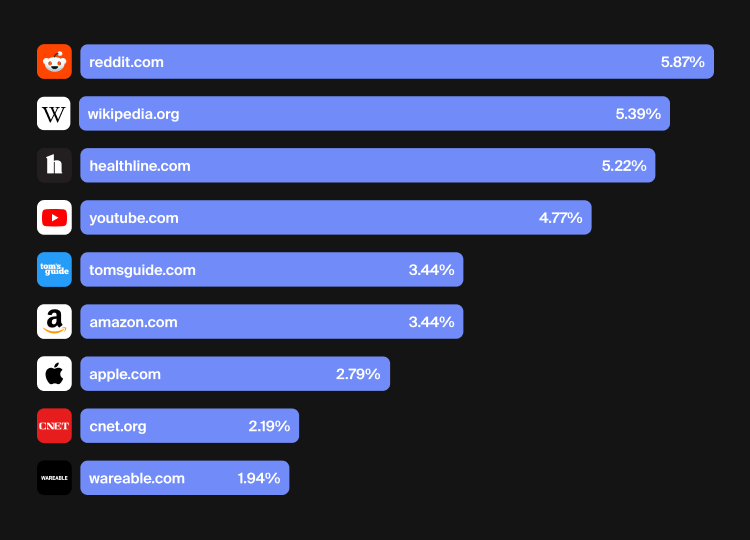
.svg)
Get a Demo
Interested in trying Goodie? fill out this form and we'll be in touch with you.
Oops! Something went wrong while submitting the form.


.svg)
.svg)


Social media functions more and more like a search engine because that's what the people yearn for. “Search” doesn’t just mean Google anymore; it also means TikTok, Reddit, YouTube, or even a mix of all three (plus a Google peruse for that sweet, sweet AI Overview).
More and more users, especially Gen Z, turn to socials for everything from product reviews to tutorials, restaurant recommendations, and beyond. According to Forbes, Gen Z uses Google 25% less than Gen X, often opting to run the same query across multiple platforms to get a more well-rounded, human perspective.
Why do us folks at Goodie care, you ask? Because these once-upon-a-time entertainment hubs are now key data sources for answer engines like ChatGPT, Gemini, Perplexity, and the whole lot of ‘em.
Most marketers know these engines pull from websites, but fewer realize how significant a role Reddit threads, YouTube transcripts, and even TikTok captions play. AI pulls from conversations happening in comment sections and creator content to give users an “authentic,” experience-based answer.
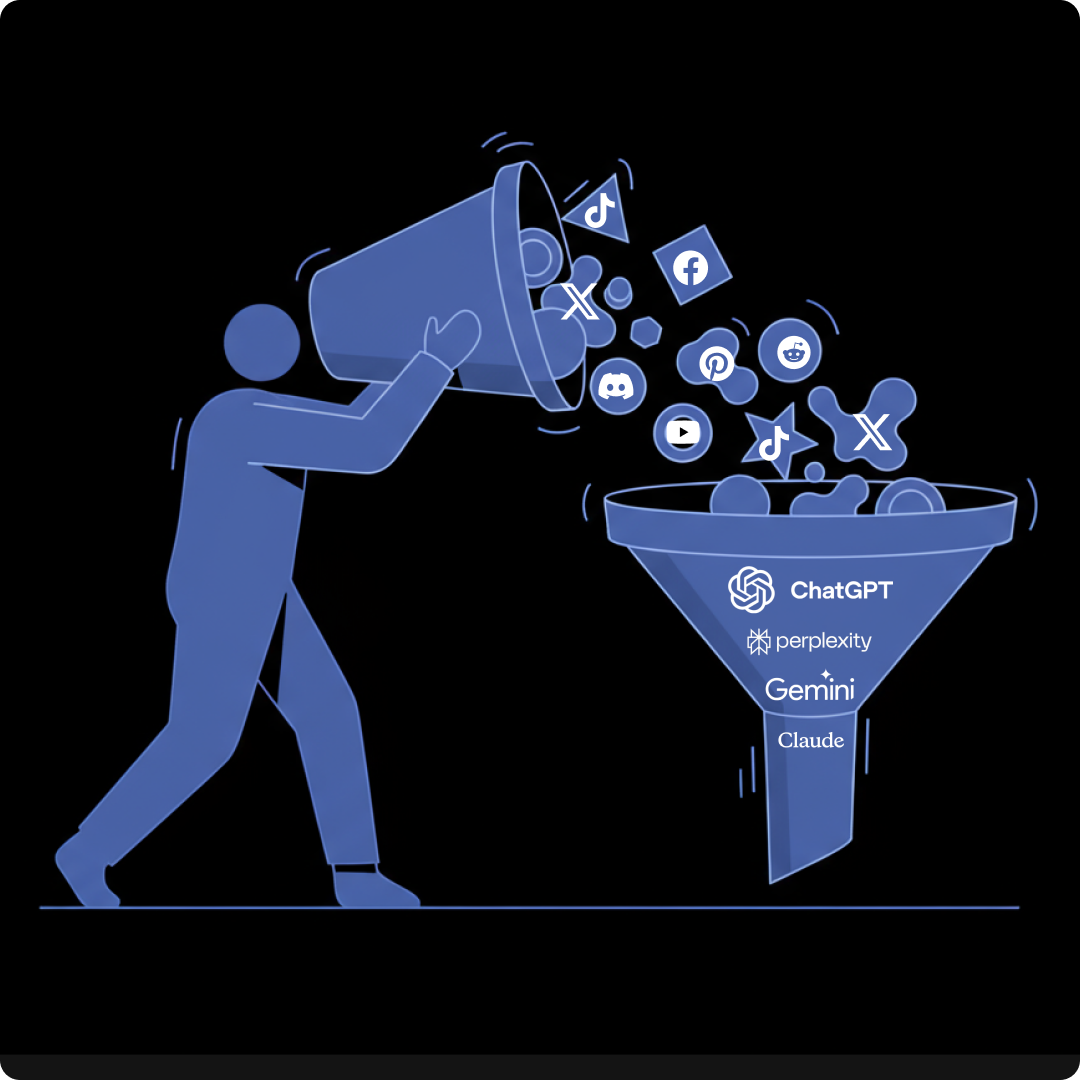
Brand visibility on social platforms not only shapes what people see; it shapes what AI knows, summarizes, and says about your business.
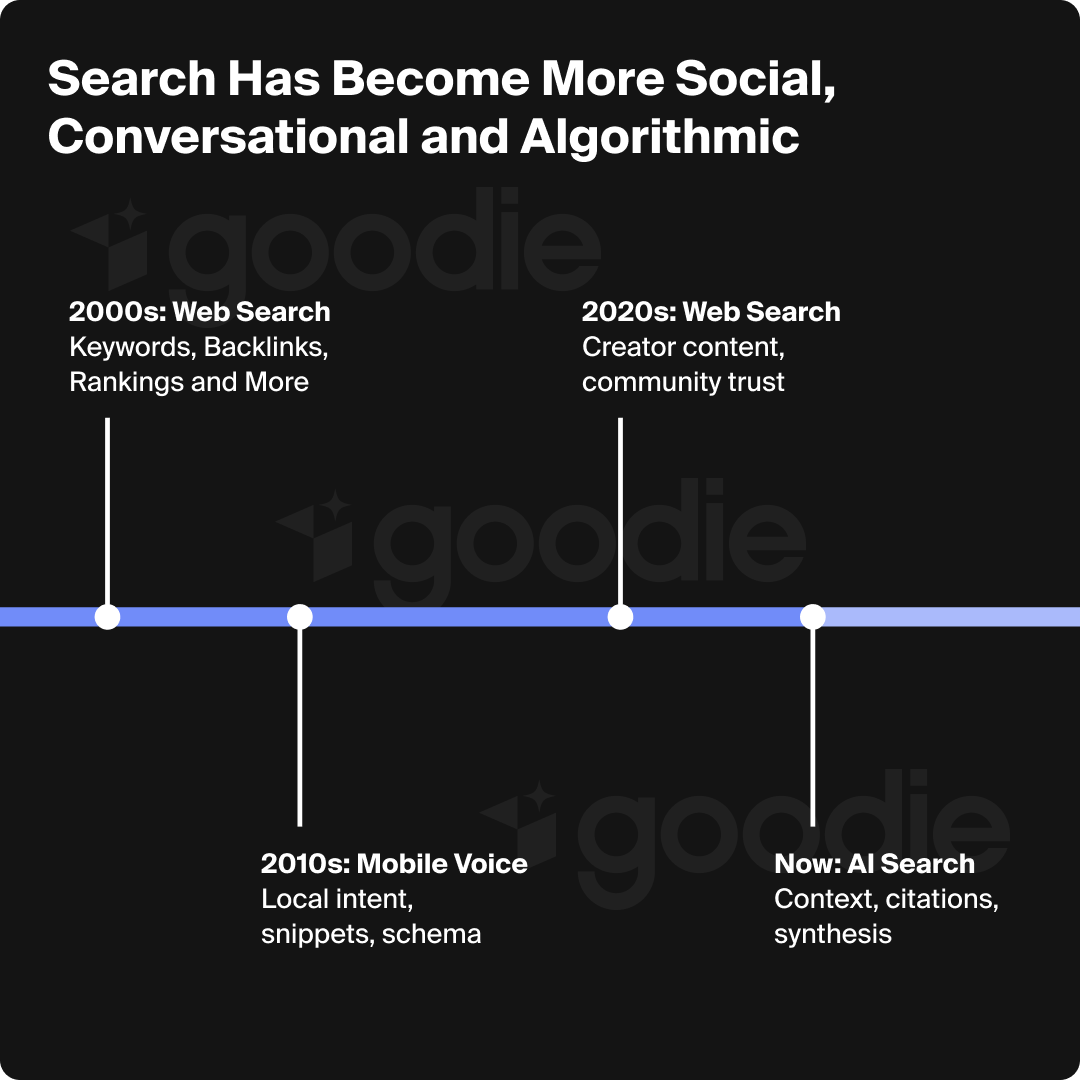
Social search works because it blends community, credibility, and context; three things traditional search engines have chased for decades. When a user types a question into TikTok, Reddit, or YouTube, saying they’re just looking for an answer would be an oversimplification. What they’re doing is looking for proof from people who’ve lived it, tried it, and tested it.
That’s what makes social media so powerful as a discovery engine. Every post, caption, and comment is a lived experience and a searchable data point; one that algorithms organize and serve back to us based on engagement, relevance, and authority. Sound familiar? It should.
Social search, SEO, and AEO are all built on the same core mechanics, intent, optimization, and trust. They’re just trained by different kinds of audiences: humans, crawlers, and now, AI.
Unlike Google’s web crawlers, social platforms use engagement as their ranking signal. Saves, comments, shares, and watch time all tell the algorithm, “this content answered the question.” The more people interact, the higher it ranks, effectively turning audience behavior into a live index of credibility.
And here’s where the overlap with answer engines comes in. These engagement-driven signals are gold for AI systems trying to understand what humans consider helpful, relevant, and trustworthy. When ChatGPT summarizes advice or Perplexity generates product recommendations, it's often informed (whether directly or indirectly) by the same kinds of content that perform well in social search: conversational, personal, and community-vetted.
That’s why social platforms aren’t just influencing discovery; they are redefining it. The discovery loop is no longer our neat little linear search → click → result. It's more cyclical: social content drives discovery, which trains AI, which then shapes future discovery.
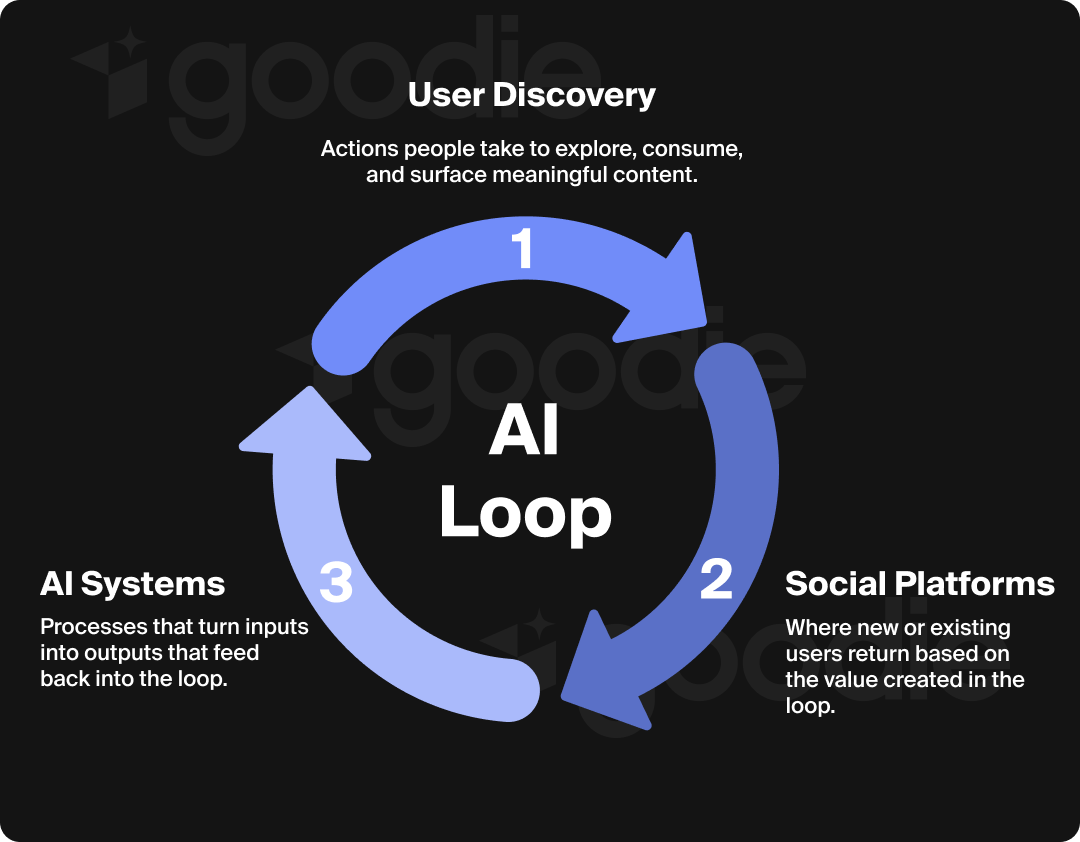
For marketers, this means you don’t just have ranking positions to worry about. You have to make sure you’re a part of the conversations, clips, and communities that train tomorrow’s search engines.
If social platforms are acting and being used as search engines, then answer engines are our great interpreters. They translate what people say, share, and search on social into structured, machine-readable knowledge.
When someone asks ChatGPT for “the best gaming headsets under $200” or “how to style a silk skirt,” it isn’t getting those answers from a single website. Instead, it's aggregating millions of human signals (and a surprising number of them come straight from social platforms).
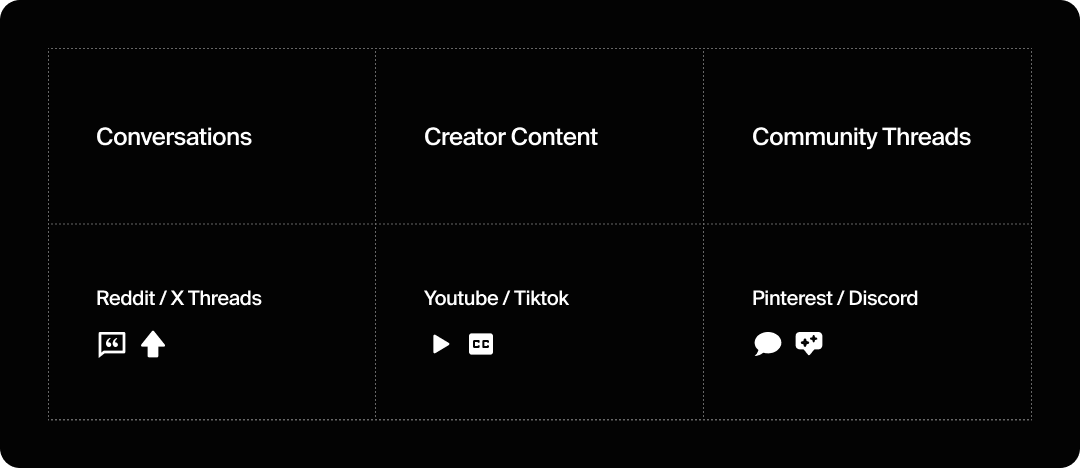
AI tools like ChatGPT, Gemini, and Perplexity analyze three key types of social data to shape their answers:
Unlike traditional crawlers that rely on backlinks and structured markup, answer engines rely on social validation. That is, what’s being discussed, upvoted, liked, watched, and shared. This is how AI decides which insights are trustworthy enough to summarize.
In short, AI models treat social engagement the way Google treats backlinks. Every comment, share, and stitch is a signal of authority collectively teaching AI what users value the most.
That, folks, is why understanding the social layer of AEO is so crucial. Optimizing for answer engines today means ensuring your brand is part of the social data ecosystem tomorrow. Not just your website, but the captions, conversations, and communities that feed it.
For years, visibility has meant showing up on Google. But as discovery fragments across social and AI platforms, our definition evolved. Your brand's discovery doesn’t solely rely on where you rank but also on how widely you’re referenced.
Your brand’s mentions, comments, and clips contribute to what AI knows about you. When users search “best budget skincare,” “how to start freelancing,” or “top gaming headsets,” answer engines scan web pages to synthesize patterns across social platforms and decide which names and narratives make the cut as part of the answer.
Here’s how this plays out in practice:
In this environment, brand visibility is multi-dimensional. You’re not just optimizing for search crawlers; you’re optimizing for human validation loops that AI is constantly learning from.
That’s why AEO and social strategy are now inseparable.
The way people talk about your brand online is the new metadata. The more discoverable and credible your brand is in social spaces, the more confidently AI systems can reference you as a trusted source.
At one point, the goal was just about being found, but now it's also about being understood.
Okay, so if social is the new search engine and answer engines are learning from it, then brands need to optimize their content not just for clicks but also for citations.
Think of every social post as a data point in your brand’s discoverability graph. You want to be feeding the systems that decide what information surfaces next.
Here’s how to do it:
The new rule of discoverability is simple: create content that answers questions before users even ask them. When your brand is a part of the conversations that shape social and AI search, visibility stops becoming a goal and becomes a given.
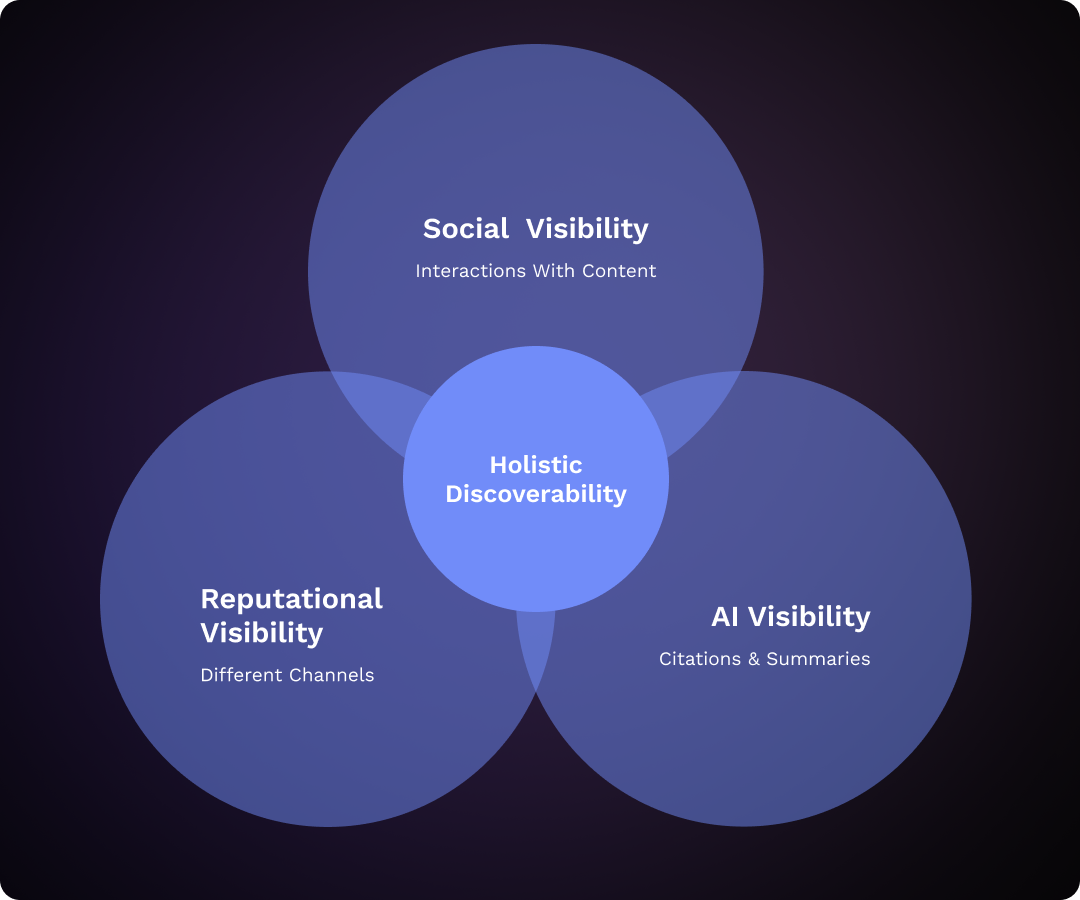
Traditional SEO metrics, impressions, clicks, and rankings, only tell part of the story now.
When discovery happens through TikTok feeds, Reddit threads, and AI summaries, visibility becomes harder to define and even harder to measure.
Marketers need to start thinking in terms of multi-dimensional visibility; not just how often their brand appears, but where and why.
In other words, visibility is no longer a search position; it’s a story being told about you across channels and technologies.
That’s why Goodie focuses on the connective tissue between these spaces: mapping how social engagement signals and organic authority work together to influence how AI understands your brand.
Because as search fragments across platforms and models, the brands that win are monitoring that momentum.
The idea of “search” used to be simple. You typed a query, got a list of links, and clicked the best-looking one. But today, discovery is fragmented: spread across social feeds, creator videos, group chats, and AI summaries. Search has become ambient: it happens wherever curiosity lives.
This shift is both disorienting and full of opportunity.
Social platforms have turned every user into a micro-search engine themselves, and answer engines have turned every conversation into training data. The result is a search ecosystem that’s faster, more human, and more contextual than ever before.
Visibility today means being referenced, remembered, and reused across platforms and models. The brands that shape tomorrow’s search presence are the ones naturally embossing themselves into the content people trust and the conversations AI learns from.
That’s the core of Answer Engine Optimization (AEO): understanding how information travels through human networks and machine logic. Doing so means you get to show up in both search engines and the AI models users are researching on.
The future of search is here, and it's social, conversational, and algorithmically intertwined. And with Goodie, you don’t just adapt to it; you lead it.
.svg)
.svg)

.svg)

.svg)